

As circular solutions gain traction, your technology products will become more durable, repairable, and designed for reuse. You’ll see more modular devices with replaceable parts, reducing waste and extending their lifespan. Digital tracking and recycling programs will make responsible disposal easier. These innovations help conserve resources, lower environmental impact, and save you money on replacements. If you want to understand how these changes shape the future of tech, keep exploring these exciting developments.

Get the little things that make your day delivered free with Prime
- Fast, free delivery on millions of items
- Prime Video, Amazon Music and more included
- Member-only deals all year
Key Takeaways
- Increased focus on designing durable, repairable, and upgradeable technology products to extend their lifespan.
- Adoption of modular designs enabling easy component replacements and reducing electronic waste.
- Integration of digital tracking and IoT to optimize resource use and facilitate end-of-life recycling.
- Shift towards circular business models like take-back schemes and refurbishment programs.
- Enhanced sustainability and cost-efficiency benefits for consumers through longer-lasting, eco-friendly devices.
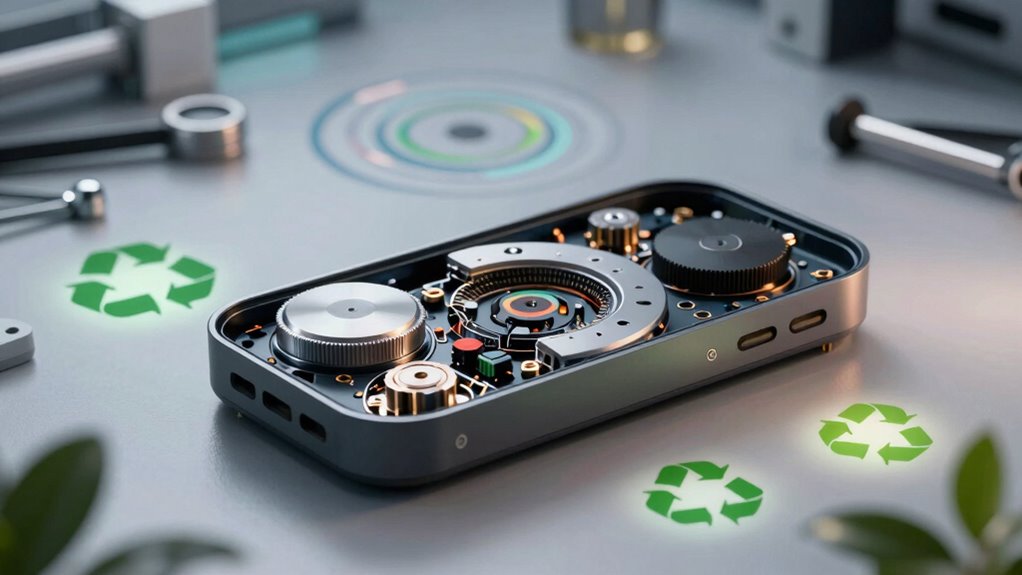
As the world seeks sustainable ways to reduce waste and conserve resources, circular solutions and technology products are becoming essential. This shift marks a significant change in how we approach design, manufacturing, and consumption. You’re likely to encounter more devices and systems that prioritize sustainable innovation, aiming to extend product lifespans and minimize environmental impact. Instead of the traditional linear economy—where products are made, used, and discarded—the focus now is on creating a circular flow that keeps materials in use longer. For example, many companies are now adopting design for longevity to ensure products remain functional and relevant over time. For you, this means more access to products designed for durability, repairability, and reuse, aligning with the broader goal of resource efficiency.
In the context of technology products, adopting circular solutions means manufacturers are rethinking how they source, produce, and dispose of components. You’ll see more devices built with modularity in mind, allowing you to upgrade parts instead of replacing entire units. This approach not only reduces waste but also makes resource management more efficient. As companies embrace sustainable innovation, they’re adopting new materials and processes that lower environmental footprints. For you, this translates into products that are less harmful to the planet and often more cost-effective over time, thanks to longer lifecycles and fewer replacements.
The rise of circular technology also encourages companies to implement take-back schemes and recycling programs. These initiatives enable you to return old devices for refurbishing or responsible disposal, closing the loop in product lifecycle management. The emphasis on resource efficiency means that fewer raw materials are needed for new products, which helps conserve finite resources and reduces ecological disruption. You benefit from this shift through improved product durability, better repair services, and access to refurbished items that perform just as well as new ones but with a smaller environmental footprint. Additionally, digital technologies like IoT and AI are being integrated to enhance product lifecycle management and improve sustainability efforts. Incorporating digital tracking tools allows for more precise monitoring of resource flows, further supporting sustainable practices. Such advancements also encourage a mindset of continuous innovation, ensuring that sustainability remains at the forefront of product development.
Furthermore, the integration of digital technologies like IoT and AI enhances the effectiveness of circular solutions. These tools enable better tracking of product usage, maintenance needs, and end-of-life management. As a result, you can expect smarter, more sustainable technology products that optimize resource use at every stage. The focus on sustainable innovation fosters a mindset where reducing waste and maximizing resource efficiency are central to product development. This not only benefits the environment but also encourages companies to innovate continuously, delivering smarter, greener solutions that meet your needs and reduce your ecological impact.
modular smartphones with replaceable parts
As an affiliate, we earn on qualifying purchases.
As an affiliate, we earn on qualifying purchases.
Frequently Asked Questions
How Do Circular Solutions Impact Product Innovation Cycles?
Circular solutions accelerate your product innovation cycles by emphasizing sustainable design and material innovation. You’ll focus on extending the product lifecycle through modularity, easy repairs, and recyclability, which encourages ongoing improvements. This approach prompts you to develop new materials and rethinking existing ones, fostering continuous innovation. As a result, you can bring eco-friendly, durable products to market faster while reducing waste and resource consumption, ultimately benefiting both your business and the environment.
What Are the Biggest Challenges in Integrating Circular Principles?
Integrating circular principles is like balancing on a tightrope—you need precision and adaptability. The biggest challenges you face include ensuring material reuse without compromising product quality and maintaining design flexibility to accommodate reuse and recycling processes. You must rethink manufacturing processes, supply chains, and product lifecycle management, all while convincing stakeholders of the long-term benefits. Overcoming these hurdles requires innovation, collaboration, and a willingness to embrace change.
How Do Circular Solutions Affect Supply Chain Management?
Circular solutions transform your supply chain by emphasizing resource recovery and waste minimization. You’ll need to redesign logistics to prioritize reuse and recycling, reducing reliance on new materials. This approach encourages collaboration with suppliers for sustainable practices, minimizes waste across the supply chain, and improves overall efficiency. By adopting these strategies, you’ll not only lessen environmental impact but also create more resilient, cost-effective supply chain processes aligned with circular economy principles.
Can Circular Models Be Cost-Effective for Tech Companies?
You’ll find that circular models can be cost-effective for tech companies, especially since they promote resource efficiency—saving up to 30% on material costs. By recycling and refurbishing products, you reduce waste and lower procurement expenses. These strategies lead to significant cost savings over time, making circular approaches not just environmentally friendly but financially advantageous. Embracing circular models can boost your bottom line while supporting sustainability goals.
What Regulatory Changes Support Circular Solutions in Tech?
Regulatory incentives and clear policy frameworks support circular solutions in tech by encouraging companies like yours to adopt sustainable practices. Governments are implementing laws that promote recycling, reparability, and material reuse, making it easier for you to integrate circular models. These changes reduce waste and boost innovation, helping your business stay compliant and competitive while contributing to environmental goals. Staying informed about evolving regulations guarantees you capitalize on these opportunities effectively.
repairable laptops with upgrade options
As an affiliate, we earn on qualifying purchases.
As an affiliate, we earn on qualifying purchases.
Conclusion
As you embrace circular solutions, think of yourself as a gardener tending to a thriving garden—each product is a seed, nurtured and renewed, not discarded. The cycle continues, vibrant and full of promise, turning waste into wealth. In this dance of renewal, you become a steward of change, planting the seeds for a sustainable future. Embrace the rhythm, and watch your technology products flourish in a world that values growth without end.
digital tracking IoT devices for recycling
As an affiliate, we earn on qualifying purchases.
As an affiliate, we earn on qualifying purchases.
refurbished eco-friendly electronics
As an affiliate, we earn on qualifying purchases.
As an affiliate, we earn on qualifying purchases.
NFL season / tailgating Picks
team gear
As an affiliate, we earn on qualifying purchases.