

The rise of application-specific semiconductors is reshaping technology by offering tailored solutions that boost performance, reduce power use, and deliver faster responses. These chips are designed for particular tasks, making devices more efficient and reliable. As design tools improve, creating custom hardware becomes easier, pushing innovation further. This trend helps companies stand out with smarter, high-performance products. To understand how this shift impacts your digital world, keep exploring what’s driving these advancements.
Key Takeaways
- Growing demand for energy-efficient, high-performance devices drives the development of custom application-specific semiconductors.
- Advanced AI-driven design tools enable precise tailoring of chips for specific tasks, accelerating innovation.
- Custom chips optimize data flow and reduce latency, enhancing performance in fields like autonomous vehicles and high-frequency trading.
- Industry benefits include competitive advantages through faster, more reliable, and specialized hardware solutions.
- The trend transforms the tech landscape by enabling smarter, more efficient devices tailored to specific application needs.
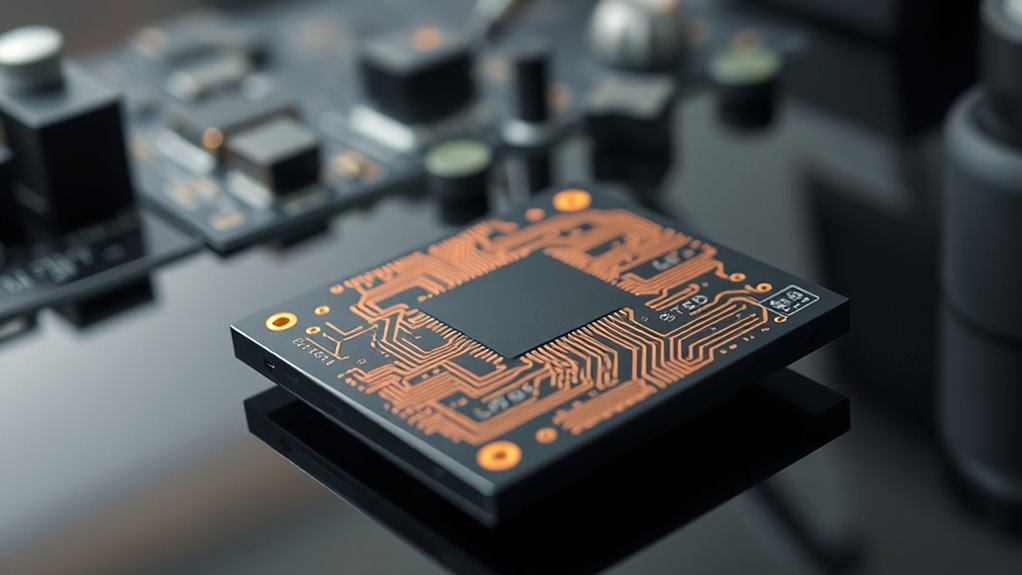
Have you ever wondered how certain electronic devices perform so efficiently? The secret often lies in the way their internal hardware is designed. Application-specific semiconductors are transforming the tech landscape by offering tailored solutions that maximize performance while reducing power consumption. Unlike general-purpose chips, which are built to handle a wide range of tasks, these semiconductors are crafted specifically for a particular application, making them incredibly efficient at what they do. This shift toward specialized hardware is driven by the demand for faster, more energy-efficient devices across industries like telecommunications, automotive, and consumer electronics.
Central to this evolution is custom chip design. When engineers develop these chips, they don’t just assemble generic components—they meticulously tailor every aspect of the hardware to fit the unique needs of the application. This process involves deep analysis of the device’s functions and performance requirements. By doing so, they can eliminate unnecessary features and optimize the core functionalities. Custom chip design enables the integration of specific algorithms or data pathways directly into the chip, which substantially boosts the device’s overall performance. It’s like creating a bespoke suit that fits perfectly instead of wearing off-the-rack clothing that might be loose or tight in the wrong places.
Custom chip design tailors hardware precisely, boosting performance by integrating specific algorithms and optimizing core functionalities.
Performance optimization is at the heart of developing application-specific semiconductors. Since these chips are designed for a particular purpose, every element is fine-tuned to deliver maximum efficiency. This includes optimizing data flow, minimizing latency, and reducing power draw—all essential for high-performance applications. When you use devices powered by these semiconductors, you notice faster response times, smoother operation, and longer battery life. Performance optimization isn’t just about speed; it also involves managing heat dissipation and ensuring stability under demanding conditions, which is indispensable for applications like autonomous vehicles or high-frequency trading systems. Advances in AI-driven design tools are further enhancing the precision and effectiveness of custom chip development, enabling even more tailored solutions.
Furthermore, custom chip design and performance optimization open doors for innovation. Companies can develop solutions that weren’t feasible with off-the-shelf chips, giving them a competitive edge. For you, this means enjoying devices that are not only faster and more reliable but also tailored to your specific needs. As the technology advances, application-specific semiconductors will become even more prevalent, pushing the boundaries of what electronic devices can achieve. Essentially, they embody the move toward smarter, more efficient hardware that’s built precisely for the task at hand, transforming your interaction with technology every day.
application-specific semiconductor development kit
As an affiliate, we earn on qualifying purchases.
As an affiliate, we earn on qualifying purchases.
Frequently Asked Questions
How Do Application-Specific Semiconductors Impact Global Supply Chains?
Application-specific semiconductors impact your global supply chains by enhancing supply chain resilience and manufacturing scalability. They allow you to customize chips for specific needs, reducing dependency on generic components and minimizing disruptions. This specialization streamlines production, speeds up delivery times, and adapts more easily to demand fluctuations. As a result, your supply chains become more flexible, efficient, and capable of supporting rapid technological advancements worldwide.
What Are the Environmental Considerations in Manufacturing Custom Chips?
You should consider that manufacturing custom chips impacts the environment through resource use and waste. To promote sustainable manufacturing, opt for eco-friendly materials and processes that reduce energy consumption and emissions. You can also implement recycling and waste management strategies, minimizing environmental harm. By prioritizing sustainability, you help lower the ecological footprint of chip production, ensuring that innovation doesn’t come at the expense of our planet’s health.
How Do These Semiconductors Influence Cybersecurity Practices?
Seizing the spotlight, application-specific semiconductors considerably shape your cybersecurity practices. They bolster chip security by customizing hardware to resist threats and reduce vulnerabilities. These chips also enhance data protection, making it harder for cybercriminals to breach systems. By designing chips tailored to specific tasks, you can implement precise security protocols, ensuring your data remains safe. In this way, specialized semiconductors serve as a robust barrier, fortifying your digital defenses against evolving cyber threats.
What Are the Long-Term Economic Effects of Adopting Custom Chips?
Adopting custom chips boosts your economic resilience by fostering innovation incentives, which can lead to competitive advantages and new markets. Over the long term, this shift encourages investments in specialized technology, creating high-paying jobs and reducing dependence on generic semiconductors. While initial costs are high, the benefits include improved performance and security, strengthening your economy’s ability to adapt and thrive amid global technological changes.
How Do Regulations Vary Across Different Countries for Custom Semiconductor Development?
Imagine a global tapestry where each country’s rules are threads woven differently. You’ll find regulations for custom semiconductor development vary widely, with some emphasizing strict compliance, others prioritizing innovation. Regulatory harmonization aims to unite these threads, easing cross-border compliance and fostering smoother cooperation. As you navigate these diverse landscapes, understanding each country’s unique standards helps you build bridges, ensuring your technology advances seamlessly across borders without getting tangled in red tape.
custom AI chip design software
As an affiliate, we earn on qualifying purchases.
As an affiliate, we earn on qualifying purchases.
Conclusion
As you explore the world of application-specific semiconductors, it’s clear they’re shaping the future like architects designing a custom blueprint. These chips are the heartbeat behind innovative devices, tailoring performance to your needs. Embracing this shift means stepping into a smarter, more efficient world where technology feels like a perfectly fitted glove—powerful, precise, and ready for whatever comes next. The rise of these semiconductors is truly a symphony of innovation, playing in perfect harmony with your future.
energy-efficient high-performance processors
As an affiliate, we earn on qualifying purchases.
As an affiliate, we earn on qualifying purchases.
autonomous vehicle custom chips
As an affiliate, we earn on qualifying purchases.
As an affiliate, we earn on qualifying purchases.