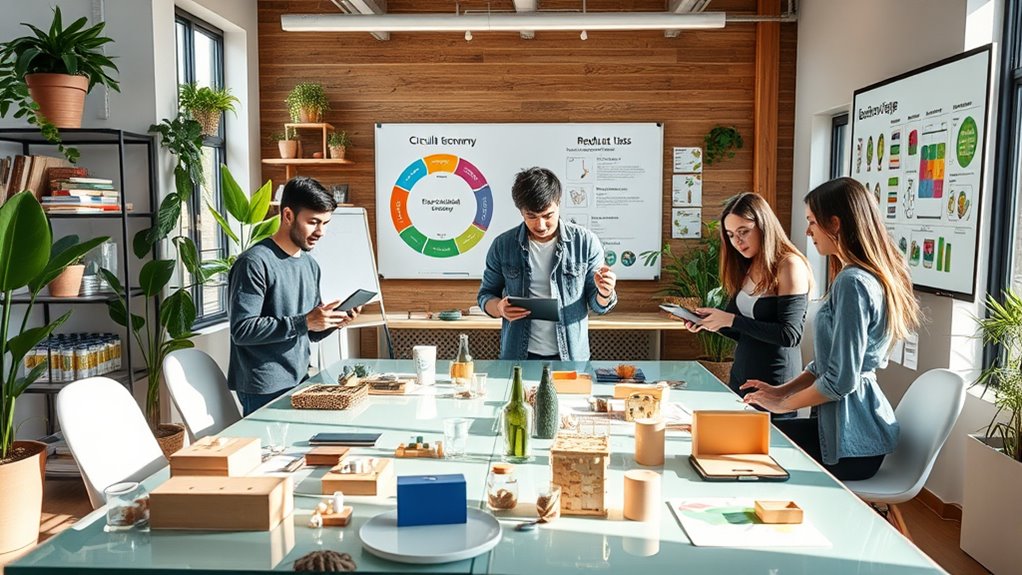
Startups are leading the way in creating sustainable, circular solutions by developing biodegradable packaging, advanced product lifecycle management, and digital tracking tools that promote transparency. They challenge traditional waste practices and encourage consumers and big brands to adopt eco-friendly habits. These innovations support resource conservation and help close the resource loop through reuse and recycling initiatives. By adopting these approaches, startups are making a significant impact, and exploring further reveals how these efforts can transform industries.
Key Takeaways
- Startups develop biodegradable, reusable, and compostable packaging to replace single-use plastics and reduce environmental impact.
- They implement advanced Product Lifecycle Management (PLM) systems to design long-lasting, recyclable, and repairable products.
- Startups utilize monitoring and transparency technologies to ensure responsible sourcing, recycling, and traceability of products.
- They create platforms for product take-back programs, encouraging consumers to participate in reuse and recycling initiatives.
- Startups drive industry-wide change by promoting sustainable practices and inspiring larger companies to adopt circular models.

Startups are increasingly driving the shift toward circular solutions, transforming how we think about waste, resources, and sustainability. They are pushing innovative ideas that challenge traditional linear models of production and consumption. One key area where startups are making a significant impact is in sustainable packaging. Instead of relying on single-use plastics or non-recyclable materials, these entrepreneurs are developing biodegradable, reusable, and compostable packaging options that reduce environmental footprints. By prioritizing sustainable packaging, startups not only cut down on waste but also encourage consumers and larger companies to adopt more eco-friendly habits. This shift creates a ripple effect, prompting established brands to rethink their packaging strategies and invest in sustainable alternatives.
Moreover, startups are leveraging advanced product lifecycle management (PLM) systems to maximize resource efficiency. Product lifecycle management involves overseeing a product’s journey from design to disposal, ensuring every stage minimizes environmental impact. With innovative PLM tools, startups can design products with reuse, refurbishment, or recycling in mind, extending their lifecycle and delaying entry into landfills. These systems enable real-time data collection and analysis, helping startups identify inefficiencies and optimize resource use throughout the product’s life. As a result, products are built to last longer, are easier to repair and recycle, and ultimately support a circular economy by keeping materials in use longer. Additionally, many startups are integrating environmental monitoring technologies to ensure their processes continually meet sustainability standards.
These startups also emphasize transparency and traceability, making it easier for consumers and partners to verify sustainable practices. They often incorporate digital tracking technologies that monitor a product’s journey, ensuring that materials are responsibly sourced and properly recycled at end-of-life. This level of accountability not only builds trust but also pushes other companies to adopt similar practices. Startups are also creating platforms for product take-back programs, encouraging consumers to return used items for refurbishment or recycling. These initiatives help close the loop, transforming waste into valuable resources and exemplifying the principles of a circular economy.
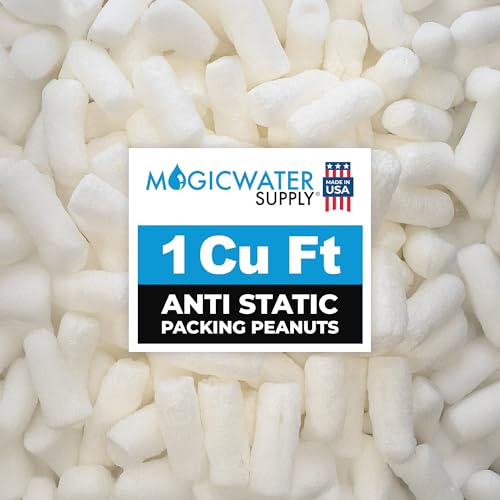
MagicWater Packing Peanuts for Shipping – 1 Cu Ft – Bio Tube Recycled Compostable & Biodegradable Void Filler – Cushion for Shipping Packaging – Dust-Free & Abrasion Resistant – Non Styrofoam
ECO-FRIENDLY & SUSTAINABLE PACKAGING SOLUTION: Choose our packing peanuts for shipping, made from renewable, sustainable materials, to reduce…
As an affiliate, we earn on qualifying purchases.
As an affiliate, we earn on qualifying purchases.
Frequently Asked Questions
How Do Startups Measure the Impact of Their Circular Solutions?
You measure the impact of your circular solutions by tracking impact metrics like resource savings, waste reduction, and carbon footprint decreases. You also engage stakeholders regularly to gather feedback and assess their satisfaction. By combining quantitative data with stakeholder insights, you get a thorough view of your initiatives’ effectiveness. This approach helps you refine your strategies, demonstrate value, and guarantee your circular solutions create meaningful, sustainable change.
What Are the Biggest Challenges Startups Face Implementing Circular Economy Models?
Tackling circular economy models is like steering a stormy sea—you face unpredictable supply chains and wavering consumer engagement. You might struggle with sourcing sustainable materials or convincing customers to embrace reuse. Balancing environmental goals with profitability pushes your limits. Overcoming these hurdles requires innovative strategies, strong partnerships, and persistent education, so you can turn these challenges into opportunities for sustainable growth and meaningful impact.
How Do Startups Secure Funding for Circular Initiatives?
You can secure funding for circular initiatives by tapping into venture capital interested in sustainable startups and applying for government grants designed to promote green innovation. Pitch your circular solutions clearly, emphasizing their environmental and economic benefits to attract investors. Building strong relationships with eco-focused investors and government agencies helps increase your chances. Demonstrating a viable business model aligned with sustainability goals makes your startup more appealing for funding opportunities.
What Partnerships Are Most Beneficial for Startups Promoting Circular Solutions?
You should seek partnerships with organizations that focus on sustainable branding and community engagement, as they can amplify your circular initiatives. Collaborate with local governments, environmental NGOs, and eco-conscious brands to build credibility and expand your reach. These partnerships help you demonstrate your commitment to sustainability, attract eco-minded consumers, and foster community support, ultimately strengthening your circular solutions and making a meaningful environmental impact.
How Do Startups Ensure Scalability of Their Circular Business Models?
To guarantee scalability, you must focus on supply chain optimization, streamline operations, and adapt quickly to consumer behavior shifts. You should invest in flexible, modular models that grow with demand, leverage technology to improve efficiency, and foster strong partnerships that support expansion. By understanding and responding to consumer preferences, you can refine your offerings, reduce waste, and build a resilient circular business that scales sustainably over time.

The Lean Product Playbook: How to Innovate with Minimum Viable Products and Rapid Customer Feedback
As an affiliate, we earn on qualifying purchases.
As an affiliate, we earn on qualifying purchases.
Conclusion
As you watch startups breathe new life into old materials, imagine a world where waste transforms into vibrant, useful creations. These innovators are like sparks igniting a circular fire, turning discarded products into fresh possibilities. Their passion fuels a cycle of renewal, where nothing truly goes to waste. By supporting these ventures, you become part of this dynamic dance—helping build a sustainable future, one creative solution at a time.

Klein Tools 935DAG Digital Electronic Level and Angle Gauge, Measures 0 – 90 and 0 – 180 Degree Ranges, Measures and Sets Angles
VERSATILE DIGITAL ANGLE GAUGE AND LEVEL: Measure angles, check relative angles with zero calibration feature, or use as…
As an affiliate, we earn on qualifying purchases.
As an affiliate, we earn on qualifying purchases.
reusable take-back program platforms
As an affiliate, we earn on qualifying purchases.
As an affiliate, we earn on qualifying purchases.