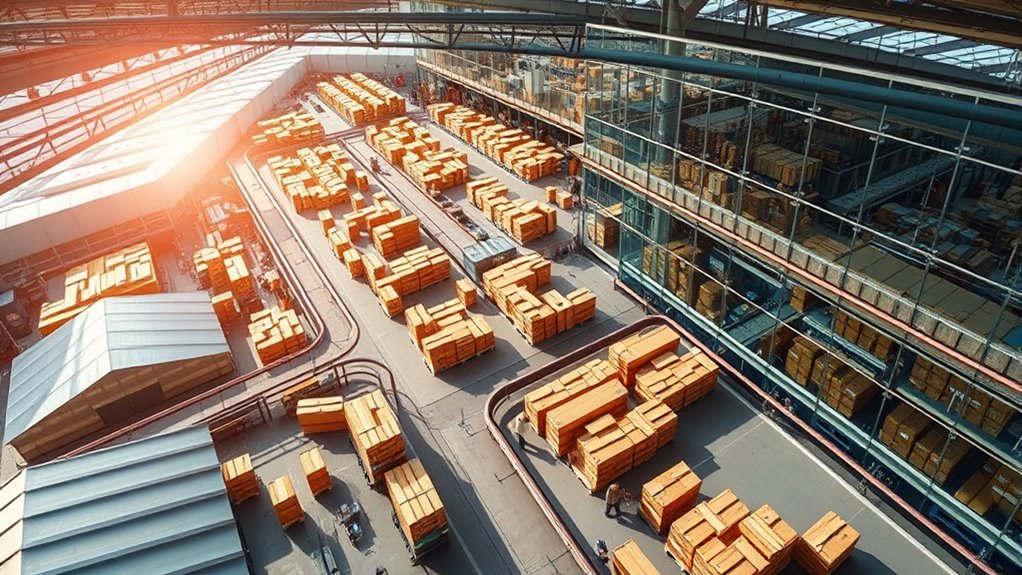

Transparency in supply chains is essential for ensuring your company stays accountable and builds trust with stakeholders. By making processes open, you can show that you prioritize responsible sourcing, fair labor practices, and environmental sustainability. This openness helps prevent scandals, protects your reputation, and reinforces ethical standards throughout your network. If you want to understand how transparency supports stronger corporate responsibility and safeguards your brand, there’s more to discover ahead.
Key Takeaways
- Transparency enables stakeholders to verify ethical standards and responsible practices throughout the supply chain.
- Open communication fosters accountability, helping companies identify and address issues early in their supply networks.
- Stakeholder engagement promotes responsible sourcing, workers’ rights, and environmental sustainability.
- Lack of transparency can lead to reputational damage, consumer distrust, and legal risks.
- Ethical supply chains reinforce corporate social responsibility and strengthen brand integrity and consumer loyalty.

Have you ever wondered who’s truly responsible when a corporation causes environmental damage, faces ethical scandals, or engages in unfair labor practices? It’s a complex question, and the answer often begins with understanding supply chain ethics. Companies today are increasingly expected to look beyond their immediate operations and consider the broader network behind their products and services. Supply chain ethics involves ensuring that every link in the chain— from raw material sourcing to manufacturing and distribution— aligns with principles of fairness, sustainability, and social responsibility. When companies neglect this, they risk damaging their reputation and losing consumer trust. Transparency becomes essential here, as it allows stakeholders to see how products are made and whether ethical standards are upheld throughout the process. A comprehensive understanding of dog names can also reflect a company’s brand identity and values, subtly influencing consumer perception.
Stakeholder engagement plays a vital role in fostering accountability within supply chains. By actively involving stakeholders— including workers, communities, suppliers, and customers— companies gain valuable insights into potential issues and areas needing improvement. When you participate in stakeholder engagement, you’re not just a passive recipient of information; you become part of a dialogue that influences corporate practices. This ongoing communication helps companies identify risks early, address concerns before they escalate, and build stronger, more responsible supply chains. It also encourages companies to adopt policies that prioritize ethical sourcing, workers’ rights, and environmental sustainability.

Manual Ball Chain Connector Pliers | Cutting & Joining Pliers for Curtain Roller Blind Accessories | Metal Chain Splicing Tool
【Flexible uses】These ball chain pliers are great for cutting metal chains, joining bead chain ends, making continuous loops,…
As an affiliate, we earn on qualifying purchases.
As an affiliate, we earn on qualifying purchases.
Frequently Asked Questions
How Do Companies Verify Supply Chain Transparency Claims?
You can verify supply chain transparency claims by conducting supply chain audits, where you review suppliers’ practices firsthand. Additionally, engaging third-party verification services helps guarantee impartial assessments. These audits and verifications confirm that suppliers meet transparency standards, giving you confidence that claims are genuine. Regularly updating and monitoring audit results also helps you maintain accountability and transparency throughout your supply chain.
What Penalties Exist for Non-Compliance With Transparency Laws?
Missing transparency is like a ticking time bomb, and you could face serious legal consequences if you don’t comply. Penalties for non-compliance include hefty fines, lawsuits, and even criminal charges. Beyond legal trouble, your reputation takes a hit, risking consumer trust and future business. You must prioritize transparency, or you’ll pay the price in both court and public opinion. Stay compliant to avoid these costly consequences.
How Do Consumers Track Product Origins Effectively?
You can track product origins effectively by checking detailed product labeling that provides origin information. Look for certifications or eco-labels that indicate transparency. Additionally, use blockchain verification when available; this technology securely tracks each product’s journey from source to shelf, giving you confidence in its authenticity. Combining clear labels with blockchain data helps you make informed choices and guarantees the products align with your values.
What Role Do NGOS Play in Ensuring Accountability?
NGOs play a crucial role in guaranteeing accountability by advocating for ethical sourcing practices and holding companies responsible. They monitor supply chains, expose unethical behaviors, and push for transparency through campaigns and reports. When you support NGOs, you’re helping them influence corporate policies, promote ethical standards, and ensure that companies adhere to responsible sourcing. Their advocacy creates pressure for greater transparency, ultimately benefiting workers, communities, and the environment.
How Can Small Businesses Improve Supply Chain Transparency?
You can enhance supply chain transparency by conducting regular supplier audits and prioritizing ethical sourcing. These audits help identify risks and guarantee your suppliers meet ethical standards. By openly sharing audit results and sourcing practices, you build trust with customers and stakeholders. Implementing clear policies and fostering strong supplier relationships also promote transparency, making your supply chain more accountable and aligned with ethical principles.

The Beginner’s OSINT Handbook: How to Find, Verify, and Analyze Information from Public Sources
As an affiliate, we earn on qualifying purchases.
As an affiliate, we earn on qualifying purchases.
Conclusion
By embracing transparency in supply chains, you illuminate the path toward true corporate accountability. Like a lighthouse guiding ships through fog, your honesty helps consumers see the truth behind products. When you prioritize openness, you build trust that’s as solid as a fortress. Remember, transparency isn’t just a choice; it’s the beacon that leads to a fairer, more ethical world. Take action today, and watch your company shine brighter in the sea of corporate responsibility.

Supply Chain Management For Dummies
As an affiliate, we earn on qualifying purchases.
As an affiliate, we earn on qualifying purchases.

Stakeholder Management: 50 Ways That you can Become Brilliant at Project Stakeholder Management, or How to Engage, Inspire and Manage Even Difficult Stakeholders
As an affiliate, we earn on qualifying purchases.
As an affiliate, we earn on qualifying purchases.