
TL;DR
Listen free for 30 days with Audible
Thousands of audiobooks and originals — cancel anytime.
Start your free trialAs an affiliate, we earn on qualifying purchases.
Former DeepMind Vice President Vinyals predicts AI will soon improve itself, but he asserts this won’t trigger an intelligence explosion. The claim highlights ongoing debates about AI development risks.
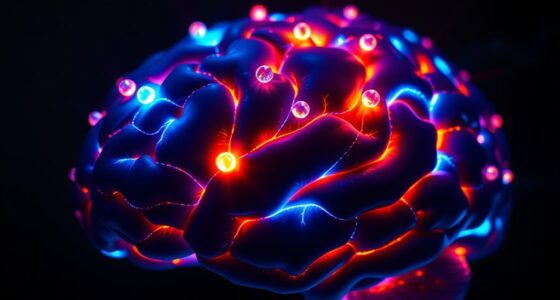
Vinyals, a former Vice President at DeepMind, has stated that AI systems are approaching a phase of self-improvement, but he firmly believes this will not lead to an intelligence explosion. His comments, made in recent discussions, are drawing attention amid broader debates about AI risks and future capabilities.
In a series of recent remarks, Vinyals emphasized that advancements in AI are progressing toward systems capable of improving their own algorithms. However, he clarified that this process, while significant, is unlikely to trigger an uncontrolled or runaway increase in intelligence, often referred to as an ‘intelligence explosion.’
Vinyals explained that current AI architectures are limited and that self-improvement, if it occurs, would be gradual rather than exponential. He also noted that the technical barriers and safety mechanisms in place make a sudden, uncontrollable surge in AI capabilities unlikely in the near future.
These comments come at a time of heightened public and academic concern about the potential risks of highly autonomous AI systems, especially those capable of recursive self-enhancement. Vinyals’ perspective adds a voice of caution but also reassurance, suggesting that fears of an imminent runaway AI scenario may be overstated.
Implications for AI Safety and Future Development
Vinyals’ assertion that AI self-improvement will not trigger an intelligence explosion is significant because it challenges some of the more alarmist narratives about AI risks. If correct, this could influence policy and research priorities, emphasizing cautious development rather than panic-driven regulation.
For AI developers and regulators, understanding the limits of current self-improvement capabilities is crucial for designing safe and controllable systems. Vinyals’ comments may help temper fears and focus attention on managing incremental progress rather than catastrophic scenarios.
However, the broader debate remains unresolved, as many experts continue to warn about potential future risks from increasingly autonomous AI systems. The true trajectory of AI self-improvement and its risks remains a subject of active investigation and discussion.
As an affiliate, we earn on qualifying purchases.
Recent Trends in AI Self-Improvement and Expert Views
The topic of AI self-improvement has gained increased attention in recent years, driven by rapid advancements in machine learning and neural network capabilities. While some researchers believe AI could eventually reach a point of recursive self-enhancement, others, including Vinyals, argue that technical and safety barriers prevent such rapid escalation.
This debate is amplified by a surge in media coverage and public interest, often fueled by speculative claims about the potential for AI to surpass human intelligence uncontrollably. Historically, AI progress has been characterized by steady, incremental improvements, with some experts warning that exponential growth is still a distant prospect.
The recent comments by Vinyals are part of a broader trend where industry insiders seek to clarify misconceptions and provide a tempered outlook on AI development. While the field continues to evolve, there is no consensus on when or if an intelligence explosion could occur.
As an affiliate, we earn on qualifying purchases.
Unresolved Questions About AI Self-Improvement Limits
It remains unclear how close current AI systems are to achieving meaningful self-improvement capabilities, and whether future breakthroughs could alter the current assessment. Experts differ on whether the barriers are purely technical or also involve fundamental theoretical limits, and there is no consensus on when, or if, an intelligence explosion might occur.
Additionally, the impact of potential safety measures and regulatory interventions on the trajectory of AI development is still uncertain, leaving open the possibility that future developments could challenge current predictions.
As an affiliate, we earn on qualifying purchases.
Monitoring AI Development and Expert Assessments
Researchers and policymakers will likely continue scrutinizing the pace of AI self-improvement, with ongoing assessments of technological and safety barriers. Future statements from industry leaders and independent experts will shape the narrative around AI risks.
Further empirical research is expected to clarify the technical feasibility of recursive self-enhancement and its timeline, informing both regulation and public understanding. The debate about whether AI could trigger an intelligence explosion remains active, with no definitive resolution expected soon.
As an affiliate, we earn on qualifying purchases.
Key Questions
What does Vinyals mean by AI self-improvement?
He refers to AI systems’ ability to modify or enhance their own algorithms, potentially leading to increased capabilities over time.
Why do some experts believe an intelligence explosion is unlikely?
Because of current technical limitations, safety mechanisms, and the gradual nature of AI progress, many believe a rapid, runaway increase in intelligence is improbable in the near future.
Could future breakthroughs change this outlook?
Yes, if new methods or discoveries significantly lower technical barriers, the potential for rapid self-improvement could increase, but this remains speculative.
How does this impact AI regulation and safety efforts?
It suggests that cautious, incremental approaches may be more appropriate than panic-driven regulation, but ongoing monitoring is essential.
Is there a consensus among experts about AI risks?
No, the field is divided, with some warning of imminent risks and others emphasizing the technical and safety hurdles that slow progress.
Source: rss
NFL season / tailgating Picks
team gear
As an affiliate, we earn on qualifying purchases.