
Climate science shows how human actions, like burning fossil fuels, increase greenhouse gases, leading to warming and more extreme weather events. Ocean acidification harms marine life, affecting ecosystems that help stabilize the climate. Rising temperatures intensify storms, heatwaves, and floods. Understanding these processes reveals your impact on weather patterns and why reducing emissions through renewable energy matters. If you stay informed, you’ll discover how these interconnected factors can be managed to protect the planet’s future.
Key Takeaways
- Climate change increases the frequency and intensity of extreme weather events like storms, heatwaves, and floods.
- Rising temperatures and ocean acidification disrupt atmospheric and marine systems, influencing weather patterns.
- Climate models project future extreme events based on greenhouse gas emission scenarios.
- Human activities, such as fossil fuel burning, accelerate climate change, exacerbating weather extremes.
- Understanding feedback mechanisms helps predict and mitigate the impacts of extreme weather linked to climate change.
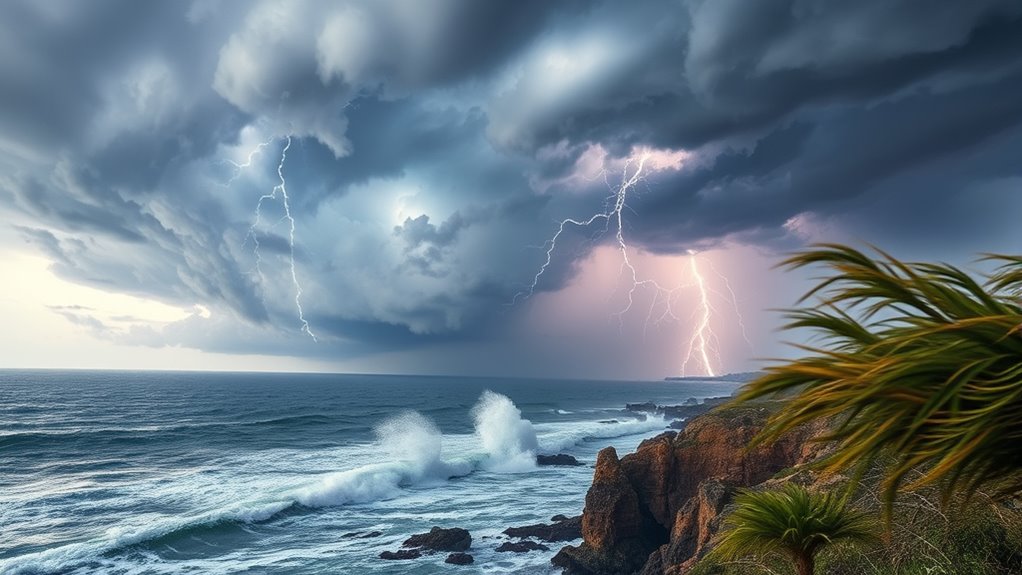
Have you ever wondered how scientists determine the impact of human activities on our planet’s climate? One significant factor they study is ocean acidification, which occurs when excess carbon dioxide from burning fossil fuels dissolves into seawater. This process makes the oceans more acidic, threatening marine life like corals and shellfish that rely on calcium carbonate to build their skeletons. By monitoring these changes, scientists can gauge how human actions are altering ocean chemistry and, in turn, influencing climate patterns. These insights help connect the dots between greenhouse gas emissions and the increase in extreme weather events, such as hurricanes, droughts, and heavy storms. To combat this, many experts advocate for a shift toward renewable energy sources—like solar, wind, and hydroelectric power—that produce little to no greenhouse gases. Moving to renewable energy is essential, as it reduces the amount of carbon dioxide entering the atmosphere, slowing ocean acidification and mitigating climate change’s worst impacts. Additionally, understanding climate feedback mechanisms is crucial for improving the accuracy of climate models and predictions.
Understanding the link between human activity and extreme weather involves detailed climate modeling. Scientists analyze historical data and current trends, taking into account factors like rising global temperatures and changing ocean conditions. They use sophisticated computer models to simulate future scenarios based on different levels of greenhouse gas emissions. These models help predict how increased carbon dioxide, partly driven by fossil fuel combustion, will continue to warm the planet and intensify weather extremes. When models project more frequent and severe storms, heatwaves, or floods, policymakers can better prepare communities and implement mitigation strategies. One of the most effective ways to reduce the severity of extreme weather events is by decreasing reliance on fossil fuels and investing in renewable energy. These clean energy sources not only reduce emissions but also help stabilize climate patterns, making weather more predictable and less destructive.
Moreover, understanding climate science empowers you to make more informed decisions and advocate for sustainable practices. You can support policies that promote renewable energy development, reduce carbon footprints, and protect natural ecosystems that buffer against climate impacts. For instance, preserving forests and restoring wetlands can absorb excess carbon and reduce the risk of flooding and erosion. By recognizing the interconnectedness of ocean health, energy choices, and weather extremes, you become part of the solution. Every effort counts, from individual lifestyle changes to supporting large-scale renewable energy projects. The more we comprehend about how human actions influence the climate, the better equipped we are to adapt and prevent the worst outcomes of extreme weather events. Ultimately, embracing sustainable practices and clean energy sources can help preserve our planet’s stability for future generations.
Frequently Asked Questions
How Can Individuals Personally Prepare for Extreme Weather Events?
You should prepare for extreme weather events by assembling a personal emergency kit with essentials like water, food, first aid supplies, and important documents. Strengthen your property resilience by securing windows, doors, and roofs, and clearing gutters. Stay informed about weather alerts and have a plan to evacuate if needed. Regularly review and update your emergency supplies and safety plans to make certain you’re ready for any sudden, severe weather.
What Role Do Governments Play in Climate Change Mitigation?
Governments play a vital role in climate change mitigation by establishing policy initiatives that limit greenhouse gas emissions and promote renewable energy. They also participate in international agreements, like the Paris Agreement, to coordinate efforts globally. By implementing regulations and incentivizing sustainable practices, governments help reduce climate impacts. Your support for these policies can drive change, encouraging stronger commitments and helping protect the planet for future generations.
Are There Any Regions Less Affected by Extreme Weather?
Some regions are less affected by extreme weather due to higher regional resilience and lower climate variability. You might find that areas with stable climates, strong infrastructure, and effective disaster preparedness experience fewer impacts. Coastal regions with frequent storms or drought-prone areas tend to be more vulnerable. While no place is completely immune, these factors help certain regions withstand climate extremes better, offering some protection against the worst effects of climate change.
How Does Climate Change Influence the Frequency of Natural Disasters?
Climate change amps up the frequency of natural disasters like a roaring fire, speeding through climate feedback loops. When greenhouse gas emissions rise, they trap more heat, intensifying storms, floods, and droughts. Just as a snowball grows bigger downhill, these feedback loops accelerate disaster occurrence. You’ll notice that as emissions increase, the planet’s weather becomes more extreme, making natural disasters more frequent and severe, impacting communities worldwide.
What Are the Economic Impacts of Extreme Weather on Communities?
Extreme weather imposes a significant economic burden on your community, disrupting businesses, damaging infrastructure, and increasing recovery costs. These events strain local resources and reduce productivity, making recovery slower and more expensive. However, investing in community resilience helps mitigate these impacts by strengthening infrastructure, planning better response strategies, and promoting sustainable development. This proactive approach minimizes economic losses and boosts your community’s ability to bounce back quickly from extreme weather events.
Conclusion
As you grasp the dance of climate science, you see how extreme weather is nature’s fierce symphony, echoing the changes we’ve set in motion. Every storm, heatwave, or flood is a drumbeat warning, urging us to listen and act. The more you understand, the clearer it becomes — our choices carve the rhythm of tomorrow’s weather. So, stand firm, tune in, and help compose a future where balance and harmony reign.