
To resolve conflicts effectively, focus on clear communication by using “I” statements and practicing active listening. Keep your emotions in check, and take a pause if needed to stay calm. Show empathy and understand your partner’s perspective, while avoiding blame or defensiveness. Creating a safe space for honest dialogue helps both of you feel heard and respected. If you want to learn more about building healthier conflict habits, keep exploring these strategies.
Key Takeaways
- Use “I” statements to express feelings and needs without assigning blame.
- Practice active listening and paraphrasing to ensure mutual understanding.
- Manage emotions by taking breaks and staying calm during disagreements.
- Foster an open environment that encourages honest, respectful communication.
- Focus on collaborative problem-solving to find solutions that satisfy both partners.
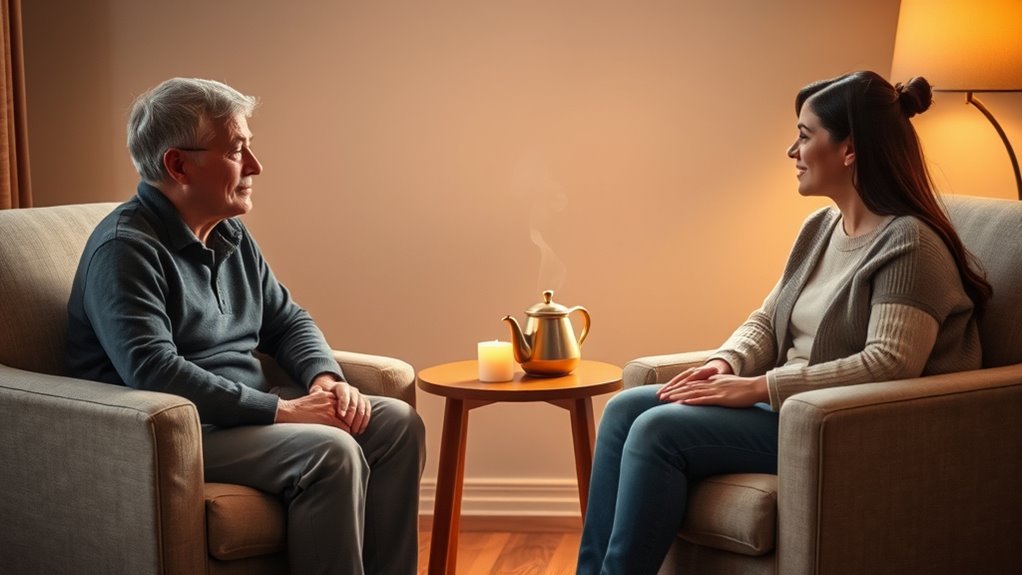
When conflicts arise in a relationship, it is vital to approach them with effective strategies to foster understanding and growth. One of the most powerful tools you can use is developing strong communication techniques. These techniques help you express your feelings clearly while listening actively to your partner. Instead of attacking or blaming, focus on “I” statements that describe your emotions and needs without sounding accusatory. For example, say, “I feel upset when…” rather than “You always…” This shift minimizes defensiveness and opens the door for honest dialogue. Remember, good communication isn’t just about talking; it’s about listening with genuine attention and patience. Practice reflective listening: paraphrase what your partner says to ensure you understand their perspective. This not only clarifies misunderstandings but also shows you value their feelings. Over time, these communication techniques become second nature, reducing the chances of conflicts escalating unnecessarily. Incorporating effective conflict management strategies can further enhance your ability to resolve disagreements constructively. Another essential element in resolving conflicts is emotional intelligence. This skill enables you to recognize, understand, and manage your own emotions while being empathetic to your partner’s feelings. When you’re emotionally intelligent, you’re better equipped to stay calm during disagreements, which helps prevent the situation from spiraling out of control. If you notice yourself becoming angry or defensive, take a deep breath or suggest a short break. This pause allows you to regain composure and approach the conflict more rationally. When you understand your partner’s emotional state, you can respond with compassion and patience, rather than frustration or indifference. Cultivating emotional intelligence also involves being aware of your triggers and patterns, so you can address issues proactively instead of reactively. Recognizing your emotional responses gives you the power to choose constructive ways to handle disagreements rather than falling into destructive habits.
Using these skills together creates a foundation for healthier conflict resolution. Effective communication techniques ensure that both of you feel heard and respected, while emotional intelligence helps you navigate the emotional landscape of disagreements with empathy and self-awareness. When you combine these approaches, you foster a safe environment for addressing issues openly and honestly. This doesn’t mean conflicts will disappear, but it does mean you’ll handle them more constructively, leading to deeper understanding and stronger trust. Remember, resolving conflicts isn’t about winning or being right; it’s about working together to find solutions that respect both your feelings and needs. By mastering communication techniques and emotional intelligence, you set the stage for a more harmonious and resilient relationship.
Top picks for "conflict resolution strategy"
Open Amazon search results for this keyword.
As an affiliate, we earn on qualifying purchases.
Frequently Asked Questions
How Can Couples Rebuild Trust After a Major Betrayal?
To rebuild trust after a major betrayal, you need to start with the forgiveness process, allowing both of you to acknowledge hurt and commit to healing. Be honest and transparent, rebuilding honesty step by step. Communicate openly, listen actively, and show consistency in your actions. Over time, these efforts can restore confidence, helping you both move forward stronger and more connected. Patience and dedication are key throughout this journey.
What Are Effective Ways to Handle Recurring Arguments?
Think of recurring arguments as storm clouds gathering on your horizon. To clear the skies, you need to navigate communication barriers and recognize emotional triggers. Speak openly and listen actively, turning down the volume on defensiveness. When you feel tension rising, pause, breathe, and identify what’s fueling the conflict. By doing so, you steer your relationship toward calmer waters, transforming storms into opportunities for understanding and growth.
How Do Cultural Differences Impact Conflict Resolution?
Cultural differences shape how you approach conflict resolution by influencing cultural norms and communication barriers. You might find that some cultures prefer direct, open conversations, while others value harmony and indirect communication. Recognizing these differences helps you adapt your style, ensuring respectful dialogue. You can bridge gaps by being patient, asking questions, and respecting each other’s norms, which fosters mutual understanding and effective conflict resolution despite cultural disparities.
When Should Couples Seek Professional Counseling?
You should seek professional counseling when emotional awareness is lacking, and conflicts become frequent or intense, especially if conflict timing worsens misunderstandings. If you notice that you’re unable to communicate effectively or resolve issues on your own, a counselor can help you develop healthier strategies. Don’t wait until problems escalate—early intervention fosters better understanding and strengthens your relationship, ensuring both partners feel heard and valued.
How Can Couples Maintain Intimacy During Conflicts?
Oh, maintaining intimacy during conflicts? Easy! Just throw emotional vulnerability out the window—said no one ever. Instead, you actively listen and show genuine empathy. When you’re open to understanding your partner’s feelings, even amid disagreements, it keeps the connection alive. Remember, intimacy isn’t about avoiding fights but making space for honest conversation. So, embrace vulnerability and listen actively—your relationship will thank you, even when you don’t feel like it.
Conclusion
Remember, conflict is like a storm—difficult but temporary. By choosing patience, understanding, and open communication, you can navigate these turbulent clouds and find clear skies together. Think of your relationship as a garden that needs tending; with gentle care and honest dialogue, you’ll cultivate trust and harmony. Embrace these strategies as your compass, guiding you through the storm to calmer, brighter days—where love blossoms even amidst challenges.