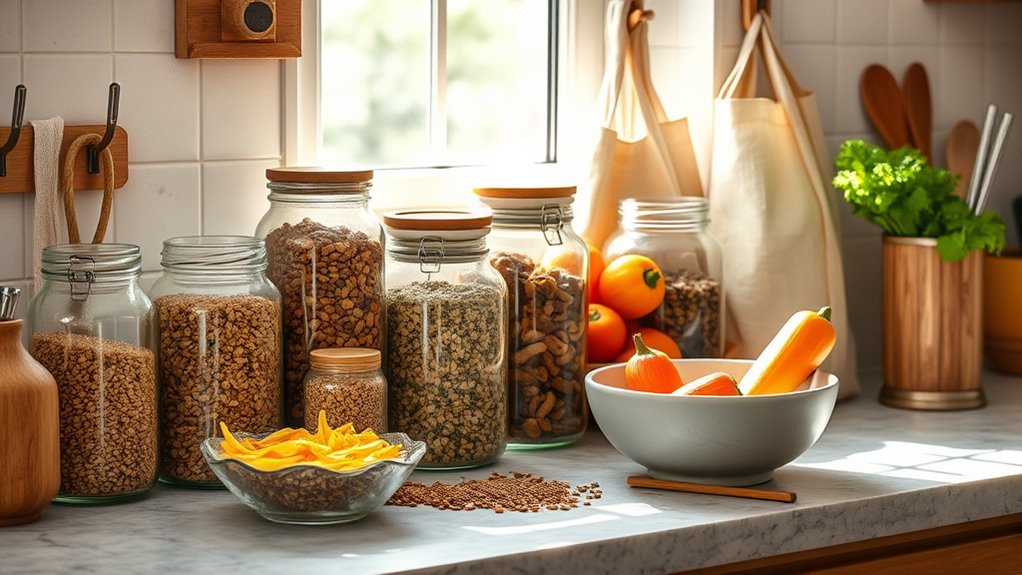

Adopting zero-waste habits helps you reduce your environmental impact by making mindful choices daily. You can start by composting food scraps and yard waste to enrich your soil naturally, or switch to reusable bags, containers, and packaging to cut down on plastic waste. Supporting eco-friendly packaging and buying in bulk further minimizes waste. These small, consistent actions create a ripple effect, leading to significant benefits over time. Keep exploring to discover more simple ways to live sustainably.
Key Takeaways
- Implement composting to transform organic waste into nutrient-rich soil and reduce landfill contributions.
- Use eco-friendly packaging like biodegradable or recyclable materials to minimize pollution.
- Adopt reusable bags, containers, and buy in bulk to decrease disposable waste.
- Separate recyclables properly and incorporate raw food diets to support sustainable consumption.
- Practice consistent eco-friendly habits to inspire others and promote long-term zero-waste living.
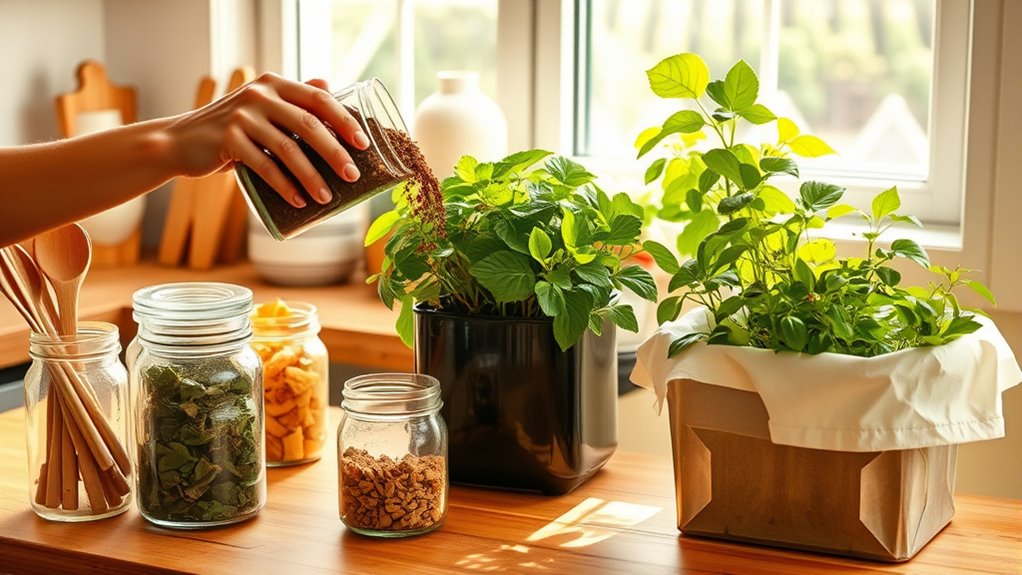
Have you ever wondered how small changes in your daily routine can make a big difference for the planet? One simple step you can take is adopting composting techniques. Composting turns organic waste like food scraps and yard waste into nutrient-rich soil, reducing the amount of trash that ends up in landfills. Instead of tossing banana peels or coffee grounds in the trash, you can set up a compost bin in your backyard or use community composting programs if space is limited. This not only minimizes methane emissions from decomposing waste but also provides you with natural fertilizer for your garden. Composting is a straightforward, eco-friendly habit that, once established, becomes second nature. Plus, it encourages you to be more mindful of what you throw away, fostering a zero-waste mindset.
Alongside composting, switching to eco-friendly packaging is another impactful change. Many products now come wrapped in single-use plastics or non-biodegradable materials, contributing to pollution and harming wildlife. By opting for products with sustainable packaging, you help reduce waste and support companies committed to environmental responsibility. Carry reusable bags, containers, and wraps whenever possible, and choose brands that prioritize biodegradable or recyclable packaging. This simple shift can considerably cut down on the tons of plastic waste generated each year.
Incorporating these habits into your routine also means reevaluating how you shop and dispose of items. For example, bringing your own reusable produce bags to the grocery store or buying in bulk can lessen your reliance on disposable packaging. When it’s time to dispose of waste, separate recyclables carefully and ensure you’re following local recycling guidelines. Additionally, understanding the benefits of raw food diets can inspire you to incorporate more fresh, unprocessed foods into your meals, further reducing packaging waste and supporting sustainable eating habits. Consistently practicing these habits creates a ripple effect, inspiring friends and family to do the same. Over time, these small, consistent actions compound into meaningful environmental benefits.

VIVOSUN Outdoor Tumbling Composter Dual Rotating Batch Compost Bin, 43 Gallon Black Door
Twin chambers: Two separate chambers allow one side to finish composting while leaving the other side available to…
As an affiliate, we earn on qualifying purchases.
As an affiliate, we earn on qualifying purchases.
Frequently Asked Questions
How Can I Start Reducing Waste With a Busy Schedule?
To start reducing waste with a busy schedule, prioritize time management by setting small, achievable goals. Use quick tips like carrying reusable bags and bottles, and batch your errands to save time. Incorporate waste-reducing habits into daily routines, such as using cloth napkins or composting kitchen scraps. Even brief moments of mindful choices can make a big difference, helping you stay eco-friendly without disrupting your busy life.
What Are the Most Effective Zero-Waste Shopping Tips?
Think of zero-waste shopping as hitting two birds with one stone. Always bring reusable containers to avoid plastic bags, and opt for bulk shopping to reduce packaging waste. Plan your trips to minimize multiple visits, and bring your own bags and jars. By staying organized and prepared, you make eco-friendly choices effortless, turning sustainable habits into your daily routine without breaking a sweat.
How Do I Handle Waste When Living in a Small Apartment?
When living in a small apartment, you handle waste by maximizing recycling options and composting methods. Keep a dedicated bin for recyclables and rinse items before recycling. Use a compact compost bin or worm bin in your kitchen for organic waste, ensuring it’s well-ventilated to prevent odors. Regularly empty and clean these containers to stay hygienic. This way, you reduce waste and stay eco-friendly without cluttering your space.
Are Zero-Waste Products More Expensive Than Conventional Ones?
Zero-waste products often seem like they carry a heavier price tag at first, but they’re worth the investment. When you do a cost comparison, you’ll find that many are actually more affordable over time because they last longer and reduce waste. While some zero-waste items may be pricier initially, their durability and reusability make product affordability better in the long run, turning waste into savings.
How Can I Encourage Others to Adopt Sustainable Habits?
You can encourage others to adopt sustainable habits through community engagement and educational outreach. Share your experiences, invite friends to eco-friendly events, and highlight practical benefits. Lead by example, demonstrating zero-waste practices daily. Use social media to spread awareness and resources. Engaging your community fosters collective action, making sustainable living more approachable and inspiring others to join your efforts for a greener future.
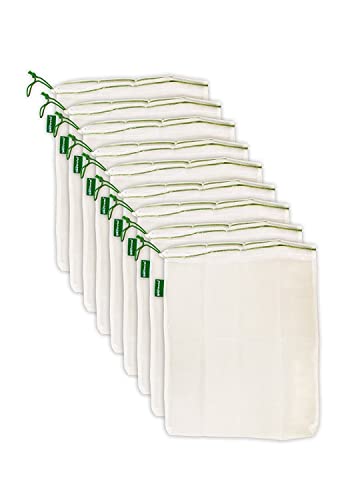
Earthwise Reusable Mesh Produce Bags – Washable Set of 9 Premium Bags, TRANSPARENT Lightweight, Strong SEE-THROUGH Mesh for shopping, transporting and storing fruits and veggies.
SUPER VALUE – You will receive a total of 9 Mesh Produce Bags! SIZE: Each Bag Measures 11"…
As an affiliate, we earn on qualifying purchases.
As an affiliate, we earn on qualifying purchases.
Conclusion
By adopting zero-waste habits, you’re making a real difference for the planet. Did you know that if everyone reduced their waste by just 10%, we could save over 1.5 billion pounds of plastic annually? Every small change adds up, so keep recycling, reusing, and reducing. Your efforts not only help the environment but also inspire others to join the movement toward a more sustainable future. Together, you can create a lasting positive impact.

Honeycomb Packing Paper – Biodegradable Bubble Wrap Alternative 15"x100 FT, 80gsm with 20 Fragile Sticker Labels | Eco-Friendly Cushioning for Shipping, Moving & Small Business Packaging,Fragile Items
🌿 BIODEGRADABLE BUBBLE WRAP ALTERNATIVE – Ditch plastic for good! Our 80gsm honeycomb Packing paper offers the same…
As an affiliate, we earn on qualifying purchases.
As an affiliate, we earn on qualifying purchases.

Airtight Food Storage Containers with Lids, Vtopmart 24 pcs Plastic Kitchen and Pantry Organization Canisters for Cereal, Dry Food, Flour and Sugar, BPA Free, Includes 24 Labels,Black
Help Organize Your Kitchen and Pantry— Imagine every time walking to your kitchen or pantry, found everything is…
As an affiliate, we earn on qualifying purchases.
As an affiliate, we earn on qualifying purchases.