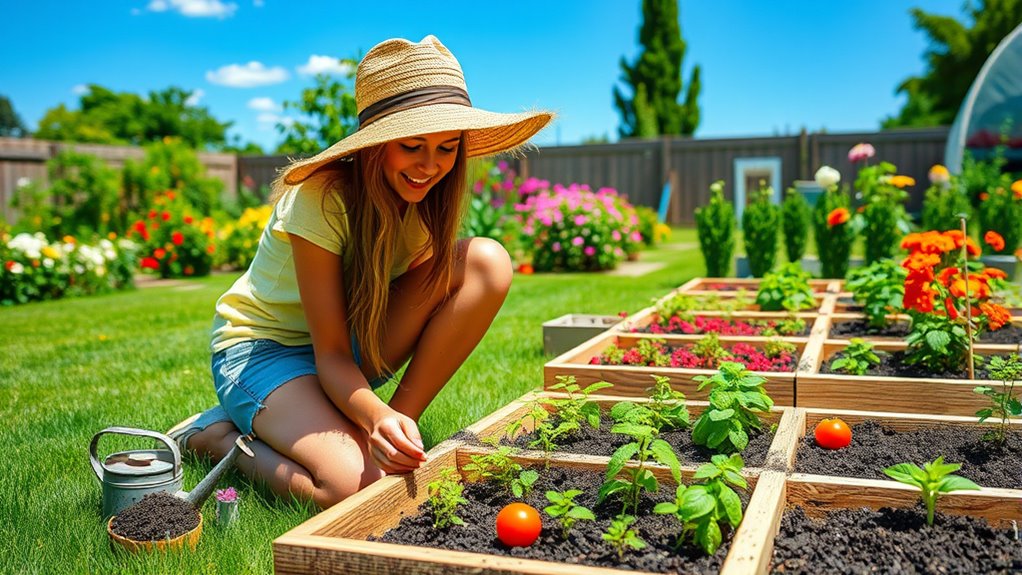

Starting a garden is a rewarding process that begins with learning about your plants and understanding your environment. To succeed, develop a watering schedule, identify common pests early, and choose plants suited to your soil and climate. Be patient and accept setbacks as part of the journey, refining your practices with each season. Stay curious about new techniques and consider using garden statistics to guide your decisions—keep exploring to grow a thriving, resilient garden.
Key Takeaways
- Research suitable plants for your climate and soil to ensure a thriving garden.
- Learn proper watering techniques and establish a consistent schedule for healthy growth.
- Identify common pests early and implement integrated pest management practices.
- Start with small, manageable garden beds and expand as you gain experience.
- Continuously observe, learn, and adapt your gardening methods for better results.
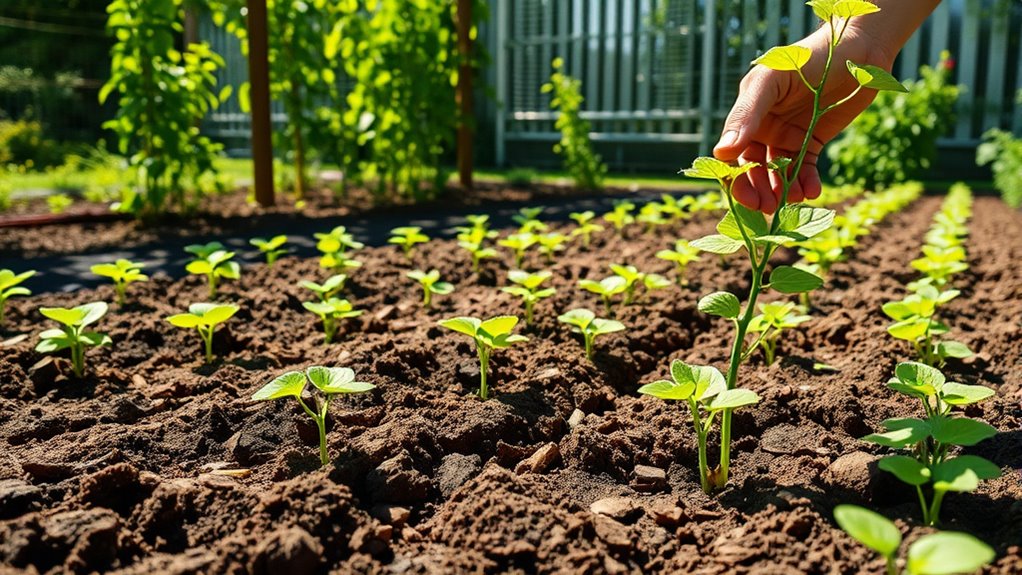
Starting a garden isn’t just about planting seeds; it’s about nurturing your space with knowledge and care. Knowing how to manage garden pests and applying proper watering techniques will help you grow healthy, resilient plants. Keep an eye on your garden, learn as you go, and don’t get discouraged by setbacks. With patience and attention, you’ll create a lush, productive garden that rewards your efforts every season. Remember, every gardener starts somewhere, and the more you learn about pests and watering, the more successful your garden will be. Additionally, being aware of common garden statistics can help you set realistic expectations and better plan your garden’s layout and plant choices.

Soil pH Paper Test Kit – 100 Tester Strips (3.5-9 Range) – Use for Testing Garden Home Lawn Grass Vegetable Gardening Dirt Yard Compost Outdoor and Indoor Plants
Accurate Soil pH Testing: Dewildetradingco Soil pH Test Strips offer measurements of soil pH levels (pH 3.5-9). As…
As an affiliate, we earn on qualifying purchases.
As an affiliate, we earn on qualifying purchases.
Frequently Asked Questions
What Are the Best Plants for Beginner Gardeners?
You should start with easy-care plants like lettuce, radishes, and marigolds, which thrive in various conditions. These plants benefit from companion planting, which naturally deters pests and reduces the need for chemicals. Marigolds, in particular, help with pest control, making your garden more manageable. Focus on these resilient options, and you’ll quickly gain confidence while enjoying healthy, flourishing plants that set the foundation for future gardening success.
How Much Sunlight Does a Garden Need Daily?
Your garden needs about 6 to 8 hours of sunlight daily, like a sunflower soaking up the sun’s warmth. Sunlight requirements vary by plant, so check individual needs. Aim for consistent daily sunlight duration to help your plants thrive. If sunlight is limited, consider placing shade-tolerant plants in those spots. Proper sunlight exposure energizes your garden, turning it into a lush, vibrant oasis.
What Is the Ideal Soil Ph for Most Plants?
You should aim for a soil pH of 6.0 to 7.0 for most plants. To find out, perform a pH testing using a kit or pH meter. This test measures soil acidity or alkalinity, helping you make adjustments if needed. Maintaining the right pH creates ideal conditions, ensuring your plants absorb nutrients properly and grow healthy. Regular testing keeps your garden thriving and sets you up for success.
How Often Should I Water My Garden?
You should water your garden early in the morning or late in the afternoon, aiming for a consistent watering schedule that keeps the soil moist but not waterlogged. Ironically, even drought-tolerant plants need regular watering to thrive, so don’t assume they can go without. Generally, watering once or twice a week suffices, but adjust based on weather—more during heatwaves and less if it rains.
When Is the Best Time to Start Planting?
You should start planting during the ideal seasonal planting time for your region, usually in spring or early fall, depending on your climate. Plan your garden carefully with garden planning to select the right crops for the season. Check local frost dates and soil conditions to guarantee your plants thrive. Starting at the right time helps you maximize your garden’s success and enjoy a bountiful harvest.

Water Timer for Outdoor Garden Hose, Hose Timer with Rain Delay/Manual Mode, Automatic Drip Irrigation Controller System for Lawn Yard Garden Watering
【Easy to Set Up Program】Rotate the dial and press the buttons to set clock, how often (watering frequency),…
As an affiliate, we earn on qualifying purchases.
As an affiliate, we earn on qualifying purchases.
Conclusion
Starting a garden is like planting a tiny seed of hope that blooms into a lush paradise. With patience, curiosity, and a willingness to learn, you’ll watch your green thumb grow stronger each day. Remember, every mistake is just a stepping stone on your gardening journey. Before you know it, your garden will be a vibrant tapestry of colors and life, a beautiful gift you’ve nurtured from the ground up. Happy gardening!

Plant Growing Kit with LED Grow Light & Root Viewing Window, Indoor Garden Kit for Beginners, Vegetable & Herb Garden, Indoor Gardening System, Soil & Seed Starter Germination Kit, Grow Your Own Plant
Indoor Garden Kit with LED Grow Light – Create your own indoor herb garden with a bright, full…
As an affiliate, we earn on qualifying purchases.
As an affiliate, we earn on qualifying purchases.

BioAdvanced Fruit, Citrus & Vegetable Insect Control for Edible Gardening, 32 oz
SPECIAL FORMULA: Specially formulated to use on over 100 listed fruits, vegetables, and citrus plants to kill listed…
As an affiliate, we earn on qualifying purchases.
As an affiliate, we earn on qualifying purchases.