
To declutter and simplify your home, start by evaluating what you really need and remove the rest. Use DIY storage options like repurposed crates or wall-mounted shelves to maximize space. Incorporate multi-purpose furniture that hides clutter, and label bins for easy access. Maintain your organization through regular tidying and developing habits that prevent clutter build-up. When you put these tips into action, you’ll create a cleaner, more functional space—discover more ways to optimize your home with simple hacks.
Key Takeaways
- Assess and remove unnecessary items to reduce clutter and focus on essentials.
- Use DIY solutions like repurposed crates and wall-mounted cubbies for custom storage.
- Maximize space with vertical storage, multi-purpose furniture, and hidden compartments.
- Implement labeling and organizational systems for easy access and consistency.
- Regularly maintain routines and habits to prevent clutter buildup and sustain organization.
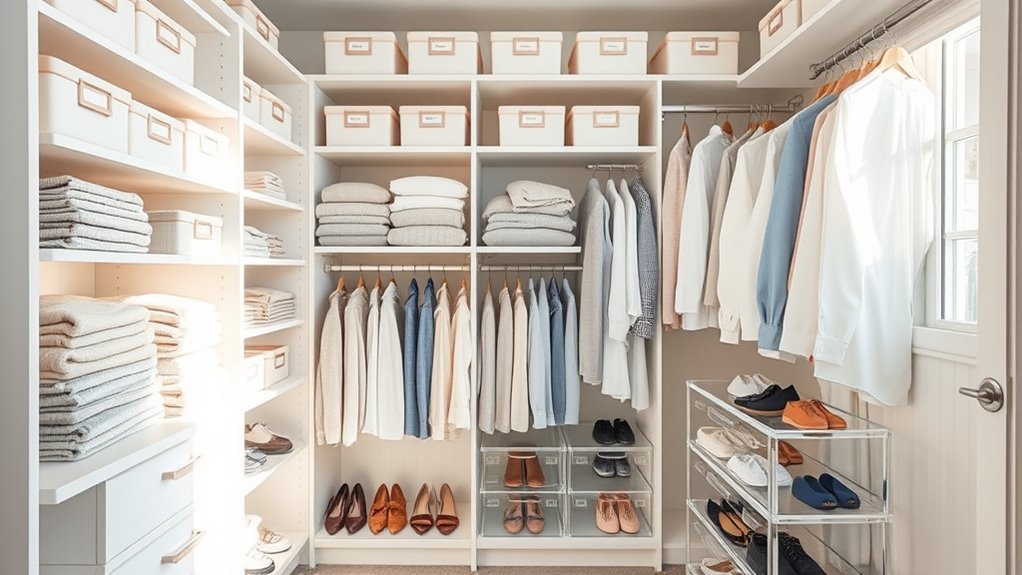
Are you tired of clutter taking over your space? It’s frustrating to feel overwhelmed every time you step into a room, but the good news is that you can regain control with some simple home organization hacks. One of the most effective ways to do this is by exploring smart storage solutions that fit your lifestyle. Whether you’re dealing with a tiny apartment or a spacious house, there are ways to maximize your space and keep everything in its place. Start by evaluating what you truly need to keep and what can be donated or discarded. Once you’ve decluttered, consider investing in or creating DIY projects that serve as custom storage options. Building your own shelves, bins, or wall-mounted organizers can be both cost-effective and tailored to your specific needs.
Declutter, evaluate needs, and create DIY storage solutions to maximize space and stay organized.
DIY projects are a fantastic way to personalize your storage solutions, making your space more functional and visually appealing. For example, repurposing old crates into storage boxes or mounting simple wooden cubbies on the wall can drastically improve your organization. These projects not only help you save money, but they also give you the satisfaction of creating something unique for your home. Plus, they’re usually quick to assemble and require minimal tools, making them accessible even if you’re not a seasoned DIYer. When designing your storage solutions, think vertically—use wall space for hooks, racks, or hanging baskets to free up surface areas. This approach helps reduce clutter on counters and floors, giving your home a cleaner, more open feel.
Another tip is to utilize multi-purpose furniture that doubles as storage. Ottomans with hidden compartments, beds with built-in drawers, or coffee tables with storage underneath can hide away items that tend to pile up. If you’re feeling ambitious, you can even create custom furniture pieces that fit perfectly into your space and meet your storage needs. Remember, organization isn’t just about storing things out of sight; it’s about creating systems that make it easier to find what you need when you need it. Labeling bins, baskets, and shelves adds clarity and helps everyone in your household stay organized. Additionally, maintaining an awareness of workaholic tendencies can help you set aside dedicated time for organizing, preventing clutter from accumulating again.
Incorporating these smart storage solutions and DIY projects into your routine doesn’t have to be overwhelming. Take it step by step, and don’t be afraid to experiment with different ideas until you find what works best for you. The key is to stay consistent and keep your space tidy. With a little effort, you’ll transform chaos into calm, making your home a more peaceful and enjoyable place to be.

Jusgym 4 Pack Heavy Duty Garage Wall Shelving Set (2x3ft), Wall Mounted Garage Shelves 1400lbs Capacity, 24"x72" Shelf Storage Rack Floating Shelves, Black
🏆【Heavy-Duty Load Capacity】- Jusgym garage shelving wall mounted system is engineered with premium steel, offering exceptional strength. Each…
As an affiliate, we earn on qualifying purchases.
As an affiliate, we earn on qualifying purchases.
Frequently Asked Questions
How Often Should I Declutter My Home?
You should declutter your home at least once every three to six months to maintain order. Establish a regular decluttering schedule to prevent clutter from piling up and to keep your space organized. Use effective storage solutions during each session to maximize space and efficiency. By staying consistent with your schedule, you’ll find it easier to manage clutter and create a more streamlined, relaxing environment.
What Are Eco-Friendly Organization Options?
You can choose eco-friendly organization options like sustainable storage solutions and biodegradable containers. These alternatives help reduce plastic waste and support environmental health. Opt for bamboo or recycled materials for storage shelves and bins, and select biodegradable containers for food or small items. By making these conscious choices, you not only keep your home organized but also contribute positively to the planet. It’s a simple step toward greener living.
How Do I Organize Shared Spaces?
To organize shared spaces, start by choosing practical storage solutions like bins or shelves that everyone can access easily. Implement label systems to clearly identify where things belong, making it simple for everyone to put items back in their designated spots. Encourage open communication about organization rules and involve everyone in maintaining the space. Regularly reassess and adjust the setup to keep the area tidy and functional for all users.
What Tools Are Best for Small Spaces?
You should consider using storage containers that maximize space and keep things tidy, like stackable bins or under-bed drawers. Space-saving furniture is also a game-changer; opt for multi-functional pieces such as beds with built-in drawers or fold-out desks. These tools help you utilize every inch effectively, making small spaces feel more open and organized. With the right storage containers and furniture, you’ll transform your space into a functional, clutter-free haven.
How Can I Maintain Organization Long-Term?
Ever wonder how to keep your space organized long-term? You should establish simple daily routines that include tidying up and returning items to their designated storage solutions. Regularly reassess your space to avoid clutter buildup. Keep essentials handy but organized, and develop habits like putting things away immediately. Consistency is key—by making these routines part of your day, you’ll maintain an organized, clutter-free home effortlessly.

DUMOS 43in Storage Ottoman Bench, Storage Chest, End of Bed Foot Rest Stool with Padded Seat, Bedroom Bench for Living Room, Support 660lbs, Grey
【Sturdy & Comfortable】: This storage ottoman bench is supported by thick MDF panels for excellent stability. The top…
As an affiliate, we earn on qualifying purchases.
As an affiliate, we earn on qualifying purchases.
Conclusion
By implementing these home organization hacks, you’ll create a calmer, more efficient space. Imagine turning a cluttered kitchen drawer into a tidy zone with simple dividers—saving you time and frustration. For example, Sarah cleared her cluttered closet by using labeled bins, making it easy to find what she needed. Small changes like these can transform your home into a stress-free haven. Start decluttering today and enjoy the benefits of a simplified, organized space.

150 Pcs Labels for Storage Bins, 6 X 4 Inch Removable Labels for Storage Bins, Tear Resistant No Residue Storage Bin Label, Matte White Blank Box Label for School, Home, Business
Quality: Our Large Labels For Storage Bins are made from synthetic paper and high-quality adhesive, offering durability and…
As an affiliate, we earn on qualifying purchases.
As an affiliate, we earn on qualifying purchases.

ECR4Kids Streamline 10-Section Wall-Mounted Hanging Cubby Coat Locker, Classroom Furniture, Natural
Space Saving: Save valuable floor space in the classroom or playroom with this wall-mounted birch wooden storage locker;…
As an affiliate, we earn on qualifying purchases.
As an affiliate, we earn on qualifying purchases.