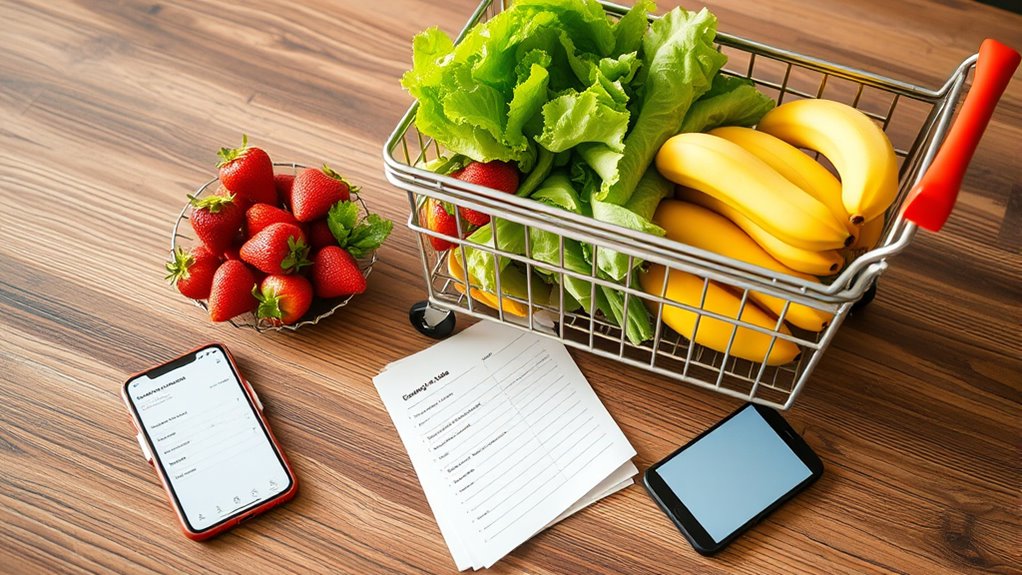

To shop efficiently and save money, plan your meals in advance and create a detailed shopping list to avoid impulse buys. Familiarize yourself with the store layout so you can navigate directly to essentials and sales sections, reducing time and temptation. Stick to your list and avoid unnecessary aisle wandering. Recognize product placements to pick fresher, cheaper options, and target sale items to maximize savings. Keep these strategies in mind, and you’ll discover even more tips to optimize your shopping experience.
Key Takeaways
- Familiarize yourself with the store layout to navigate efficiently and avoid impulse buys.
- Plan meals and create a detailed shopping list to purchase only necessary items.
- Shop during restock times and target sale sections to maximize savings on fresh and essential goods.
- Stick to your shopping list and avoid wandering aisles to prevent unnecessary purchases.
- Use store knowledge to select fresher, more affordable options and reduce food waste.
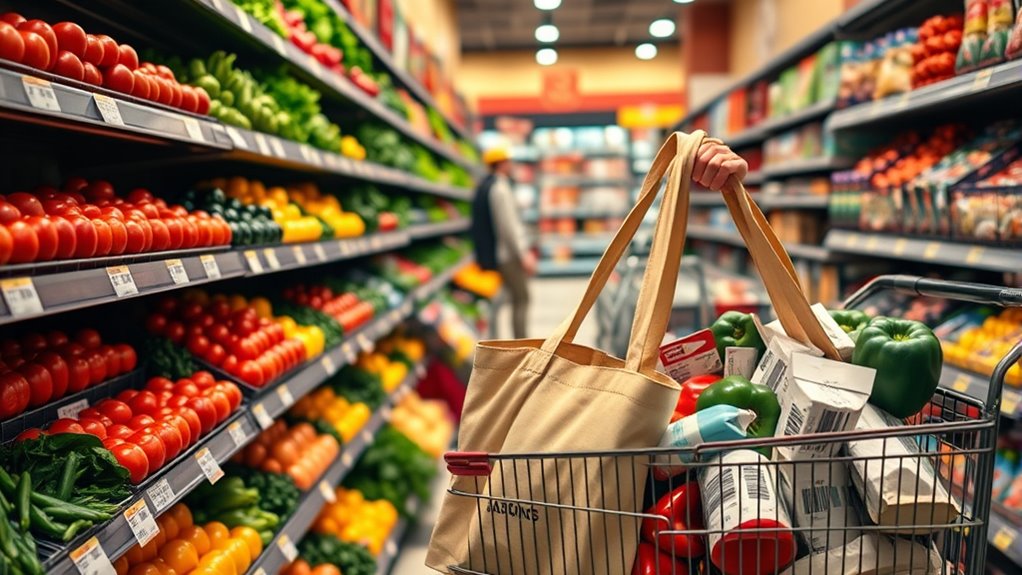
Have you ever wondered how you can save money while grocery shopping without sacrificing quality? The key lies in smart planning, which includes understanding the store layout and incorporating meal prep into your routine. When you familiarize yourself with the store layout, you can steer more efficiently, avoiding unnecessary detours that lead to impulse buys. Many stores organize their aisles to promote certain products, often placing high-margin items at eye level or near checkout counters. By knowing where essentials and sale items are located, you can quickly gather what you need, reducing time and temptation to spend extra.
Knowing your store layout helps you shop efficiently and avoid impulse buys.
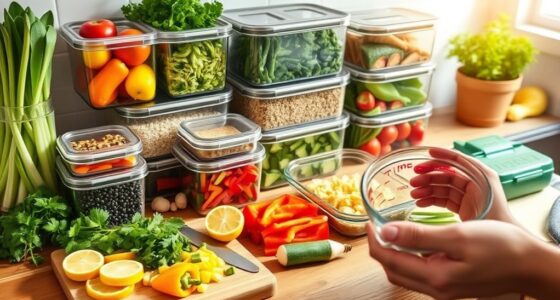
Meal prep is another powerful tool to stretch your grocery budget. When you plan your meals ahead of time, you buy only what you need, minimizing waste and avoiding impulse purchases. Preparing your meals in advance helps you stick to a shopping list, which is essential for saving money. Plus, meal prep allows you to buy ingredients in bulk, which is often more economical than purchasing individual items. When you prepare your ingredients in advance, you also eliminate the need for last-minute takeout or convenience foods, which tend to be pricier and less healthy.
Additionally, understanding store layout helps you leverage sales and promotions more effectively. For example, if you know where produce, dairy, or meat sections are located, you can plan to buy items when they’re on sale, further saving money. It also allows you to pick the freshest, most affordable options, especially if you shop during peak times when stores restock. Being aware of the product placement strategies used by stores can help you avoid less fresh or more expensive options placed at eye level.
In essence, a combination of meal prep and knowing your store layout makes your grocery shopping more intentional and cost-effective. It turns what could be a stressful, costly chore into a strategic activity that saves you money and time. With practice, you’ll become faster at navigating stores and more disciplined in sticking to your list, ensuring that your grocery trips are both economical and efficient.

Evercio Meal Plan & Grocery List Magnetic Notepad for Refrigerator | For Shopping Lists Planner Organizer Memo Note Pad for Fridge | Kitchen Gift for Mother, Girlfriend | 7×10 Inches, 52 Sheets
[ FULLY MAGNETIC BACK ] – Stick this magnetic meal planner / grocery list notepad to a fridge…
As an affiliate, we earn on qualifying purchases.
As an affiliate, we earn on qualifying purchases.
Frequently Asked Questions
How Can I Avoid Impulse Buys at the Store?
To avoid impulse buys, practice mindful purchasing by sticking to your shopping list. Before heading to the store, plan your meals and jot down only the essentials. As you shop, resist the temptation of tempting displays by focusing on your list. Avoid browsing unnecessary sections, and set a budget to keep your spending in check. This way, you stay intentional and save money.
What Are the Best Apps for Grocery Deals?
You should try apps like Ibotta, Checkout 51, or Rakuten, which offer great digital coupons and cashback rewards. These apps help you find grocery deals quickly, saving you money on your shopping trips. Just scan your receipts or browse offers before shopping, so you can maximize savings. Using these apps makes it easy to access discounts and earn cashback, ensuring you get the best deals every time.
How Do I Estimate My Weekly Grocery Budget?
To estimate your weekly grocery budget, start with meal planning to determine what you need. Track your current spending and use price comparison apps to find the best deals. Consider your typical grocery list and set a realistic limit based on your income and expenses. Adjust as needed, and keep monitoring your spending to stay within your budget, ensuring you save without sacrificing essential items.
What Are Effective Tips for Shopping With Children?
A word to the wise: “Don’t put all your eggs in one basket.” When shopping with children, involve them in family involvement by letting them pick a few snacks, which teaches responsibility. Use snack strategies like healthy, easy-to-grab options to keep them satisfied and focused. Keep trips short and engaging, and praise good behavior to make shopping a positive experience for everyone.
How Can I Reduce Food Waste After Shopping?
You can reduce food waste by practicing meal prep and proper food storage. Plan your meals based on what you’ve bought, so you use ingredients efficiently and avoid leftovers. Store perishable items in airtight containers and at the correct temperatures to prolong freshness. Regularly check your fridge for expired or spoiled foods, and organize your pantry to see what you have at a glance. This way, you minimize waste and save money.

The Real Food Grocery Guide: Navigate the Grocery Store • Ditch Artificial and Unsafe Ingredients • Bust Nutritional Myths • Select the Healthiest Foods Possible
As an affiliate, we earn on qualifying purchases.
As an affiliate, we earn on qualifying purchases.
Conclusion
Remember, “A penny saved is a penny earned.” By planning your grocery trips, sticking to a list, and looking for deals, you can save money and reduce waste. Stay organized, avoid impulse buys, and shop smartly to make the most of your budget. With a little effort, efficient grocery shopping becomes a simple habit that benefits your wallet and your health. Start today, and watch your savings grow with every trip!

Airtight Food Storage Containers with Lids, Vtopmart 24 pcs Plastic Kitchen and Pantry Organization Canisters for Cereal, Dry Food, Flour and Sugar, BPA Free, Includes 24 Labels,Black
Help Organize Your Kitchen and Pantry— Imagine every time walking to your kitchen or pantry, found everything is…
As an affiliate, we earn on qualifying purchases.
As an affiliate, we earn on qualifying purchases.
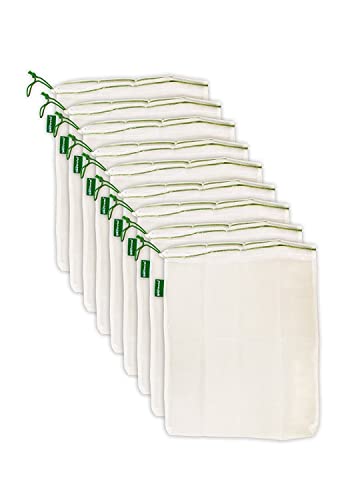
Earthwise Reusable Mesh Produce Bags – Washable Set of 9 Premium Bags, TRANSPARENT Lightweight, Strong SEE-THROUGH Mesh for shopping, transporting and storing fruits and veggies.
SUPER VALUE – You will receive a total of 9 Mesh Produce Bags! SIZE: Each Bag Measures 11"…
As an affiliate, we earn on qualifying purchases.
As an affiliate, we earn on qualifying purchases.