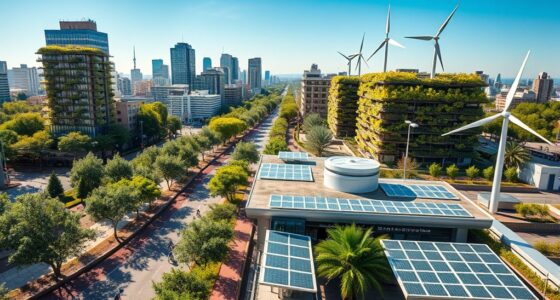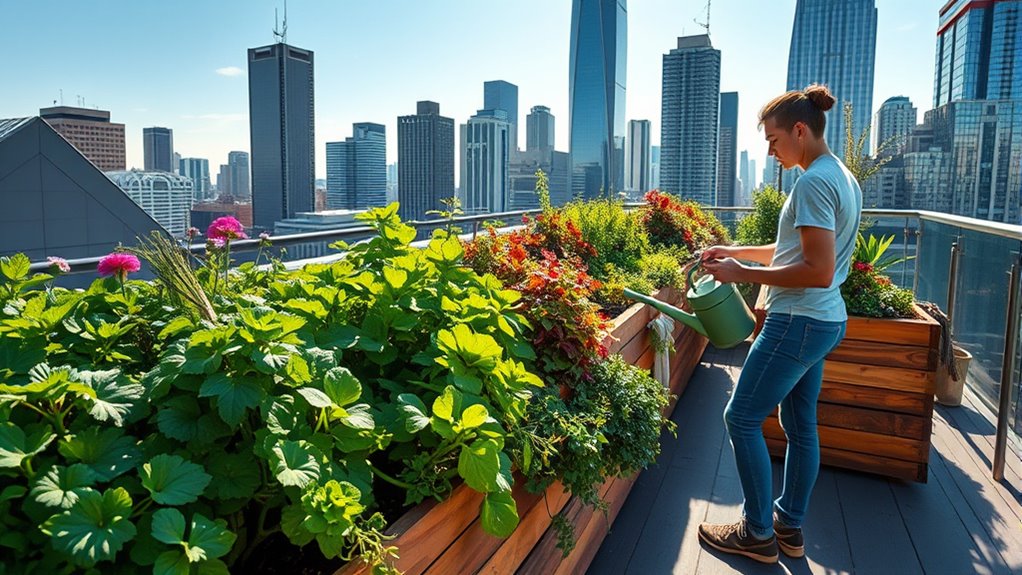

Incorporating food systems into urban planning involves transforming neglected areas into green spaces like community gardens and rooftop farms. These initiatives boost local food security, reduce heat islands, and promote sustainability. You can support efforts that turn vacant lots into vibrant food-producing hubs, fostering social bonds and environmental benefits. If you explore further, you’ll discover how urban agriculture can reshape cities into resilient, fertile environments that serve everyone’s needs.
Key Takeaways
- Integrate community gardens and rooftop farms into urban planning to promote local food production and sustainability.
- Design green spaces that enhance biodiversity, improve air quality, and reduce urban heat island effects.
- Develop policies that incentivize the repurposing of vacant lots and rooftops for food-growing initiatives.
- Incorporate urban agriculture into infrastructure planning to support food security and community resilience.
- Engage residents and stakeholders in planning processes to foster ownership and sustainable urban food systems.
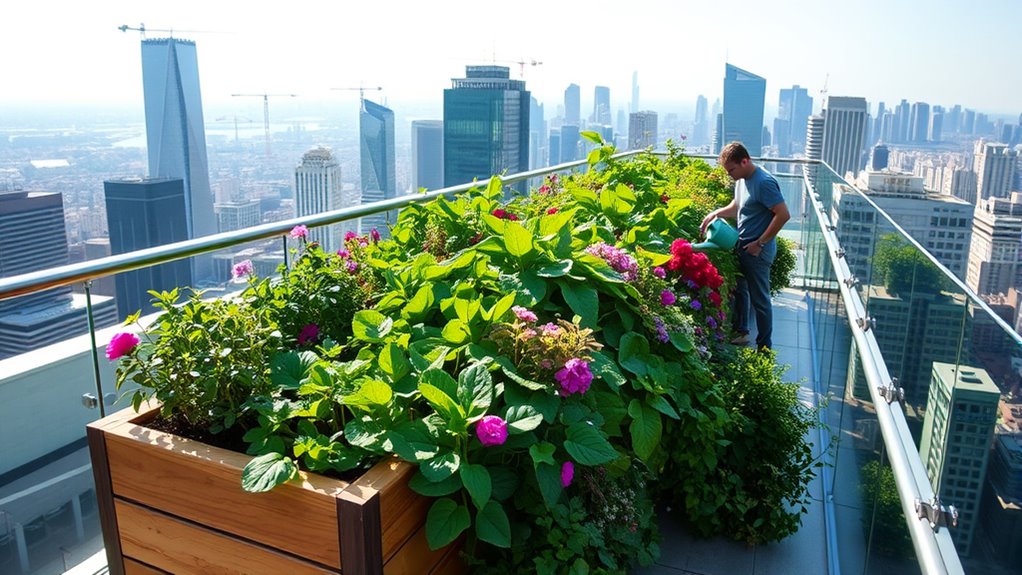
Have you ever wondered how cities can turn unused spaces into productive green areas? It’s a fascinating process that transforms neglected lots, rooftops, and vacant land into vibrant hubs of food production and community engagement. Two of the most effective methods are community gardens and rooftop farms. These initiatives not only enhance urban landscapes but also promote sustainability, social cohesion, and food security.
Community gardens are a cornerstone of urban agriculture. They turn small patches of land into shared spaces where residents can grow vegetables, herbs, and flowers. These gardens offer more than just fresh produce; they foster a sense of ownership and pride among community members. You can participate in planting, maintaining, and harvesting, which creates opportunities for education and skill development. Community gardens also encourage diversity, bringing together people from different backgrounds to collaborate and learn from each other. They serve as green oases amidst concrete jungles and help improve local air quality, reduce heat island effects, and promote biodiversity. By transforming vacant lots into these lively spaces, cities can combat urban blight while providing residents with access to healthy, affordable food. Additionally, incorporating urban planning strategies can optimize these green spaces for maximum community benefit.
Rooftop farms take urban agriculture a step further by utilizing the often-overlooked space on building rooftops. Instead of letting rooftops remain unused or serve solely as aesthetic features, they become productive sites for growing food. Rooftop farms can range from small container gardens to large-scale installations that supply fresh produce directly to local markets or restaurants. These farms maximize space efficiency, especially in densely populated areas where ground-level land is limited. They also serve as educational platforms, demonstrating sustainable farming techniques and inspiring other building owners to participate. Plus, rooftop farms can help insulate buildings, reducing energy costs, and mitigate stormwater runoff, making them environmentally beneficial. As a resident or city planner, promoting rooftop farms offers an innovative way to integrate food production into urban infrastructure, making cities more self-sufficient and resilient.
Both community gardens and rooftop farms exemplify how urban spaces can be repurposed to meet local food needs while fostering community ties. These green initiatives challenge the notion that cities are separate from nature. They show that with creativity and planning, urban areas can become productive landscapes that support health, sustainability, and social well-being. So, whether you’re planting in a community garden or advocating for rooftop farms, you’re helping to reshape the urban environment into a greener, more sustainable place to live.
Top picks for "urban agriculture incorporat"
Open Amazon search results for this keyword.
As an affiliate, we earn on qualifying purchases.
Frequently Asked Questions
How Can Urban Agriculture Be Scaled for Large Cities?
You can scale urban agriculture in large cities by leveraging community engagement to guarantee local support and participation. Incorporate technological innovations like vertical farming, hydroponics, and smart irrigation to maximize space and efficiency. Collaborate with local governments, businesses, and residents to create policies and infrastructure that support widespread urban farming. This approach helps you develop sustainable, resilient food systems that serve diverse urban populations effectively.
What Are the Legal Barriers to Urban Farming?
You might face legal barriers like zoning restrictions that limit where you can farm within city limits. Property rights can also complicate urban agriculture, especially if landowners aren’t willing to lease or sell land for farming purposes. Local ordinances often don’t account for small-scale urban farms, making it harder to get permits or legal approval. To succeed, you’ll need to navigate these regulations and advocate for flexible policies.
How Does Urban Agriculture Impact Local Biodiversity?
You’ll see urban agriculture positively impacts local biodiversity by creating pollinator habitats and supporting native plant preservation. When you incorporate diverse plantings into your urban farm, you attract bees, butterflies, and other pollinators, boosting ecosystem health. Preserving native plants also maintains local species and reduces invasive species. This biodiversity enriches the urban environment, making it more resilient and sustainable while providing educational opportunities and enhancing community well-being.
What Funding Options Support Urban Agriculture Initiatives?
You can tap into various funding options to support urban agriculture initiatives. Grant opportunities from government agencies, NGOs, and foundations provide vital financial support. Public-private partnerships are also a win-win, combining resources and expertise. Don’t forget to explore local initiatives and community crowdfunding—it’s often said that every little bit helps. By leveraging these options, you’ll give your urban farm the green light to grow and thrive.
How Can Urban Farms Ensure Food Safety Standards?
To guarantee food safety standards, you should regularly test soil for contamination and monitor water quality to prevent pollutants. Use raised beds with clean soil, and establish buffer zones to reduce soil contamination risks. Implement proper irrigation methods that avoid water runoff, and follow local regulations for food safety. Consistent testing and adherence to safety protocols help protect your produce and build consumer trust.
Conclusion
As you embrace urban agriculture, you plant the seeds of change right in the heart of the city. Think of it as weaving vibrant threads into the urban fabric, transforming gray landscapes into lush, edible canvases. Your efforts turn concrete jungles into blooming gardens, nourishing both body and community. By incorporating food systems into planning, you’re cultivating a future where sustainability blossoms and city life flourishes like a well-tended garden—beautiful, resilient, and full of promise.