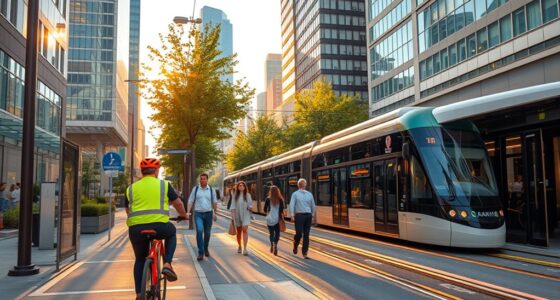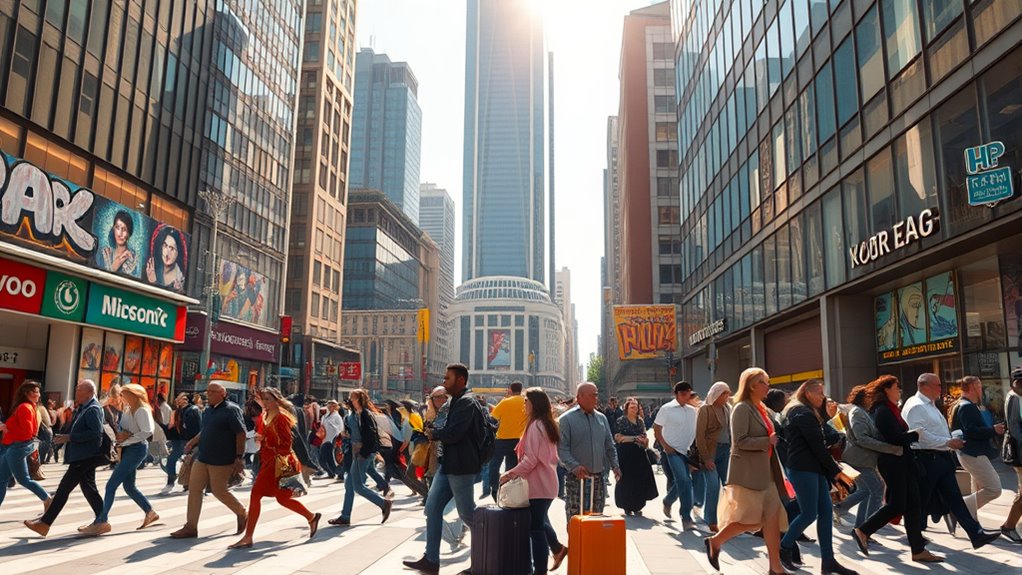

When planning for growing diversity through migration, you face paradoxes like balancing support for newcomers with local concerns and managing limited resources. Promoting integration helps build social cohesion but can strain budgets and risk marginalization if poorly executed. Restrictive policies might reduce influx but foster resentment and alienation. To navigate these challenges effectively, you need a flexible, community-focused approach that turns diversity into a source of growth. Keep exploring to uncover strategies that help you manage these complex dynamics.
Key Takeaways
- Develop flexible policies that balance supporting migrants and maintaining social cohesion.
- Invest in language, employment, and integration programs to facilitate newcomers’ successful settlement.
- Engage communities actively to foster understanding, reduce tensions, and promote shared values.
- Monitor migration trends to adapt strategies proactively, avoiding resource strain or social fragmentation.
- Recognize migrants’ contributions and tailor approaches to leverage diversity as an economic and cultural asset.

Have you ever wondered why migration, often seen as a solution to economic hardship, can also create new challenges for both migrants and host communities? As people move in search of better opportunities, they bring diverse backgrounds, skills, and perspectives. While this diversity can enrich societies, it also introduces complex issues around integration. One of the main hurdles you might face is integration challenges—how to help newcomers settle, learn local customs, and access essential services. These challenges aren’t just about language barriers or employment; they involve creating an environment where migrants feel welcomed and valued. When integration efforts fall short, tensions can rise, leading to social fragmentation and resentment among existing residents. Governments and policymakers often grapple with policy dilemmas—balancing the need to support migrants with the concerns of local communities. For example, should resources be prioritized for language education, housing, and employment programs? Or should stricter immigration controls be enforced to limit numbers? These questions force policymakers into tough choices that influence social cohesion and economic stability.
You might notice that addressing integration challenges demands coordinated policies that can sometimes seem contradictory. Investing heavily in integration services can strain public budgets, especially in regions experiencing high migration flows. Conversely, limiting support risks marginalizing newcomers, reducing their chances of successful integration and potentially stoking social unrest. This creates a policy dilemma—should governments focus on inclusivity or control? The answer isn’t straightforward because both approaches have benefits and drawbacks. Promoting inclusive policies encourages social harmony and economic participation but may require significant investment and patience. On the other hand, restrictive policies might reduce immediate pressures but risk alienating migrants and fueling resentment. Additionally, understanding the role of technology in facilitating communication and integration can be vital for developing effective strategies.
To navigate these paradoxes, you need to understand that effective planning involves foresight, flexibility, and community engagement. You must consider the long-term benefits of a diverse society while managing short-term challenges. Successful integration policies recognize that migrants aren’t just recipients of aid but active contributors to the community. They require tailored approaches that respect cultural differences while fostering shared values. As host communities evolve, so must your policies, balancing openness with realistic resource management. The paradox lies in the fact that, although migration brings challenges, it also offers opportunities for growth and renewal—if approached thoughtfully. Ultimately, the key is to develop strategies that transform integration challenges and policy dilemmas into pathways for social cohesion and economic vitality.

The C Programming Language
As an affiliate, we earn on qualifying purchases.
As an affiliate, we earn on qualifying purchases.
Frequently Asked Questions
How Can Cities Balance Growth and Infrastructure Capacity?
To balance growth and infrastructure capacity, you should control urban sprawl by promoting higher-density development and mixed-use neighborhoods. Invest in enhancing infrastructural resilience through smart planning, sustainable transport, and adaptable utilities. Prioritize efficient land use and long-term planning to accommodate increasing populations without overstretching resources. This approach helps maintain quality of life, reduces congestion, and guarantees your city can grow sustainably while supporting diverse communities.
What Role Do Policies Play in Managing Diverse Populations?
Policies play a vital role in managing diverse populations by addressing integration challenges and guiding community development. You can implement policies that promote inclusivity, equitable access to resources, and cultural understanding. Effective policy implementation helps reduce social tensions and fosters harmonious coexistence. By proactively shaping frameworks that support integration, you guarantee that growing diversity enriches your city rather than creating divisions, making your community stronger and more resilient.
How Does Migration Impact Local Economies Long-Term?
Migration acts like a ripple, shaping local economies long-term. You’ll find that cultural integration fosters innovation, boosting economic resilience. New residents bring diverse skills, increase demand, and create jobs, which strengthens your community’s financial stability. Over time, migration enriches local markets and broadens perspectives, helping your area adapt and thrive despite challenges. Embracing this change turns potential turbulence into a steady, upward economic journey.
What Are Effective Strategies for Fostering Social Cohesion?
To foster social cohesion, you should prioritize cultural integration and community engagement. Encourage open dialogue and activities that celebrate diverse backgrounds, helping residents understand and appreciate each other. Support local initiatives that promote inclusivity, like intercultural events or language programs. By actively involving everyone in community life and respecting different traditions, you create a sense of belonging and trust, making your community stronger and more united.
How Can Planning Adapt to Unpredictable Migration Trends?
You need to stay flexible and anticipate surprises. By prioritizing cultural integration, you can create inclusive policies that adapt quickly when migration trends shift unexpectedly. Housing adaptation plays an essential role—designing versatile spaces that accommodate diverse needs guarantees resilience. Keep monitoring migration patterns, engage communities, and update strategies regularly. This proactive approach keeps your planning responsive, allowing you to navigate unpredictable migration flows while fostering harmony and cohesion.

An Americanization Program (Classic Reprint)
As an affiliate, we earn on qualifying purchases.
As an affiliate, we earn on qualifying purchases.
Conclusion
As you navigate the intricate dance of migration, remember that its paradoxes are like a winding river—sometimes unpredictable, yet essential for growth. Embrace the complexity, for it’s within these swirling currents that diversity blooms and resilience takes root. By planning thoughtfully, you become the steady hand guiding this flowing tapestry, transforming challenges into opportunities. In this ongoing voyage, your foresight helps turn the paradoxes into a symphony of vibrant, interconnected communities.

AI Translation Earbuds, 3-in-1 Multilingual Communication Wireless Earphone, Real-Time Translator for 144 Languages & Dialects, Suitable for Global Business, Tours and Studies, White
High-precision Multilingual Translation Support: Our AI translation earbuds support translation in 144 languages and dialects, including English, Chinese,…
As an affiliate, we earn on qualifying purchases.
As an affiliate, we earn on qualifying purchases.

Get Ready Kids Around The World Multicultural Figures Set of 8 | 5 Inch Diversity People Toys for Toddlers, Preschool, Classroom & Daycare | Cultural Learning Playset Boys & Girls
Multicultural Diversity Set – Includes 8 chunky figures dressed in traditional attire, representing different cultures and ethnicities to…
As an affiliate, we earn on qualifying purchases.
As an affiliate, we earn on qualifying purchases.