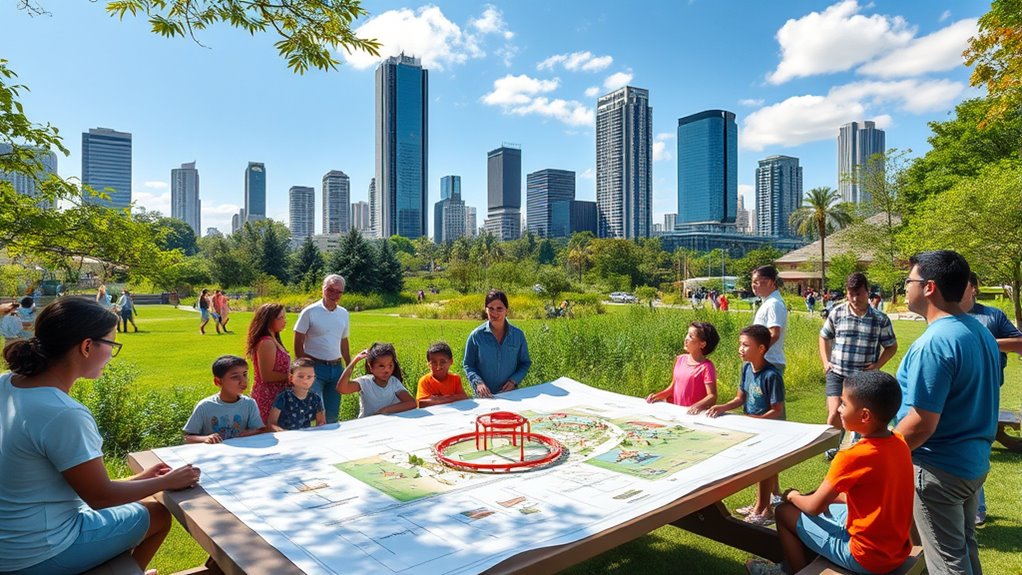

Community engagement in urban planning involves actively involving residents in shaping their neighborhoods, so your voice influences decisions, fostering a sense of ownership and trust. It shifts away from top-down approaches, encouraging participatory design and community-driven initiatives that reflect your needs and culture. Public consultations like town halls and surveys build transparency and make sure projects align with local environment and economy. Keep exploring to discover how your involvement can truly transform urban spaces.
Key Takeaways
- Engaging residents ensures their needs and preferences are reflected in urban planning decisions.
- Participatory design actively involves community members to create inclusive and functional urban projects.
- Public consultations foster transparency, trust, and early problem-solving in planning processes.
- Community-driven initiatives strengthen local ownership and support sustainable development outcomes.
- Effective engagement boosts project acceptance, cultural relevance, and long-term success of urban developments.
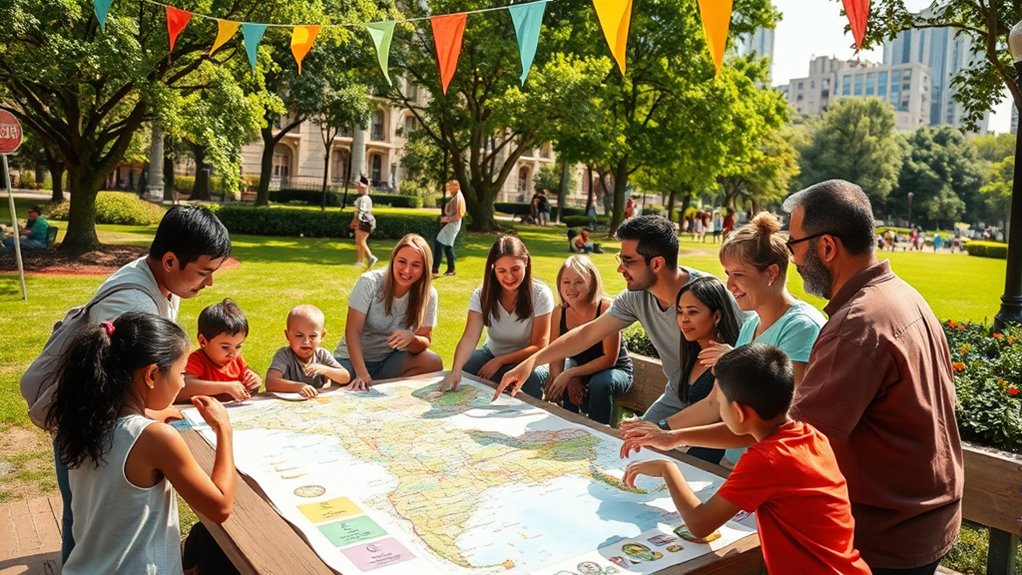
Community engagement plays a vital role in shaping successful urban planning projects because it guarantees that residents have a say in decisions that affect their neighborhoods. When you actively involve community members through participatory design, you create a process where residents directly contribute their ideas, preferences, and concerns. This approach guarantees that plans don’t just reflect top-down decisions but instead are shaped by those who will live and work in the area. Participatory design fosters a sense of ownership among residents, making them more invested in the project’s success and sustainability. Through this method, urban planners can gather valuable insights that might otherwise be overlooked, leading to more inclusive and functional developments. Incorporating community-driven initiatives can further enhance the effectiveness of engagement efforts and ensure diverse voices are heard.
Public consultation is a key component of community engagement, providing a platform for dialogue between planners and residents. When you participate in public consultation processes, you get the opportunity to voice your opinions, ask questions, and offer feedback on proposed projects. These sessions can take many forms, such as town hall meetings, workshops, or online surveys, but their core purpose remains the same: to guarantee transparency and foster trust between planners and community members. Engaging in public consultation helps identify potential issues early, allowing planners to address concerns before they become major obstacles. It also helps validate the community’s needs, ensuring that new developments support local culture, environment, and economy.
Frequently Asked Questions
How Can Technology Improve Community Participation?
Technology can boost your community participation by providing virtual forums and mobile apps that make it easier to share ideas and feedback. You can join discussions anytime, from anywhere, without physical barriers. Mobile apps send notifications about upcoming meetings or surveys, encouraging more involvement. Virtual forums foster inclusive conversations, helping you connect with others and influence urban planning decisions more effectively. This keeps you engaged and informed at every step.
What Are Common Challenges in Engaging Marginalized Groups?
You often face challenges engaging marginalized groups due to cultural barriers and trust issues. These communities might feel misunderstood or overlooked, making them hesitant to participate. To overcome these hurdles, you need to build genuine relationships, show respect for their traditions, and guarantee transparent communication. By fostering trust and addressing cultural concerns, you can encourage more active involvement, ensuring their voices are included in urban planning decisions.
How Is Success Measured in Community Engagement?
You measure success in community engagement by actively tracking participation levels and evaluating the impact of your efforts. When you see diverse groups involved and their feedback shape decisions, that’s a clear sign you’ve succeeded. You should also assess whether your initiatives foster ongoing engagement and trust. By analyzing these factors, you guarantee your engagement efforts are meaningful and truly benefit the community.
What Funding Options Support Community-Led Urban Projects?
Did you know that over 40% of community-led urban projects receive funding through grant opportunities? You can tap into various sources like government grants, foundation funding, and local programs to support your initiatives. Crowdfunding campaigns also offer a powerful way to rally community support and raise funds directly from residents and supporters. Combining these options increases your chances of securing the resources needed to turn your urban project ideas into reality.
How Do Urban Planners Handle Conflicting Community Interests?
You handle conflicting community interests by facilitating open stakeholder negotiations to find common ground. When zoning conflicts arise, you mediate discussions between diverse groups, aiming for solutions that balance different needs. You actively listen to concerns, encourage compromise, and seek innovative approaches that respect the community’s diverse perspectives. By fostering transparent communication, you guarantee that all voices are heard, helping to resolve conflicts and move projects forward collaboratively.
Conclusion
By actively participating in urban planning, you become the heartbeat of your community’s future. Your voice shapes the city’s skyline and breathes life into its streets. Think of community engagement as planting seeds—each contribution grows into a vibrant, thriving neighborhood. When you get involved, you’re not just a spectator; you’re the artist painting the city’s masterpiece with your dreams and ideas. Together, you create a city that truly feels like home.