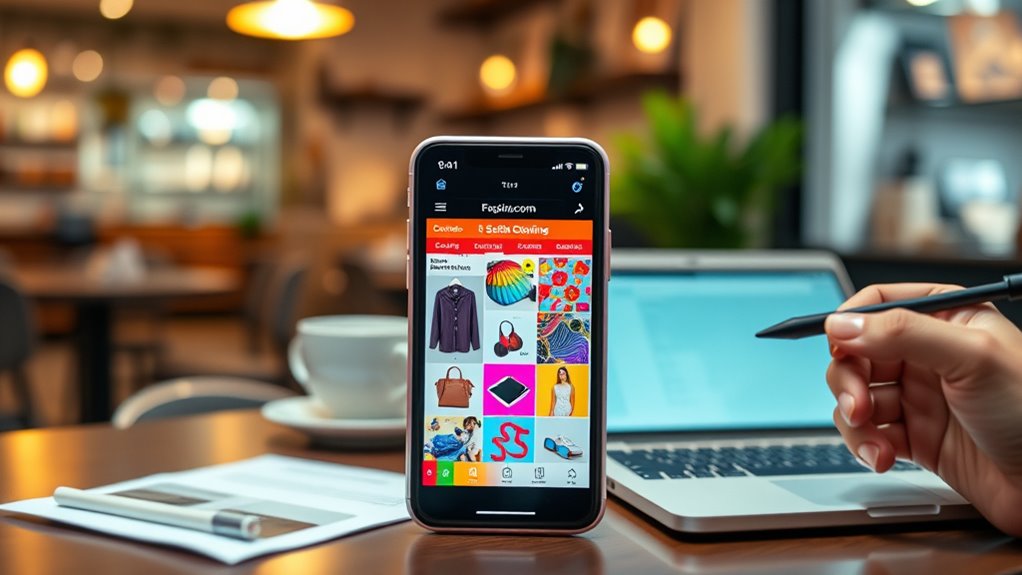

Social commerce lets you shop directly on social media platforms like Instagram and TikTok. You can discover products through influencer posts, user reviews, and authentic content that feels natural and trustworthy. These platforms now offer shoppable posts and in-app checkout options, making buying seamless and fun. By integrating shopping into your social feeds, brands create a more engaging, emotional connection with you. Discover how this trend is transforming online shopping and what’s next as you explore further.
Key Takeaways
- Social platforms now enable seamless shopping through features like shoppable posts and in-app checkout.
- Influencer collaborations influence purchasing decisions by showcasing products in authentic, relatable contexts.
- User-generated content builds trust and social proof, encouraging more direct purchases on social media.
- Shopping experiences are organic and natural, integrated into daily social interactions rather than traditional ads.
- Future trends focus on deeper emotional connections and easier shopping within familiar social environments.

Have you ever wondered how your favorite social media platforms are transforming into shopping destinations? Today, they’re not just places to scroll or connect; they’re becoming seamless shopping environments where you can discover products, get inspired, and make purchases without ever leaving the app. This shift is driven by a powerful combination of Influencer Partnerships and User Generated Content, which work together to create authentic and engaging shopping experiences.
Influencer Partnerships play a key role in social commerce because they bring trusted voices into the fold. When influencers showcase products, it feels less like an advertisement and more like a recommendation from a friend. You’re more likely to consider buying something when you see someone you follow genuinely using or endorsing it. Brands leverage these partnerships to reach targeted audiences, and influencers often highlight products in real-life settings, making the shopping experience feel natural and relatable. This approach not only boosts brand awareness but also drives conversions directly on social platforms.
Alongside influencer collaborations, User Generated Content (UGC) has become a cornerstone of social commerce. UGC includes reviews, photos, videos, and posts created by everyday users rather than brands. When you see authentic content from fellow consumers, it builds trust and provides social proof that a product is worth buying. UGC creates a sense of community and transparency, which encourages you to engage more deeply with brands. Social platforms now make it easy for users to share their experiences, tag products, and participate in campaigns, turning everyday interactions into dynamic marketing tools.
The integration of these elements makes shopping on social media feel organic rather than intrusive. You might come across a post from a friend about a favorite skincare product or see an influencer’s story demonstrating how they use a particular item. These authentic touches influence your purchasing decisions far more than traditional ads. Platforms like Instagram and TikTok have introduced features like shoppable posts and in-app checkout options, simplifying the path from discovery to purchase.
In essence, social commerce leverages Influencer Partnerships and User Generated Content to turn social media into a vibrant marketplace. They help brands build trust, foster engagement, and inspire action—all within the familiar environment of your favorite apps. As these trends continue to evolve, expect your social feeds to become even more integrated with shopping opportunities, making it easier than ever to buy products you love while scrolling your daily feed.
Furthermore, understanding the importance of emotional support can help brands create more empathetic and engaging shopping experiences, fostering stronger connections with consumers.
Frequently Asked Questions
How Do I Set up a Social Commerce Storefront?
To set up your social commerce storefront, start by choosing the right platform like Instagram or Facebook. Link your product catalog and enable shopping features. Boost sales by partnering with influencers for collaborations and creating engaging content. Use content personalization to target your audience effectively. Regularly update your storefront with new products and promotions, and monitor analytics to optimize your strategy. This approach helps maximize reach and conversions seamlessly.
What Are the Best Social Platforms for Selling?
You should focus on platforms like Instagram, Facebook, and TikTok for selling, as they excel in influencer collaboration and content optimization. These platforms allow you to leverage influencer partnerships to boost credibility and reach. Prioritize engaging content and use platform-specific features to maximize sales. Regularly analyze performance metrics to refine your strategy, ensuring your social commerce efforts effectively connect with your target audience.
How Can I Track Social Commerce Sales Effectively?
Like a trusty compass in the wild west, analytics metrics keep your social commerce sales on course. You can track sales effectively by setting up conversion tracking tools native to each platform, like Facebook Pixel or Instagram Shopping insights. Monitor key metrics such as click-through rates, conversion rates, and ROI regularly. This helps you identify what works, optimize your strategy, and ultimately, turn your social efforts into real sales.
What Are Common Challenges in Social Commerce?
You face challenges like maintaining high user engagement and managing influencer partnerships effectively. Users may lose interest if content isn’t compelling, so you need to keep interactions lively. Influencer collaborations can be tricky to coordinate and guarantee authenticity, impacting credibility. Additionally, tracking ROI and steering platform algorithms add complexity. Addressing these issues requires strategic planning, clear communication, and continuous optimization to boost sales and build a loyal customer base.
How Do I Ensure Customer Data Security Online?
To guarantee customer data security online, you should prioritize privacy compliance and implement data encryption. Make sure your platform follows relevant regulations like GDPR or CCPA, and use encryption protocols to protect sensitive information during transmission and storage. Regularly update your security measures, train your team on best practices, and communicate your commitment to data security transparently. This builds trust and safeguards your customers’ information effectively.
Conclusion
Social commerce is transforming how you shop and sell, making it easier to connect directly with your audience. With over 74% of shoppers relying on social media to discover new products, you can see how powerful these platforms are for business growth. Embracing social commerce means tapping into this massive, engaged audience and boosting your sales effortlessly. So, get active on social platforms and watch your business thrive in this dynamic, digital marketplace.