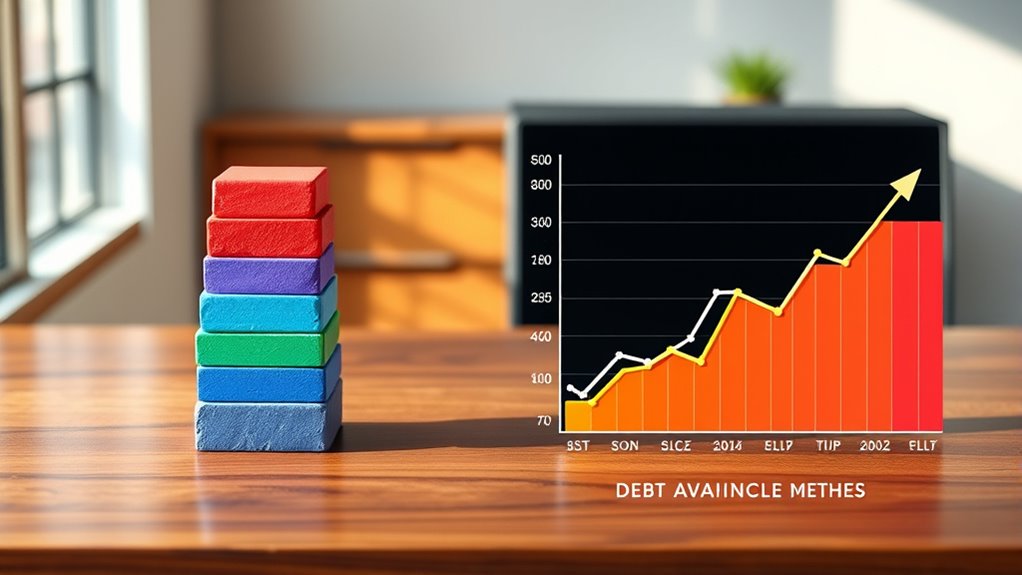

When creating a debt repayment plan, you can choose the snowball approach, which focuses on paying off your smallest debts first to build momentum and keep you motivated, or the avalanche method, which targets high-interest debts first to save money and pay off debts faster. Both strategies work, but your choice depends on whether you want quick wins or cost savings. Keep exploring to discover which approach suits your goals best.
Key Takeaways
- The debt snowball targets smallest debts first for quick wins, boosting motivation.
- The debt avalanche prioritizes highest interest debts to minimize overall interest paid.
- Choose snowball for psychological motivation; choose avalanche for cost efficiency.
- Both strategies require consistent payments and long-term commitment for effectiveness.
- Select the approach aligning with your financial goals and personal motivation for best results.

When it comes to paying off debt, choosing the right strategy can make a significant difference in how quickly and easily you become debt-free. Two popular approaches are the debt snowball and debt avalanche methods, each with its own advantages based on your financial situation and motivation. The key difference lies in how you prioritize your payments, especially regarding interest prioritization and payment strategies.
With the debt snowball approach, you start by focusing on your smallest debt first, regardless of the interest rate. You make minimum payments on all your debts, but any extra funds go toward paying off the smallest balance. Once that debt is cleared, you roll its payment into the next smallest debt. This method emphasizes quick wins and can boost your motivation, making it easier to stay committed. The primary benefit here is psychological satisfaction; paying off smaller debts provides a sense of accomplishment and momentum. However, it might not always be the most cost-effective, especially if larger debts have higher interest rates.
Focusing on your smallest debt first provides quick wins and boosts motivation.
In contrast, the debt avalanche approach requires you to prioritize debts based on interest rates. You target the debt with the highest interest first, regardless of its size, while making minimum payments on the others. By focusing on interest prioritization, you reduce the total amount of interest paid over time. This payment strategy generally results in paying off your debts faster and saving you money in the long run. It’s a more efficient way to eliminate debt since you’re attacking the most costly debts first, which minimizes the total interest accrued. The downside is that it might take longer to see debts disappear, and if your high-interest debts are also large, it can be discouraging initially. Additionally, understanding the importance of interest ratios can help you make more informed decisions.
Choosing between these strategies depends on your personality and financial goals. If you want quick wins to stay motivated, the snowball method might suit you best. If you’re more disciplined and want to minimize the total interest paid, then the avalanche approach is likely more effective. Remember, the best payment strategy is the one you can stick with consistently. Whichever method you choose, the key is to stay committed, stay organized, and keep your end goal in mind. By understanding the importance of interest prioritization and applying the appropriate payment strategies, you’ll be well on your way to becoming debt-free more efficiently.

Debt Payoff Planner: Simple Debt Payment Tracker to Pay off Your Credit Card and Organize Your Financial Situation and Pay off Debts (105 Pages "8.5X11" Inches )
As an affiliate, we earn on qualifying purchases.
As an affiliate, we earn on qualifying purchases.
Frequently Asked Questions
Which Method Is Better for Long-Term Financial Stability?
You should choose the avalanche method for long-term financial stability because it prioritizes high-interest debt, saving you money over time. With effective debt prioritization and payment planning, you pay off debts faster, reducing interest costs and building momentum. While the snowball method offers quick wins, the avalanche approach is more strategic for sustained financial health, helping you stay on track and achieve your goals efficiently.
Can I Combine Both Debt Repayment Strategies?
While some see it as a clever dance, you can definitely blend debt repayment strategies with hybrid strategies like debt stacking. By prioritizing high-interest debts first (avalanche) and then tackling smaller ones (snowball), you optimize both savings and motivation. This mixed approach keeps you flexible, ensuring you stay motivated while reducing overall interest costs. It’s a smart way to customize your debt payoff journey for long-term financial success.
How Do Interest Rates Affect the Effectiveness of Each Approach?
Interest rates markedly impact each repayment approach’s effectiveness. With high interest rates, the avalanche method speeds up repayment by targeting the highest interest debt first, saving you money over time. Conversely, the snowball approach offers quick wins by paying off smaller balances first, boosting motivation. Your choice depends on whether you prioritize faster repayment speed (avalanche) or psychological encouragement (snowball).
What Psychological Factors Influence Motivation in Debt Repayment?
You’re driven by psychological motivation, which can be influenced by behavioral finance principles like reward and progress. When you see debts disappear quickly, you feel accomplished, boosting your confidence and commitment. Conversely, focusing on small wins keeps you motivated during tough times. Recognizing these psychological factors helps you stay on track, making debt repayment less overwhelming and more manageable, ultimately fueling your persistence and success.
Are There Specific Debts Better Suited for One Method Over the Other?
You should use the debt snowball method for priority debts and small balances, as paying off smaller debts quickly boosts motivation. For larger, high-interest debts, the avalanche approach is better because it minimizes interest payments over time. By focusing on priority debts first, you stay on track with essentials, while tackling small balances swiftly helps you build confidence and momentum in your overall debt repayment journey.

The Master Debt Payoff Planner 2026: Professional Financial System: Advanced Debt Tracker with Snowball & Avalanche Strategies, Liability Analysis … Tables & Fiduciary Tracking. Large 8.5 x 11
As an affiliate, we earn on qualifying purchases.
As an affiliate, we earn on qualifying purchases.
Conclusion
Choosing between the debt snowball and avalanche methods depends on what motivates you most. The debt snowball can boost your confidence by quickly paying off smaller debts, while the avalanche saves you more money with faster repayment of high-interest debts. Did you know that people using the avalanche method save an average of 30% more on interest? Whichever approach you pick, stay consistent and watch your debt disappear faster than you thought possible.
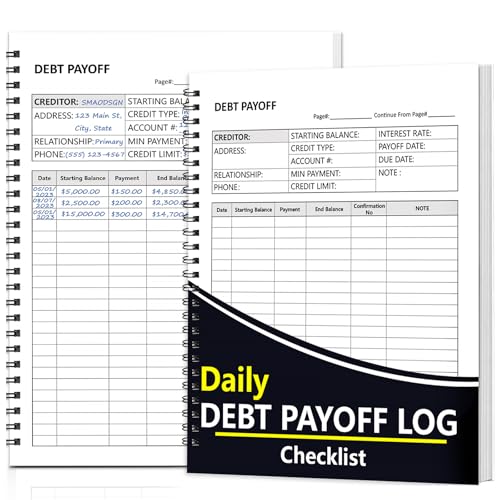
Debt Payoff Planner Spiral Bound Letter Size Debt Payoff Tracker 8.5×11 Inch Bill Payment Tracker Notebook Double Printed Financial Planner Monthly Expense Tracker for Credit Cards Payment 110 Pages
Comprehensive Debt Management Tool:The debt payoff planner log offers a detailed table design to help users manage debt…
As an affiliate, we earn on qualifying purchases.
As an affiliate, we earn on qualifying purchases.
Debt Payoff Planner Spiral Bound Letter Size Debt Payoff Tracker 8.5×11 Inch Bill Payment Tracker Notebook Double Printed Financial Planner Monthly Expense Tracker for Credit Cards Payment 110 Pages
Comprehensive Debt Management Tool:The debt payoff planner log offers a detailed table design to help users manage debt…
As an affiliate, we earn on qualifying purchases.
As an affiliate, we earn on qualifying purchases.