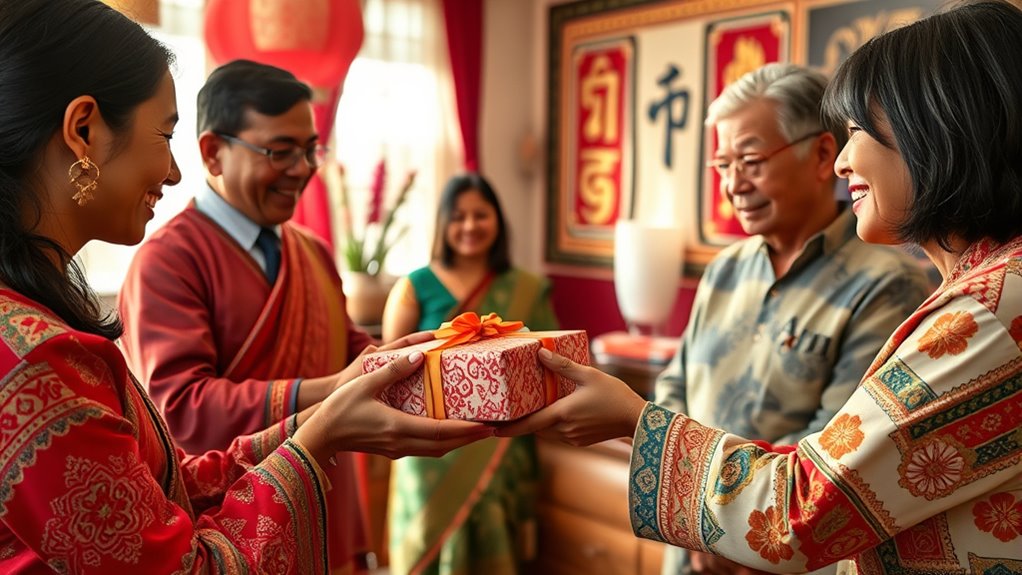
When giving or receiving gifts across cultures, remember that customs vary widely. In Japan and South Korea, using both hands shows respect, while in China, wrapping in red signifies luck. Be aware of item restrictions, like avoiding clocks or knives in some places, and pay attention to timing, such as festivals or ceremonies. Proper presentation, modesty, and understanding local norms help avoid offenses. Keep exploring to uncover more essential tips for respectful and meaningful exchange.
Key Takeaways
- Cultural etiquette influences gift presentation, such as wrapping methods and handling with both hands, to show respect and humility.
- Certain items or colors, like clocks or knives, may be restricted due to cultural symbolism of bad luck or severed relationships.
- The timing of gift exchanges often aligns with festivals or ceremonies, emphasizing tradition and relationship-building.
- In some cultures, refusing a gift once or twice demonstrates modesty and politeness, highlighting social norms.
- Thoughtfulness is shown through appropriate, symbolic gifts and careful presentation, reflecting respect for local customs.

Have you ever wondered why giving and receiving gifts can feel so meaningful? It’s because, beyond the act itself, it’s deeply rooted in cultural etiquette and gift customs that vary around the world. When you understand these differences, you’re more likely to show respect and appreciation, making the exchange more genuine and heartfelt. In many cultures, gift giving isn’t just about the object; it’s about honoring relationships, tradition, and social harmony. For example, in Japan, the way you present a gift, like using both hands or wrapping it carefully, signals respect and humility. It’s customary to refuse a gift once or twice before accepting, showing modesty and politeness. Meanwhile, in China, gift customs often involve giving items in pairs or wrapping them in red paper, which symbolizes good luck and prosperity. Knowing these subtleties helps you navigate social interactions smoothly and avoid unintentional offense.
Cultural etiquette plays a crucial role in gift exchanges because it guides you on what’s appropriate and respectful in different settings. In some countries, like South Korea, presenting a gift with both hands is a sign of sincerity, while in others, like the United States, a firm handshake might accompany the gesture. The significance attached to gift wrapping also varies; in many Asian cultures, elaborate packaging reflects thoughtfulness and effort, while in Western contexts, a simple, elegant wrap is often enough. Understanding these customs ensures that your gesture aligns with local expectations, fostering trust and positive relationships.
Respect local gift customs to build trust and foster positive relationships across cultures.
It’s also important to be aware of what’s considered appropriate to give. Some cultures have strict restrictions, such as avoiding certain colors or items like clocks or knives, which might symbolize bad luck or severed relationships. In contrast, other cultures might see giving practical or symbolic items as more meaningful than expensive gifts. The timing of giving gifts can differ too—some cultures emphasize giving during specific festivals or ceremonies, while others appreciate spontaneous gestures of kindness. Paying attention to these gift customs demonstrates your thoughtfulness and respect for the recipient’s cultural norms. Additionally, knowledge of entertainment and parks hours can help you plan visits to cultural sites or events where gift exchanges or celebrations take place, enhancing your experience.
In essence, understanding cultural etiquette and gift customs enhances your ability to give and receive thoughtfully. When you take the time to learn and adapt to these traditions, your gestures become more than just acts of generosity—they become expressions of genuine respect and connection. By honoring these differences, you help create meaningful exchanges that strengthen bonds across cultures, making every gift-giving experience more memorable and authentic.
Frequently Asked Questions
How Do Gift-Giving Customs Vary Across Different Religious Groups?
You should recognize that gift-giving customs vary widely among religious groups, influenced by religious symbolism and sacred rituals. For example, some faiths may avoid certain items, like alcohol or pork, due to their religious significance. Others might include specific prayers or blessings with gifts. Understanding these customs helps you show respect and sensitivity, ensuring your gift aligns with their spiritual beliefs and enhances the meaning behind the exchange.
Are There Specific Etiquette Rules for Corporate Gift Exchanges Internationally?
Like guiding a ship through unpredictable waters, understanding international customs in corporate gift exchanges is essential. You should research business etiquette for each country, use respectful packaging, and choose appropriate gifts that avoid cultural taboos. Always consider the timing and presentation, and if in doubt, consult local contacts. Following these guidelines ensures your gesture is appreciated and strengthens international relationships, demonstrating your respect for diverse business etiquette.
What Are the Typical Gift Preferences in Rural Versus Urban Areas?
In rural areas, you’ll find that gift preferences often emphasize local traditions and meaningful gift symbolism, like handcrafted items or foods tied to regional culture. Urban areas typically lean toward modern, practical gifts that reflect contemporary tastes and global trends. When choosing gifts, consider local customs and the symbolism behind your presents, ensuring they resonate with the recipient’s cultural background, whether in rural or urban settings.
How Should One Handle Unintentional Gift-Giving Faux Pas?
When you accidentally commit a gift-giving faux pas, remember, it’s not the end of the world. You should quickly offer a sincere apology, showing genuine remorse, and use apology strategies that reflect cultural sensitivity. Acknowledge the mistake, express your intention to respect traditions, and learn from it. This approach demonstrates humility and helps rebuild trust, proving that even slip-ups can be stepping stones toward better understanding.
What Are Some Emerging Trends in Gift-Giving in Modern Society?
You’ll notice that personalized gifts are gaining popularity, as they show thoughtfulness and cater to individual tastes. Digital gifting also emerges as a trend, making it easier to send virtual presents instantly, especially for long-distance occasions. These trends reflect how society values convenience and meaningful connections. Embrace these modern approaches to gift-giving, knowing they help strengthen relationships and adapt to an increasingly digital world.
Conclusion
Remember, when it comes to gift giving and receiving across cultures, “It’s the thought that counts.” By respecting different customs and being considerate, you show genuine appreciation and build stronger connections. Keep an open mind, ask questions if unsure, and approach every exchange with kindness. When you embrace these guidelines, you’ll navigate cultural differences smoothly and make every gift-giving moment meaningful. After all, understanding others’ traditions creates bonds that last a lifetime.