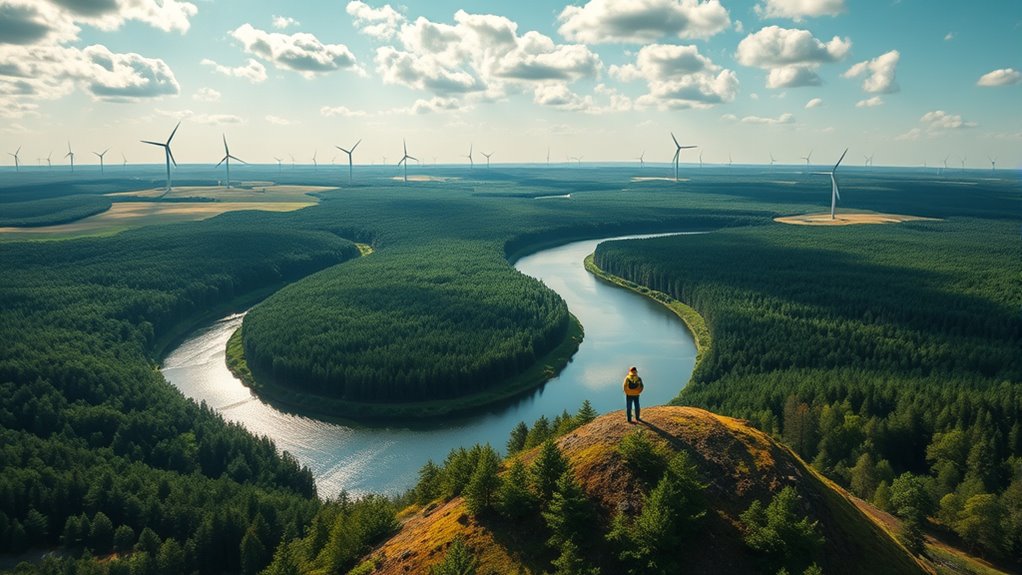

Balancing progress and sustainability in environmental ethics requires you to contemplate not just economic growth but also your moral responsibilities toward the planet. You should recognize the intrinsic value of all living beings and aim for fair distribution of resources and harms across communities. By adopting eco-friendly habits and supporting systemic reforms, you can help promote ecological integrity while pursuing development. Staying conscious of these principles will guide you toward more ethical choices that benefit both society and nature.
Key Takeaways
- Integrate eco justice principles to ensure equitable distribution of environmental benefits and burdens across communities.
- Recognize the intrinsic value of all living beings, promoting conservation and harmony with natural processes.
- Prioritize sustainable development that balances economic growth with ecological integrity and long-term health.
- Promote systemic reforms and policies that address environmental inequalities and reduce ecological harm.
- Encourage individual and collective lifestyles that minimize harm, reflecting moral responsibilities toward future generations and ecosystems.

Environmental ethics explores how humans should relate to the natural world and the moral responsibilities that come with it. As you navigate this complex field, you realize that questions of right and wrong aren’t just about human interests but also about the well-being of ecosystems and non-human entities. One key concept is eco justice, which emphasizes fairness in how environmental benefits and burdens are distributed across different communities. You might see eco justice as a call to address environmental inequalities, ensuring that marginalized groups are not disproportionately harmed by pollution, resource extraction, or climate change. It challenges you to think beyond individual actions and contemplate systemic changes that promote equity and sustainability.
Eco justice calls for fair distribution of environmental benefits and burdens across all communities.
Deep ecology offers another perspective that profoundly influences your understanding of environmental ethics. This philosophy advocates for recognizing the intrinsic value of all living beings, regardless of their utility to humans. It pushes you to view nature not merely as a resource to be exploited but as a community of interconnected life forms deserving moral consideration. Deep ecology urges a shift in your attitude—from viewing nature as separate and subordinate to appreciating it as an equal participant in the moral landscape. This approach often calls for radical changes in how societies operate, promoting conservation, reduced consumption, and harmony with natural processes.
You’re encouraged to think about how these ideas challenge traditional anthropocentric views that prioritize human needs above all else. Instead, eco justice and deep ecology push you to think more holistically, recognizing that human well-being is deeply intertwined with the health of the planet. They ask you to reflect on your responsibilities—how your choices affect others, including future generations, non-human species, and entire ecosystems. For instance, supporting policies that reduce carbon emissions or advocating for the protection of endangered habitats aligns with these principles, emphasizing moral duties that extend beyond immediate personal gains.
Balancing progress and sustainability becomes a moral endeavor when you incorporate eco justice and deep ecology into your worldview. You understand that progress isn’t just about economic growth or technological advancement but also about fostering a fairer, more inclusive relationship with nature. You realize that sustainable development requires ethical commitments that prioritize long-term ecological integrity over short-term profits. As you engage with these ideas, you’re called to challenge existing systems, advocate for policies that respect the intrinsic worth of all life forms, and adopt lifestyles that minimize harm. Additionally, understanding the importance of self-understanding can help you reflect on how your personal choices influence the environment and your role within the broader moral community. Ultimately, environmental ethics invites you to see yourself as part of a broader moral community—one that includes the planet’s diverse life forms and ecosystems, urging you to act with compassion, responsibility, and integrity.
Frequently Asked Questions
How Do Environmental Ethics Influence Government Policy Decisions?
Environmental ethics influence your government’s policy decisions by emphasizing environmental justice and moral responsibility. As a citizen, you expect your leaders to prioritize sustainable practices that protect vulnerable communities and future generations. They consider ethical principles when crafting laws, ensuring that progress doesn’t come at the expense of the environment. By integrating these values, your government aims to balance development with the moral obligation to preserve Earth’s resources for everyone.
What Role Do Cultural Values Play in Environmental Ethics?
Did you know that over 80% of the world’s population believes that caring for the environment is a moral responsibility? Cultural values shape your environmental ethics by offering diverse perspectives that influence how you view nature and sustainability. These cultural perspectives foster ethical diversity, encouraging different communities to prioritize environmental issues uniquely. Your cultural background impacts your approach to conservation, making it essential to respect and understand these varied ethical viewpoints for effective global environmental progress.
Can Environmental Ethics Resolve Conflicts Between Development and Conservation?
Yes, environmental ethics can help resolve conflicts between development and conservation. You can use principles like nature preservation to guide decision-making, balancing economic growth with ecological health. Ethical dilemmas arise when short-term gains threaten long-term sustainability, but by applying environmental ethics, you become more aware of your responsibilities. This approach encourages you to find solutions that respect nature while allowing progress, fostering a more sustainable future for all.
How Do Businesses Incorporate Environmental Ethics Into Their Practices?
Think of your business as a gardener, nurturing growth while protecting the soil. You incorporate environmental ethics through corporate responsibility, ensuring your practices respect the planet. Embracing sustainable innovation, you develop eco-friendly products and reduce waste. For example, some companies now use recycled materials, lowering their carbon footprint. By doing so, you not only meet customer values but also foster long-term success, demonstrating that progress and sustainability can grow hand in hand.
What Are the Ethical Considerations of Emerging Green Technologies?
You should consider the moral implications of emerging green technologies, as they often involve rapid technological innovation that can impact communities and ecosystems. While these innovations aim to promote sustainability, you need to evaluate potential unintended consequences, ethical sourcing, and equitable access. Balancing progress with responsibility requires you to weigh benefits against possible harms, ensuring that technological advancements align with broader environmental and social values.
Conclusion
As you navigate the delicate balance between progress and sustainability, remember that your choices matter. Every decision, from supporting green initiatives to reducing waste, shapes our future. But what if the path forward isn’t clear? The stakes are higher than ever, and the outcome depends on your actions today. Will you choose to prioritize growth or preserve our planet’s future? The answer lies in your hands—are you ready to make that pivotal decision?