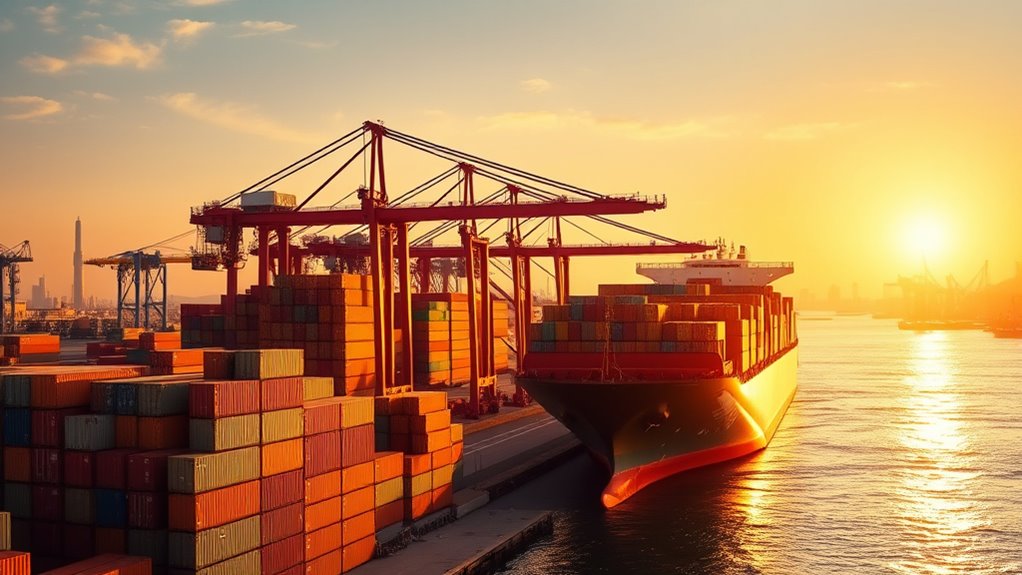
Trade policies can disrupt economic growth by creating uncertainty and increasing costs. When tariffs rise or trade agreements change unexpectedly, it raises import prices and slows down international trade. This discourages investments and hampers supply chains, leading to fewer jobs and less innovation. Unpredictable trade negotiations further undermine confidence, making businesses hesitant to expand. If you look closer, you’ll find how these disruptions ripple through the economy and impact overall growth prospects.
Key Takeaways
- Unpredictable trade policies create uncertainty, discouraging long-term investments and innovation.
- Tariff increases raise import costs, reduce competitiveness, and slow trade growth.
- Trade tensions and sudden negotiations disrupt supply chains, raising operational costs and delays.
- Protectionist measures erode market confidence, hindering economic expansion and job creation.
- Overall, unstable trade policies weaken economic trajectories by limiting trade flow and investment.
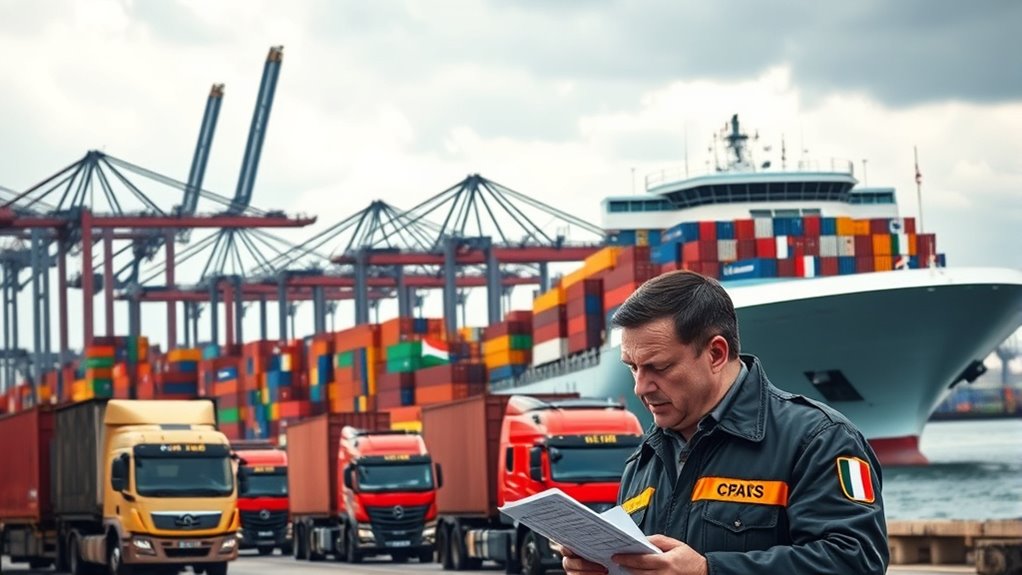
Trade policy plays a essential role in shaping a country’s economic growth, and when it becomes unpredictable or protectionist, it can profoundly disrupt progress. One of the most immediate ways this happens is through tariff impacts. When tariffs increase or are unpredictably changed, you may find that the cost of importing goods rises sharply. This means higher prices for consumers and businesses alike, which can slow down trade and reduce overall economic activity. Companies may cut back on imports or shift production elsewhere to avoid tariffs, leading to job losses and decreased competitiveness. These tariff impacts ripple through supply chains, making goods more expensive and less accessible, which discourages business investment and consumer spending. Additionally, unpredictable trade policies can undermine market confidence, causing further hesitation among investors and traders. Trade negotiations are equally essential in this context. When countries engage in unpredictable or aggressive trade negotiations, the certainty that businesses rely on diminishes. You might see sudden changes in trade agreements or the imposition of new barriers, which creates an environment of uncertainty. This uncertainty discourages long-term investments because companies are unsure about future trade rules or tariffs. As a result, they may delay expansion plans or seek out alternative markets, hindering economic growth. Trade negotiations also influence the stability of international relationships. When negotiations break down or become confrontational, it can lead to retaliatory measures like tariffs or sanctions, escalating trade tensions and further disrupting economic cooperation.
Furthermore, when trade negotiations are handled poorly or become protectionist, they can foster a climate of distrust among trading partners. This often results in increased tariffs or non-tariff barriers, such as quotas or licensing restrictions, which complicate cross-border commerce. Such measures not only increase costs but can also cause supply chain disruptions, making it harder for businesses to operate smoothly. You might notice delays in shipments, increased bureaucratic hurdles, or even the rerouting of trade flows. These disruptions can slow economic growth by reducing trade volume, raising operational costs, and limiting access to essential goods and services.
In short, tariffs and trade negotiations are deeply intertwined in shaping economic trajectories. When tariffs are used as bargaining chips or are unpredictably altered, they have immediate impacts on prices and supply chains. Meanwhile, unstable trade negotiations foster uncertainty that can stifle investment and innovation. Together, these elements can substantially hinder a nation’s ability to grow economically, making it essential for policymakers to strike a balance that promotes open, predictable, and fair trade practices.
Top picks for "trade policy disruption"
Open Amazon search results for this keyword.
As an affiliate, we earn on qualifying purchases.
Frequently Asked Questions
How Do Trade Policies Influence Income Inequality?
You might notice that tariff impacts can widen income disparity, as higher tariffs often protect certain industries but hurt low-income workers. When trade policies favor the wealthy or specific sectors, it can increase income inequality by limiting job opportunities for lower-income groups. Conversely, fairer trade policies can reduce income disparity by promoting broader economic growth and creating more equitable job prospects for everyone.
What Are the Environmental Impacts of Restrictive Trade Policies?
Restrictive trade policies can negatively impact the environment by limiting environmental regulation enforcement and encouraging resource depletion. When countries impose barriers, they might neglect eco-friendly practices to protect industries, leading to increased pollution and deforestation. You might see more resource depletion as companies seek cheaper, unregulated sources. These policies can hinder global efforts to promote sustainable development, ultimately harming ecosystems and reducing long-term environmental health.
How Can Countries Balance Trade Protection With Innovation?
Balancing trade protection with innovation is like walking a tightrope—you need steady steps. You can do this by designing tariff strategies that shield emerging industries without stifling competition. Offering innovation incentives encourages companies to develop new technologies while respecting trade policies. By fostering an environment where protection and progress coexist, you guarantee growth while safeguarding your economy’s future, keeping the tightrope walk steady and successful.
What Role Do Trade Agreements Play in Economic Resilience?
Trade agreements play a vital role in your country’s economic resilience by fostering stability and predictability in international trade. When you guarantee their effectiveness, you create a more robust environment that attracts investment and encourages innovation. These agreements help you manage disruptions better, diversify trade partners, and reduce vulnerabilities. Ultimately, effective trade agreements strengthen your economy’s ability to recover swiftly from shocks, ensuring sustained growth and resilience in uncertain times.
How Do Trade Policies Affect Small and Medium Enterprises?
Trade policies directly impact your small or medium enterprise by shaping tariff impacts and market access. When tariffs rise, it becomes more expensive to import or export goods, limiting your ability to compete internationally. Reduced market access can hinder growth opportunities, forcing you to focus on local markets or adapt quickly. Conversely, favorable trade policies can lower tariffs and expand your reach, boosting your business’s resilience and growth prospects in a competitive global economy.
Conclusion
You should recognize that trade policies significantly impact your country’s economic growth. For instance, recent data shows that countries with open trade policies experience up to 2.5% higher annual GDP growth compared to those with restrictive measures. By understanding and adapting trade strategies, you can help foster a more resilient economy. Don’t underestimate the power of smart trade policies—they can be the key to revealing sustained growth and prosperity for your nation.