Emerging markets often struggle with weak financial systems, limited access to affordable credit, and fragile banking infrastructure that undermine economic stability. These weaknesses can lead to reduced investor confidence, increased vulnerability to crises, and hindered growth. Additionally, high unemployment, informal employment, and skills mismatches make labor markets inefficient and insecure. When these issues combine, they create a cycle that stalls development and hampers resilience. Continue exploring to understand how these interconnected factors shape their economic outlook.
Key Takeaways
- Financial sector limitations reduce access to affordable credit and undermine institutional trust.
- Weak regulatory frameworks increase vulnerability to external shocks and financial crises.
- Labor market challenges, including high unemployment and informality, hinder productivity and economic growth.
- Underdeveloped financial and labor sectors create a cycle that restricts business expansion and innovation.
- Limited fiscal capacity due to informal economies hampers infrastructure development and social programs.

Emerging markets often present exciting growth opportunities, but they also face significant structural weaknesses that can hinder long-term stability. As a participant or observer in these economies, you might notice that their financial sector often lacks the robustness seen in developed nations. This can mean limited access to affordable credit, underdeveloped banking infrastructure, and weaker regulatory frameworks. When financial institutions are fragile or poorly regulated, it becomes harder for businesses and consumers to trust the system, which stifles investment and consumer spending. This vulnerability can lead to increased susceptibility to external shocks, like global financial crises or sudden capital outflows, which disproportionately impact these economies.
Another critical weakness lies in the labor market. You’ll find that many emerging markets struggle with high unemployment rates, informal employment, and underemployment. The labor force is often characterized by a lack of skills matching the demands of modern industries, which constrains productivity growth. Because of this, businesses face difficulties in scaling up or shifting towards more value-added activities, limiting economic diversification. Young workers, in particular, might find themselves trapped in low-wage, insecure jobs that offer little opportunity for advancement. This situation hampers consumption growth and perpetuates income inequality, making social stability more fragile over time.
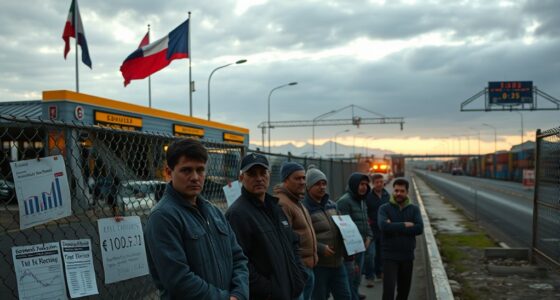
Many emerging markets face high unemployment and skills gaps, hindering growth and increasing social instability.
The constraints in the financial sector directly influence the labor market as well. When banks and financial institutions are weak, they tend to restrict credit, especially to small and medium-sized enterprises. Without access to financing, these businesses can’t expand or innovate, which limits job creation. Consequently, the labor market remains stagnant, and unemployment persists at higher levels than in more developed economies. Additionally, a weak financial sector often correlates with poor savings rates and limited investment, which further depresses economic growth and employment opportunities.
You may also observe that structural weaknesses in these economies are interconnected. For example, the underdeveloped labor market can exacerbate financial sector vulnerabilities, as a large informal sector makes it difficult for regulators to track economic activity accurately and enforce policies effectively. This informal economy often operates outside the formal financial system, reducing government tax revenues and hindering efforts to channel funds into infrastructure or social programs. In turn, these deficiencies reinforce each other, creating a cycle that hampers sustainable growth and long-term stability. Furthermore, strengthening financial sector resilience can help mitigate some of these challenges by improving access to credit and encouraging investment.
Frequently Asked Questions
How Do Political Stability Issues Affect Emerging Market Vulnerabilities?
Political stability issues, like political unrest and governance failures, make you more vulnerable in emerging markets. When unrest erupts, it disrupts economic activities and scares off investors. Governance failures lead to poor policy decisions and corruption, weakening institutions. These issues create uncertainty, increase risks, and reduce foreign investment, ultimately hindering growth. Staying alert to political developments helps you navigate and manage these vulnerabilities effectively in emerging markets.
What Role Does Corruption Play in Structural Weaknesses?
Corruption challenges carve cracks into the core of emerging markets, creating costly governance flaws. When corruption corrupts decision-making, it stalls development, discourages investments, and distorts resource allocation. You may see institutions weaken and economies wobble, as illicit practices undermine trust and transparency. Addressing these issues requires diligent dedication to governance reforms, transparency, and accountability, helping to build a stronger, more resilient foundation for sustainable growth and stability.
How Can Emerging Markets Improve Their Financial Infrastructure?
You can improve your financial infrastructure by promoting fintech adoption, which modernizes payment systems and increases access to banking services. Additionally, implementing regulatory reforms creates a safer, more transparent environment for investors and consumers. By embracing innovative technologies and streamlining regulations, you’ll foster financial stability, boost economic growth, and reduce barriers, ensuring your market becomes more resilient and competitive in the global economy.
What Are the Impacts of Foreign Debt on Economic Resilience?
Foreign debt can weaken your economic resilience by increasing vulnerability to currency volatility and shifts in foreign investment. When your country relies heavily on foreign debt, a sudden withdrawal of foreign investment or a spike in currency fluctuations can lead to financial instability. This makes it harder for your economy to absorb shocks, hampers growth prospects, and increases the risk of debt distress, ultimately reducing your resilience to economic challenges.
How Do Demographic Changes Influence Long-Term Economic Strength?
Think of your economy as a mighty ship steering changing seas. Population shifts and aging populations are like shifting currents that can steer your vessel toward calmer waters or turbulent storms. As your population ages, your workforce shrinks and consumer demand wanes, weakening your long-term economic strength. Embracing these demographic changes with proactive policies can help steady the ship, ensuring smooth sailing through future economic waves.
Conclusion
Understanding these structural weaknesses is like spotting cracks in a building—you know they can threaten stability if ignored. By recognizing issues like overreliance on commodities and limited institutions, you can better navigate the risks ahead. Addressing these weaknesses is vital for growth, turning shaky ground into a solid foundation. Think of it as tending a garden—you plant the seeds of reform today for a flourishing tomorrow. Your awareness can be the key to revealing emerging markets’ true potential.