

You’ll notice that Millennials prefer thoughtful, personalized gifts and often follow traditional gift-giving norms like wrapping and timing presents for special occasions. They tend to choose classic presentation and may skip receipts to keep gifts a surprise. In contrast, Gen Z favors spontaneous, trend-driven gifts shared on social media, with a focus on immediacy and digital presentation. Culture and social responsibility also influence choices. If you want to explore how these differences shape gift etiquette further, keep exploring these insights.
Key Takeaways
- Millennials prefer planned, meaningful gifts with personalized presentation, while Gen Z favors spontaneous, trendy gifts often shared on social media.
- Millennials tend to use casual language and informal etiquette; Gen Z adopts more structured, respectful communication and presentation.
- Millennials often avoid gift receipts to preserve surprise; Gen Z may include receipts for flexibility or exchanges.
- Millennials value traditional gift-giving occasions and etiquette; Gen Z emphasizes instant gratification and social validation through sharing online.
- Cultural and ethical considerations influence gift choices differently: Millennials focus on authenticity and effort; Gen Z prioritizes trendiness and sustainability.
Preferences in Gift Selection and Personalization
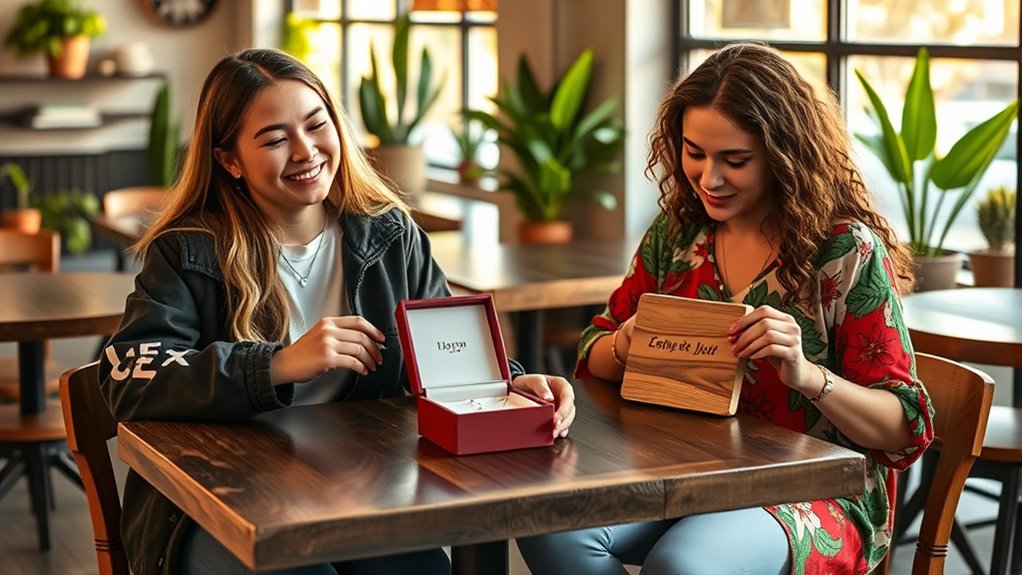
When it comes to gift selection and personalization, Millennials tend to appreciate thoughtful, curated presents that reflect the recipient’s interests and experiences. Your personalization preferences often lean toward meaningful, customized items that showcase a genuine understanding of the recipient’s personality. Cultural influences play a significant role in shaping these choices; Millennials may favor gifts that honor traditions or incorporate cultural symbols, making the gift more special. They value authenticity and effort, so personalized touches like engraved jewelry, custom artwork, or tailored experiences resonate deeply. You might prefer gifts that tell a story or reflect shared memories, emphasizing connection and thoughtfulness. Overall, Millennials seek gifts that feel unique and considerate, aligning with their desire for authenticity and cultural relevance. Additionally, understanding the specific arcade games hours can help you plan memorable experiences around special occasions, ensuring your thoughtful gifts are complemented by enjoyable outings. Recognizing the importance of shower fixtures and design elements can also inspire more meaningful and personalized gift choices for home upgrades or renovation ideas.
Attitudes Toward Gift-Giving Occasions and Timing

You might notice that Millennials often prefer planned gift-giving for special occasions, while Gen Z tends to be more spontaneous. Some see formal events as essential, whereas others feel that timing should be more flexible. Understanding these attitudes helps you navigate expectations around when and how to give gifts effectively. Recognizing different cultural norms around gift-giving can also inform how you approach gift-giving in various cultural or social contexts. Additionally, awareness of home organization can influence how thoughtfully you prepare and present gifts, enhancing the overall experience.
Celebratory Timing Preferences
Millennials tend to view gift-giving as a meaningful gesture that should occur during traditional celebrations like birthdays and holidays, often aligning with scheduled events. They appreciate seasonal gifting and prefer to plan ahead, valuing the significance of timing. Surprise celebrations are less common among millennials, who often see gift exchanges as part of established traditions. Additionally, they tend to favor cohesive decor that complements the occasion’s theme, reflecting their appreciation for thoughtful presentation. Their approach to gift timing is often influenced by a desire to uphold cultural norms, which guides their preference for planned rather than spontaneous giving. Moreover, many millennials consider the recipient’s preferences to ensure that their gifts are both timely and meaningful.
Spontaneous vs. Planned Giving
While millennials prioritize planned gift exchanges rooted in tradition and meaningful timing, spontaneity plays a more significant role among Gen Z. You’ll notice that Gen Z values the surprise element, often giving gifts impulsively to capture genuine reactions. Their spontaneity timing emphasizes seizing moments without prior warning, making gift-giving feel more authentic and heartfelt. Conversely, millennials prefer thoughtful, well-planned gifts aligned with specific occasions, ensuring the gesture feels deliberate. This difference reflects their attitudes toward gift-giving: Millennials see it as an opportunity to honor tradition, while Gen Z views it as an expressive, spontaneous act that emphasizes emotional connection. Embracing spontaneity can lead to memorable moments, but understanding these generational preferences helps you navigate gift etiquette more thoughtfully. For those seeking the perfect gift, considering dog names can add a personalized touch that resonates with the recipient’s personality and style.
Formality Expectations
Different generations approach gift-giving occasions and timing with distinct attitudes toward formality. Millennials tend to favor more casual gift exchanges, often opting for relaxed gift tone and informal language, even on special occasions. They’re comfortable with spontaneous giving and may see strict adherence to formal language as unnecessary. In contrast, Gen Z generally prefers a more structured approach, especially for important events, where they expect a certain level of formality. They value proper timing and appreciate gifts given with a respectful gift tone that reflects thoughtfulness. For them, understanding the appropriate level of formality in both language and presentation shows respect and consideration, especially during milestone moments. Recognizing these differences helps you navigate gift etiquette more effectively across generations. Additionally, awareness of cultural sensitivities and individual preferences can further refine your approach to gift-giving and strengthen your relationships.
Expectations Regarding Gift Wrapping and Presentation

Expectations around gift wrapping and presentation vary considerably between Millennials and Gen Z. Millennials often prefer elegant, classic wrapping styles, focusing on neatness and quality, while Gen Z leans toward creative, eco-friendly, or minimalistic wraps. When it comes to gift card preferences, Millennials might favor traditional cards, whereas Gen Z prefers personalized or digital options. Additionally, understanding AI Bifurcation can help anticipate how societal shifts influence evolving gift-giving trends across generations. For example, the relationship between societal values and gift presentation highlights how cultural influences shape preferences. Recognizing changing consumer behaviors is essential for tailoring gift-giving approaches in today’s diverse cultural landscape. Here’s a quick comparison:
| Aspect | Millennials | Gen Z |
|---|---|---|
| Wrapping styles | Classic, polished | Eco-friendly, minimalistic |
| Gift card preferences | Traditional, physical | Digital, personalized |
| Presentation importance | Emphasized on neatness | Emphasized on uniqueness |
| Presentation methods | Well-wrapped, formal | Creative, casual |
Understanding these differences helps you tailor your gift presentation to match each generation’s expectations.
Approaches to Gift Receipts and Exchanges

Understanding how to handle gift receipts and exchanges is essential to ensuring a smooth gifting experience. Millennials often prefer including gift receipts for flexibility, while Gen Z might prioritize the surprise element by avoiding receipts altogether. When it comes to gift card preferences, millennials tend to favor physical cards, whereas Gen Z prefers digital options for convenience. To navigate exchanges smoothly, consider these points:
- Respect the recipient’s comfort with gift receipts, whether they prefer them or not
- Be aware of gift card preferences, choosing digital or physical based on their habits
- Keep the surprise element in mind, sometimes opting to skip receipts to maintain excitement
- Being familiar with Mazda Tuning options can inspire personalized gift ideas for car enthusiasts.
- Additionally, understanding the horsepower of electric dirt bikes can help tailor gift suggestions for off-road fans interested in high-performance bikes.
- Remember that eye patches are popular skincare tools that can also serve as thoughtful gifts for those interested in self-care routines.
The Role of Social and Environmental Responsibility

As awareness of social and environmental issues grows, more Millennials and Gen Z individuals expect the brands they support to demonstrate responsibility. They prioritize environmental ethics and social responsibility when choosing gifts, favoring brands that align with their values. This shift influences gift etiquette, encouraging thoughtful choices that support sustainability and ethical practices. You might see this reflected in choosing eco-friendly packaging or supporting companies with fair labor policies. To deepen understanding:
| Values Driven Choices | Impact on Gift Giving |
|---|---|
| Environmental ethics | Promoting sustainable products |
| Social responsibility | Supporting ethical brands |
| Transparency | Choosing brands with clear practices |
| Long-term impact | Prioritizing meaningful gifts |
Digital Versus In-Person Gift Giving Practices

You might notice that more people are choosing online platforms for gift shopping, valuing convenience and quick delivery. Virtual gift presentation has become more common, with digital cards and video messages replacing traditional wrapping. Consider how in-person gifting etiquette differs from digital practices, affecting the thoughtfulness and timing of your gestures. Additionally, understanding raw food diets can provide insight into the importance of authenticity and naturalness in gift choices, emphasizing the value of genuine and unprocessed offerings. Recognizing the emotional impact of a thoughtfully selected gift can enhance its significance, regardless of the method of presentation. Being aware of asset division laws can also influence how you select meaningful gifts that acknowledge personal or shared histories.
Online Gift Selection Trends
Online gift selection has become increasingly popular, especially among Millennials and Gen Z, who often prefer digital platforms over traditional in-person shopping. You’ll notice that these generations favor personalized themes that reflect the recipient’s interests, making gifts feel more thoughtful. They also tend to prioritize gift card preferences, choosing options that allow the recipient to select something they truly want. When shopping online, you might see these trends:
- Customized options for products like jewelry or tech accessories
- A wider variety of gift card brands and denominations
- Ease of browsing curated collections based on interests or occasions
- The use of wall organization systems and aesthetic decor ideas to create appealing gift presentations
These trends show a shift toward convenience and personalization, making online gift selection more aligned with their values than traditional in-person shopping. Additionally, the emphasis on digital communication has influenced how gift ideas are shared and discussed among friends and family, further reinforcing the preference for online shopping. Moreover, the accessibility of global shopping platforms has expanded options for unique and culturally diverse gifts, aligning with their desire for meaningful and memorable presents.
Virtual Gift Presentation Norms
With digital platforms making gift exchanges more convenient, the way gifts are presented virtually has become an important aspect of modern giving. Your virtual presentation can enhance the gift’s impact, making the recipient feel appreciated even without a physical moment. When it comes to gift delivery, you might include a thoughtful message or a personalized video to add a special touch. Millennials often prefer a polished virtual presentation, ensuring the gift looks appealing in digital formats. Conversely, Gen Z values authenticity and spontaneity, so casual or creative gift delivery methods resonate more. Additionally, paying attention to home decor elements or themed visuals can elevate the overall presentation and align with their appreciation for aesthetics. Regardless of your approach, clear communication and timely delivery are key. By paying attention to how you present your gift online, you show thoughtfulness and respect for the recipient’s preferences.
In-Person vs. Digital Etiquette
While in-person gift exchanges often emphasize personal touches and immediate reactions, digital gift-giving relies on thoughtful presentation and timely communication to convey appreciation. When using digital gifting, you can enhance the experience with personalized tokens that reflect the recipient’s interests. To make your digital gestures more meaningful, consider these tips:
- Send personalized messages or digital cards alongside your gift.
- Use high-quality images or videos to showcase your gift creatively.
- Follow up promptly to express your gratitude and ensure the recipient feels valued.
For Millennials and Gen Z, digital gifting emphasizes thoughtfulness and connection through carefully curated presentations and timely communication. In contrast, in-person exchanges focus on physical tokens and shared moments, making the experience more tactile and immediate.
Cultural Influences and Evolving Norms in Gift-Giving

Cultural influences play a significant role in shaping gift-giving norms, and these influences are constantly evolving across generations. You’ll notice that intergenerational traditions often blend old customs with new ideas, reflecting shifting societal values. For example, older generations might emphasize practical gifts rooted in tradition, while Millennials and Gen Z tend to prioritize personal meaning or experiences. Cross cultural customs also influence how you approach gift-giving, especially as your social circles become more diverse. Some cultures view giving and receiving as a way to strengthen relationships, while others emphasize modesty or symbolic gestures. These evolving norms highlight how cultural backgrounds and generational shifts shape your expectations around gift etiquette, encouraging a more thoughtful and inclusive approach to giving across different contexts.
The Impact of Social Media on Gift Choices and Sharing

Social media has transformed how you choose and share gifts, making the process more immediate and visually driven. The social media influence encourages you to showcase your gift sharing moments, which can shape perceptions and expectations. You’re often inspired by trending products or ideas seen online, influencing your gift choices. Plus, sharing gifts publicly fosters a sense of community and validation.
- Posting gift reveals to gain likes and comments
- Following influencers for gift inspiration
- Comparing your gift choices to online trends
These behaviors reflect how social media impacts gift etiquette, especially for Millennials and Gen Z. It emphasizes instant gratification, public validation, and trendiness, shifting traditional gift-giving norms toward a more digital and social experience.
Navigating Gift-Giving in Different Relationships

As social media continues to influence how you pick and showcase gifts, understanding the nuances of giving in different relationships becomes even more important. For close friends or family, personalized touches like handwritten notes can make your gift stand out and feel meaningful. When giving gift cards, pay attention to their preferences—some prefer digital codes, while others value physical cards or specific brands. In professional settings, simpler gestures, like a thoughtful card with a handwritten message, often work best. Be mindful of boundaries; what’s appropriate for a romantic partner may differ from a coworker or acquaintance. Tailoring your approach based on the relationship helps you navigate gift-giving smoothly, showing thoughtfulness without overstepping boundaries.
Frequently Asked Questions
How Do Generational Values Influence Gift Preferences?
You notice that your gift choices are influenced by generational values, shaping what feels appropriate and meaningful. Millennials often value cultural traditions and emotional significance, preferring personalized or meaningful gifts. In contrast, Gen Z tends to focus on authenticity and practicality, favoring gifts that reflect their values or social consciousness. Understanding these preferences helps you choose gifts that resonate, fostering genuine connections based on shared values and cultural understanding.
Are There Differences in Gift-Giving Expectations Across Genders?
Think of gift-giving like a dance, where gender expectations and societal norms set the rhythm. You might notice that societal norms influence what’s considered appropriate for different genders—like giving practical gifts to men or sentimental ones to women. These expectations shape how you approach gift-giving, sometimes making it feel more formal or personal depending on gender. Understanding these nuances helps you navigate gift etiquette with sensitivity and respect.
How Do Economic Factors Affect Gift Choices Among Millennials and Gen Z?
Economic factors influence your gift choices, especially with budget constraints and economic stability in mind. You tend to be more mindful of spending, opting for meaningful, affordable gifts during financial uncertainty. When the economy is stable, you’re more willing to splurge on special items. Both Millennials and Gen Z prioritize thoughtful gifts that reflect personal connection, but economic factors shape how much effort and money you invest in each present.
What Role Does Peer Influence Play in Gift Selection?
Peer influence notably impacts your gift choices, as peer pressure and social validation drive you to select presents that reflect current trends and group preferences. You may feel compelled to give what’s popular or admired among friends to gain acceptance and approval. This desire for social validation shapes your gift-giving behavior, making you more attentive to peer opinions and more likely to choose gifts that align with group expectations.
How Do Online Shopping Habits Impact Gift-Giving Behaviors?
Imagine your gift-giving journey as a digital bridge, connecting you instantly to loved ones. Online shopping habits, like using digital wallets, make giving quick and seamless, while social media influences your choices through trending products and peer reviews. These tools shape your behaviors, encouraging spontaneous gifts and personalized options, transforming traditional etiquette into a dynamic, tech-driven experience. You’re now part of a fast-paced, interconnected gift-giving world.
Conclusion
As you navigate the gift-giving landscape, remember that each gesture is a thread in the fabric of relationships. Millennials value personalized, meaningful gifts, while Gen Z emphasizes authenticity and social consciousness. Like a compass, your understanding of evolving norms guides you through traditions and new customs. Embrace the journey, knowing that your thoughtful choices can turn simple acts into lasting symbols of connection and care.