

As a community leader, your role is to inspire others around a shared vision, foster active engagement, and create a safe, positive environment. You support volunteers, mediate conflicts, and promote open communication to build trust. Your responsibilities include advocating for local needs, organizing activities, and maintaining transparency. By effectively guiding and empowering members, you help ensure your community thrives. Continue exploring these roles to learn how to strengthen your leadership and make a lasting impact.
Key Takeaways
- Set and communicate a clear community vision and goals to guide collective efforts.
- Support, empower, and motivate volunteers and community members to foster engagement.
- Mediate conflicts fairly and promote open dialogue to maintain community harmony.
- Ensure safety protocols are in place and handle issues with calm, open-minded conflict resolution.
- Maintain transparency, accountability, and adapt strategies based on community needs and feedback.
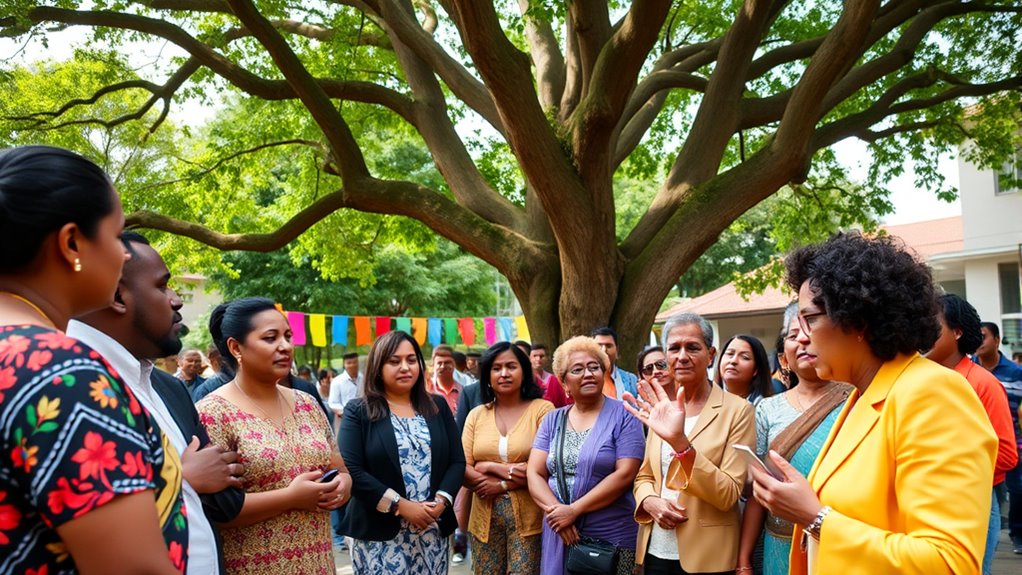
What makes a community leader truly effective? It’s a combination of qualities, skills, and a genuine commitment to making a difference. At the core, your ability to foster volunteer engagement is essential. When you motivate community members to participate actively, you create a sense of ownership and collective responsibility. You understand that volunteers are the backbone of many initiatives, and you work to create an environment where they feel valued and empowered. By encouraging diverse participation, you guarantee that different perspectives are heard, which ultimately strengthens the community’s fabric. You might organize events, outreach programs, or training sessions that inspire people to get involved and stay committed. Remember, the more engaged your volunteers are, the more sustainable and impactful your efforts become. Incorporating effective safety measures can also help ensure that community activities are conducted securely and responsibly. Conflict resolution is another indispensable skill that sets effective community leaders apart. Conflicts are inevitable in any group setting, but how you handle them determines the overall health of your community. You approach disputes with a calm, open mind, aiming to understand all sides before jumping to conclusions. Your goal is to mediate disagreements fairly, ensuring everyone feels heard and respected. You foster an environment where open dialogue is encouraged, and misunderstandings are addressed promptly. By developing your conflict resolution skills, you prevent small issues from escalating into larger problems that could derail progress. This proactive approach helps maintain unity and keeps the focus on shared goals. As a community leader, you also recognize that your role extends beyond managing conflicts and engaging volunteers. You set the vision and inspire others to work toward common objectives. Your communication skills are essential—you articulate your ideas clearly, listen actively, and respond empathetically. You build trust by being transparent and accountable, which encourages others to follow your lead. Additionally, you stay informed about your community’s needs and adapt your strategies accordingly. Whether it’s organizing a neighborhood clean-up or advocating for local policies, your leadership involves guiding, supporting, and empowering others. Ultimately, your effectiveness depends on your ability to balance assertiveness with compassion, creating a positive environment where everyone feels motivated to contribute.

The Literacy Specialist: Leadership and Coaching for the Classroom, School, and Community
As an affiliate, we earn on qualifying purchases.
As an affiliate, we earn on qualifying purchases.
Frequently Asked Questions
How Do Community Leaders Handle Conflicts Among Members?
When conflicts arise among members, you handle them through effective conflict resolution by listening carefully to each person’s perspective. You facilitate member mediation, encouraging open communication and understanding. You remain neutral, ensuring everyone feels heard and respected. By guiding members toward common ground and collaborative solutions, you foster a positive environment. This proactive approach helps resolve disputes quickly, strengthening the community’s cohesion and trust.
What Skills Are Essential for Effective Community Leadership?
Think of community leadership as steering a ship through diverse waters. Your essential skills include strong leadership communication, which helps you clearly convey goals and inspire others. Community engagement is vital; it involves actively listening and building trust with members. Flexibility and problem-solving abilities keep you adaptable to changing circumstances. With these skills, you create a united crew, charting challenges together and steering your community toward success.
How Can New Leaders Gain Community Trust Quickly?
To gain community trust quickly, you should focus on building rapport by actively listening and engaging with residents. Practice transparency by openly sharing your goals, decisions, and challenges. Show genuine concern for their needs, follow through on promises, and communicate honestly. When you demonstrate authenticity and consistency, people will see you as reliable and dedicated, which helps establish trust faster and fosters stronger community relationships.
What Resources Are Available for Community Leadership Development?
Ironically, the best way to develop your community leadership skills is by diving into volunteer opportunities and leadership training programs. These resources are your gateway to hands-on experience and mentorship, helping you grow into a trusted leader. You’ll build relationships, learn effective strategies, and gain confidence, all while making a real difference. Don’t wait—start exploring local nonprofits, workshops, or online courses today to unseal your full leadership potential.
How Do Leaders Measure Success in Community Initiatives?
You measure success in community initiatives through community engagement levels and volunteer coordination. If you notice increased participation, stronger relationships, and volunteers actively contributing, you’re on the right track. Tracking attendance, gathering feedback, and observing tangible outcomes help you evaluate progress. Success also means fostering a sense of ownership among community members, ensuring ongoing involvement, and achieving your initiative’s goals, which ultimately creates a more vibrant, connected community.

CONFLICT FIX-IT GUIDE: Practical Skills to Manage Conflict—So It Does Not Manage You
As an affiliate, we earn on qualifying purchases.
As an affiliate, we earn on qualifying purchases.
Conclusion
You play a crucial role in shaping your community’s future. When you step up as a leader, you inspire others and create positive change. Some believe that strong communities naturally thrive without leadership, but evidence shows active engagement makes a real difference. So, take responsibility, get involved, and lead with purpose. Your efforts can transform your neighborhood into a better place for everyone, proving that leadership truly matters in building a united, resilient community.
volunteer engagement activity kits
As an affiliate, we earn on qualifying purchases.
As an affiliate, we earn on qualifying purchases.

HATAUNKI Security Vest for Men Women Reflective Safety Vest with 5 Pockets and Front Zipper Mesh High Visibility Vest Meets ANSI/ISEA 107-2015 Standards(Black-22, Large)
DESIGN: The HATAUNKI security vest with a 2-tier pocket with a pocket window for an ID badge and…
As an affiliate, we earn on qualifying purchases.
As an affiliate, we earn on qualifying purchases.