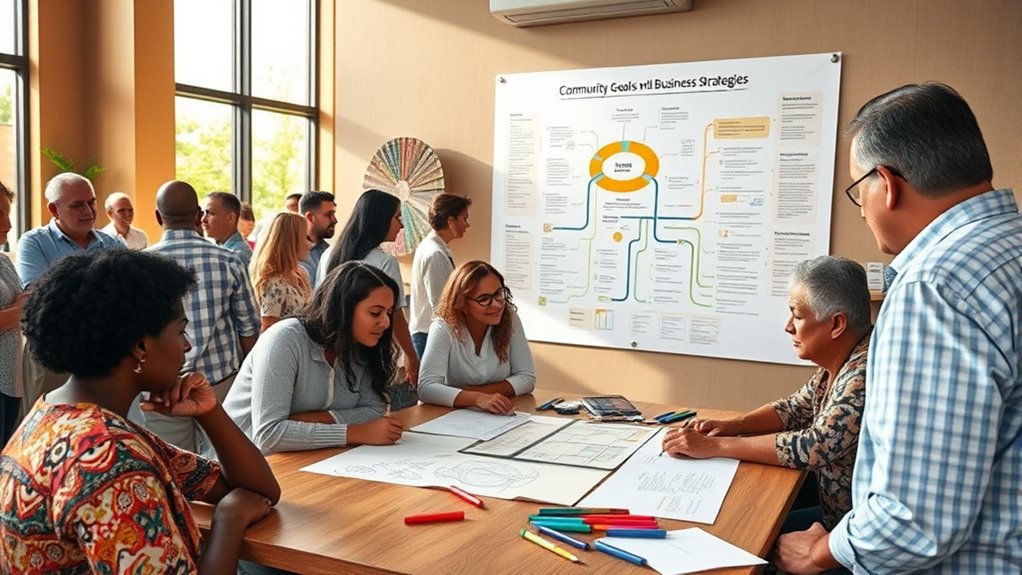

To align community goals with business objectives, involve stakeholders early and keep communication transparent. This includes understanding community needs, sharing resources strategically, and maintaining ongoing engagement. By fostering trust and encouraging collaboration, you’ll build partnerships that support shared prosperity. Clear resource allocation and adaptable plans help everyone stay aligned as circumstances change. This approach not only strengthens relationships but also drives sustainable growth—if you continue, you’ll discover more ways to make this collaboration successful.
Key Takeaways
- Engage stakeholders early to gather diverse perspectives and identify shared priorities for community and business goals.
- Maintain transparent communication to build trust, ensure accountability, and facilitate collaborative decision-making.
- Allocate resources strategically based on community needs and business objectives to maximize impact and sustainability.
- Foster ongoing dialogue and feedback loops to adapt plans and keep efforts aligned with evolving goals.
- Build strong partnerships through continuous engagement, resulting in mutually beneficial growth for the community and businesses.

Have you ever wondered how communities come together to achieve common goals? It’s often through strategic collaboration and shared understanding. One of the most essential elements in this process is stakeholder engagement. When community members, local organizations, businesses, and government agencies actively participate, they create a sense of ownership and commitment. By involving these stakeholders early and consistently, you guarantee that everyone’s perspectives and needs are considered. This inclusive approach fosters trust, encourages open dialogue, and helps identify priorities that align with both community aspirations and business objectives. It’s not just about getting people involved; it’s about making sure their voices influence the decision-making process. When stakeholders feel heard, they’re more likely to support initiatives and contribute resources, whether those are time, expertise, or funding. Incorporating transparent communication practices further strengthens these relationships and promotes shared accountability. Resource allocation plays a pivotal role in aligning community goals with business objectives. Once you’ve engaged stakeholders, you need to determine how to best use available resources to maximize impact. Effective resource allocation requires clarity about priorities and a keen understanding of what each stakeholder can offer. For example, a local business might contribute funding or mentorship, while community organizations provide outreach and on-the-ground support. By strategically distributing resources, you can accelerate progress toward shared goals, ensuring that efforts aren’t scattered or duplicated. This process involves evaluating the community’s needs alongside the business’s strategic interests, striking a balance that benefits both parties. When resources are allocated thoughtfully, projects become more sustainable and impactful, creating a ripple effect that benefits the entire community. Aligning community goals with business objectives isn’t a one-time effort; it’s an ongoing process that depends heavily on continuous stakeholder engagement and smart resource management. As circumstances change or new challenges arise, maintaining open communication channels allows you to adapt plans and reallocate resources effectively. Regular updates, feedback loops, and transparent decision-making keep everyone aligned and committed. This dynamic approach ensures that community development remains relevant and that business endeavors support long-term social well-being. Ultimately, when you prioritize inclusive engagement and strategic resource allocation, you forge stronger partnerships that propel your community forward while simultaneously advancing your business interests. It’s a win-win situation that builds trust, boosts local prosperity, and drives sustainable growth for everyone involved.
Top picks for "align community goal"
Open Amazon search results for this keyword.
As an affiliate, we earn on qualifying purchases.
Frequently Asked Questions
How Do You Measure Community Engagement Effectiveness?
You measure community engagement effectiveness by tracking digital metrics like website visits, social media interactions, and content shares. Additionally, you use engagement surveys to gather direct feedback from community members about their experiences and satisfaction. Combining these data points helps you assess whether your efforts are fostering meaningful connections and achieving your community goals, ensuring your initiatives align with your business objectives and drive measurable results.
What Strategies Foster Long-Term Community-Business Partnerships?
Did you know 78% of successful partnerships thrive on strong stakeholder collaboration? To foster long-term community-business partnerships, focus on consistent communication and shared values. Develop strategic partnership development plans that emphasize mutual benefits. Engage stakeholders early and often, encouraging their input and feedback. Building trust and transparency guarantees lasting relationships. By nurturing these elements, you create a foundation for sustainable collaboration that aligns community goals with your business objectives.
How Can Conflicts Between Community Needs and Business Goals Be Resolved?
You can resolve conflicts between community needs and business goals by fostering stakeholder collaboration and employing effective conflict resolution strategies. Engage all parties early, listen to their concerns, and find common ground. By promoting open communication and mutual understanding, you guarantee that community interests are respected while aligning business objectives. This collaborative approach helps build trust, reduces misunderstandings, and creates sustainable solutions that benefit everyone involved.
What Role Do Local Governments Play in Alignment Efforts?
Local governments play a vital role in alignment efforts by shaping urban planning and policy development. For example, they might create zoning laws that encourage businesses to support community gardens, meeting both economic and social goals. You can see how their leadership guarantees development projects consider community needs, fostering collaboration. By setting regulations and guiding urban planning, local governments help balance economic growth with community well-being effectively.
How Does Cultural Diversity Influence Alignment Strategies?
Cultural diversity influences your alignment strategies by requiring cultural sensitivity and diversity integration. You need to understand different cultural perspectives to create inclusive initiatives that resonate with diverse community members. By actively listening and respecting cultural nuances, you guarantee your goals align with community values. This approach fosters trust and collaboration, making your strategies more effective and sustainable. Embracing diversity integration helps you build stronger, more unified community-business relationships.
Conclusion
By aligning your community goals with your business objectives, you’ll foster stronger relationships and drive sustainable growth. Remember, communities that feel genuinely connected are 50% more likely to support your initiatives, according to recent studies. So, take the time to understand their needs and incorporate their aspirations into your strategy. When you do, you’ll not only build loyalty but also create a thriving environment where everyone wins. Your success starts with listening and aligning authentically.