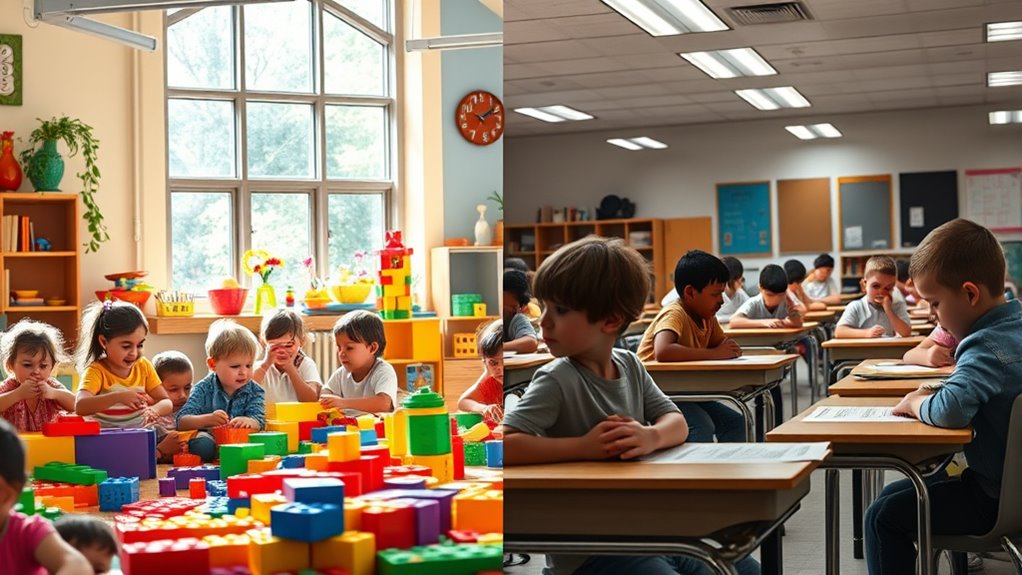

Finding the right balance between play-based learning and academic drills helps you create a stimulating and effective environment for children. Play encourages creativity, social skills, and exploration, while drills build essential skills through repetition and structure. Combining both approaches through outdoor activities, music, and movement makes learning engaging and memorable. When integrated thoughtfully, these methods foster motivation, deepen understanding, and support holistic development—keep exploring ways to blend play and structure for maximum growth.
Key Takeaways
- Incorporate outdoor exploration and music to make academic drills more engaging and multisensory.
- Use play-based activities to reinforce foundational skills through spontaneous, hands-on experiences.
- Balance structured drills with creative, movement-based learning to maintain motivation and deeper understanding.
- Recognize that drills build discipline, while play develops social skills and creativity; blending both optimizes development.
- Implement research-backed strategies to create a flexible curriculum that fosters curiosity, mastery, and joy in learning.
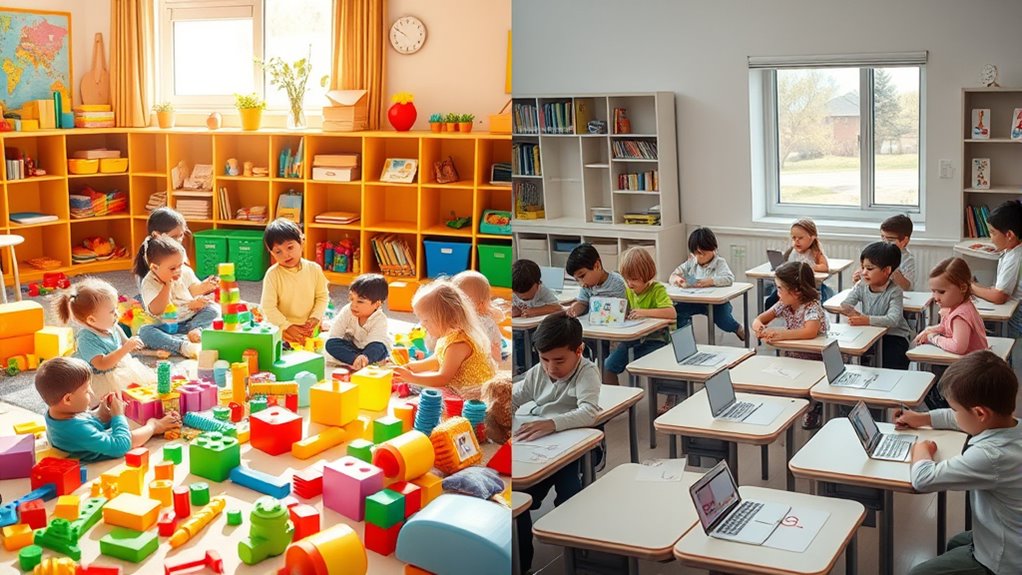
Have you ever wondered whether children learn better through playful exploration or structured drills? It’s a question many educators and parents grapple with, especially as they try to find the best way to support a child’s development. Play-based learning emphasizes hands-on activities, outdoor exploration, and integrating music into lessons to foster creativity and natural curiosity. For example, outdoor activities not only promote physical health but also provide a rich environment for spontaneous learning. When children play outside, they often engage in activities that enhance their social skills, problem-solving abilities, and understanding of the world around them. Incorporating music integration into play can make learning even more engaging. Singing songs during outdoor activities or using rhythm and melody to teach concepts turns learning into a multisensory experience that sticks better than rote memorization.
On the other hand, academic drills focus on repetition and structured tasks aimed at mastering specific skills, such as math exercises or language drills. While these methods can efficiently build foundational knowledge, they often lack the spontaneity and joy that come with play. However, some children thrive with clear, goal-oriented routines, and drills can help establish discipline and focus. The key is to strike a balance where drills reinforce what children are learning through play, rather than replacing it entirely. Combining outdoor activities with music integration during instructional time can make lessons more dynamic and memorable. For instance, using rhythmic clapping to count or incorporating movement-based learning can transform a typical lesson into an active, engaging experience. This approach not only keeps children interested but also helps them retain information through active participation. Additionally, the integration of research-backed methods can enhance the effectiveness of a balanced learning environment.
Ultimately, the most effective approach recognizes that children learn best when they’re motivated and engaged. Play-based learning encourages exploration, social interaction, and creativity, all crucial for holistic development. Meanwhile, structured drills can be useful for reinforcing specific skills, especially when integrated thoughtfully into a broader, playful curriculum. Finding a balance means blending structured activities with opportunities for outdoor exploration and music integration, creating a learning environment that is both fun and effective. As you consider your child’s education, remember that combining the best of both worlds can lead to more well-rounded, confident learners who are eager to discover and explore their potential.
Frequently Asked Questions
How Can Parents Support Both Play and Academics at Home?
You can support both play and academics at home by establishing playful routines that incorporate educational activities and creating creative spaces where your child can explore freely. Engage in hands-on learning through games, storytelling, or art, making learning enjoyable. Allow time for unstructured play, encouraging curiosity and imagination. This balance helps your child develop essential skills while fostering a love for learning, all within a supportive and fun environment.
Are There Age-Specific Benefits for Play-Based Versus Academic Learning?
Around age three, children hit key developmental milestones, making play especially beneficial for social skills and emotional growth. Play-based learning fosters creativity, problem-solving, and collaboration, while academic drill builds foundational skills like literacy and numeracy. Younger children thrive with play, as it aligns with their developmental needs, whereas older kids benefit from a balanced mix that supports their growing independence and prepares them for more structured learning.
How Do Educators Assess Progress in Play-Based Learning Environments?
You assess progress in play-based learning by observing children’s play assessment and documenting their development. You track progress through ongoing, informal methods like checklists, anecdotal records, and portfolios that capture their skills and interests. You also encourage reflection and peer feedback, which helps you identify areas of growth. This approach guarantees you stay informed about each child’s progress while fostering a supportive, engaging environment that values exploration and discovery.
What Are the Long-Term Impacts of Each Approach on Student Motivation?
You might think academic drills boost motivation, but play-based learning actually fosters long-term student engagement. When you prioritize curiosity and exploration, you help students develop intrinsic motivation, leading to sustained interest and enthusiasm over time. Conversely, relying solely on drills can cause motivation to diminish, as students often see them as tedious. Balancing both approaches ensures your students stay motivated and engaged well into their academic journeys.
Can a Balanced Approach Be Integrated Into Already Structured Curricula?
Yes, you can integrate a balanced approach into already structured curricula by using curriculum integration and diverse pedagogical strategies. Incorporate play-based activities alongside academic drills to enhance engagement and understanding. You might blend hands-on projects with traditional lessons, ensuring that each method complements the other. This approach allows you to create a flexible learning environment that supports both creativity and academic achievement, fostering motivation and long-term success.
Conclusion
Striking the right balance is like tending a garden—you need the nurturing warmth of play to let curiosity bloom, while a steady hand guides growth through focused learning. Embrace the dance between exploration and structure, each step supporting the other’s rhythm. When you blend play-based learning with academic drills, you create a vibrant tapestry where children can flourish, their minds blossoming like spring flowers—bright, resilient, and full of endless potential.