
To encourage creative expression through art and music, start by embracing activities that feel safe and enjoyable, regardless of skill level. Explore opportunities like workshops, community groups, or simple projects at home that focus on participation, exploration, and fun. Let go of perfectionism and listen to your intuition. Regularly engaging in these practices can boost emotional well-being, foster self-discovery, and build resilience. Keep exploring—more insights on unleashing your creative potential await you.
Key Takeaways
- Provide accessible art and music activities that focus on participation and enjoyment rather than technical skill.
- Use creative outlets like art therapy and musical improvisation to facilitate emotional self-expression and healing.
- Foster a safe environment that encourages letting go of perfectionism and trusting spontaneous creation.
- Incorporate community workshops and group activities to build social connection and shared creative experiences.
- Emphasize the long-term benefits of regular creative practice for self-discovery, resilience, and emotional well-being.

Have you ever wondered how fostering creative expression can transform lives? It’s a powerful force that allows you to explore your inner world, process emotions, and connect with others on a deeper level. Engaging in activities like art therapy and musical improvisation can markedly boost your emotional well-being and self-awareness. Art therapy, in particular, offers a unique way to communicate feelings that words often can’t capture. When you pick up a brush or craft materials, you create a visual language that reveals your thoughts and emotions without judgment. This process not only helps you understand yourself better but also provides a safe outlet to release stress and anxiety. You may find that through creating art, you gain clarity, find new perspectives, and experience a sense of accomplishment that uplifts your confidence. Additionally, exploring creative outlets can lead to increased emotional resilience, helping you better navigate life’s ups and downs.
Music, especially musical improvisation, offers another dynamic approach to nurturing your creative side. When you engage in improvisation, you let go of expectations and simply express yourself in the moment. Whether you’re playing an instrument or singing spontaneously, you tap into your intuition and access a flow of raw emotion. This form of musical creation encourages you to listen actively—both to others and to your own impulses—and respond authentically. It’s an empowering experience that can reduce feelings of self-doubt and foster a sense of freedom. Musical improvisation also promotes social connection, as it often involves collaboration, helping you build trust and empathy with others. Plus, it stimulates your brain, enhancing cognitive flexibility and emotional resilience.
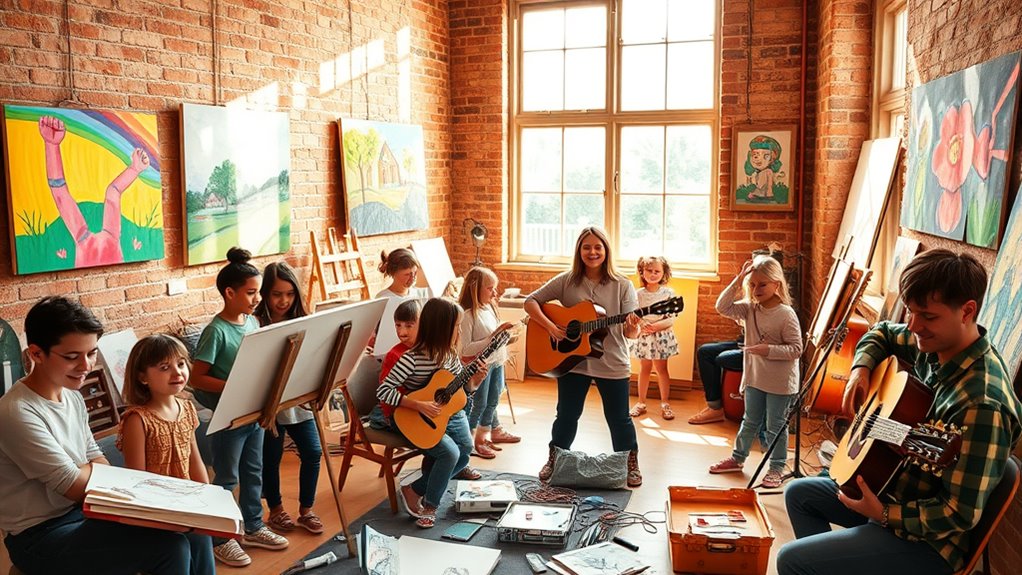
Encouraging these forms of creative expression doesn’t require you to be an artist or musician. The goal is to participate, explore, and enjoy the process. You can attend a local art workshop, join a community choir, or simply spend time doodling or improvising melodies at home. The key is to let go of perfectionism and focus on the experience itself. Over time, you’ll notice how these activities become more than just hobbies—they turn into essential tools for self-discovery and emotional healing. As you continue to incorporate art therapy and musical improvisation into your routine, you’ll discover a richer, more vibrant way to process life’s challenges and celebrate your unique voice. Embracing creative expression empowers you to live more authentically and resiliently.
Frequently Asked Questions
How Can Parents Support a Child’s Unique Artistic Style?
You can support your child’s unique artistic style by providing consistent parental encouragement and fostering creative freedom. Show genuine interest in their work, offer positive feedback, and avoid critiquing their originality. Supply diverse art supplies and set aside dedicated time for creative activities. By trusting their choices and nurturing their individuality, you empower your child to explore and develop their personal artistic voice confidently.
What Are Effective Ways to Overcome Creative Blocks?
To overcome creative blocks, you should try mindfulness exercises to clear your mind and reduce stress. Incorporate daily journaling to explore your thoughts and spark new ideas. Take breaks when needed and change your environment to gain fresh perspectives. Don’t be afraid to experiment without judgment. These strategies help you reconnect with your creativity, making it easier to overcome obstacles and find inspiration again.
How Does Art Therapy Benefit Emotional Well-Being?
Did you know that 75% of people report improved emotional resilience through art therapy? It helps you process complex feelings, fostering self-discovery and emotional growth. When you engage in creative activities, you build resilience by expressing emotions non-verbally. Art therapy encourages introspection, strengthening your ability to handle stress and setbacks. Ultimately, it’s a powerful tool that enhances emotional well-being by unveiling inner strength and promoting self-awareness.
What Role Does Cultural Diversity Play in Artistic Expression?
Cultural diversity plays a crucial role in artistic expression by enriching it with a variety of cultural influences. You’ll find that diversity in art introduces new perspectives, techniques, and stories, making creations more vibrant and meaningful. Embracing different cultures allows you to explore unique styles and themes, fostering greater understanding and appreciation. It encourages you to push boundaries, blend traditions, and celebrate the richness that cultural influences bring to your artistic journey.
How Can Schools Integrate More Art and Music Programs?
Imagine students sharing digital portfolios filled with their artwork and music, showcasing diverse talents. You can integrate more art and music programs by partnering with local artists and organizing community art projects, making creative expression accessible. Encourage students to document their progress digitally, fostering pride and ownership. These initiatives not only enrich the curriculum but also celebrate cultural diversity, inspiring students to explore and express their unique identities through art and music.
Conclusion
Think of your creativity as a garden—you’re the gardener, and your ideas are the seeds. With every brushstroke or musical note, you nurture these seeds into vibrant blooms. Keep planting, exploring, and expressing, and watch your unique garden flourish. When you embrace art and music, you’re cultivating a space where your imagination can grow wild and free. So, go ahead—tend to your creative garden, and let it bloom in ways only you can imagine.