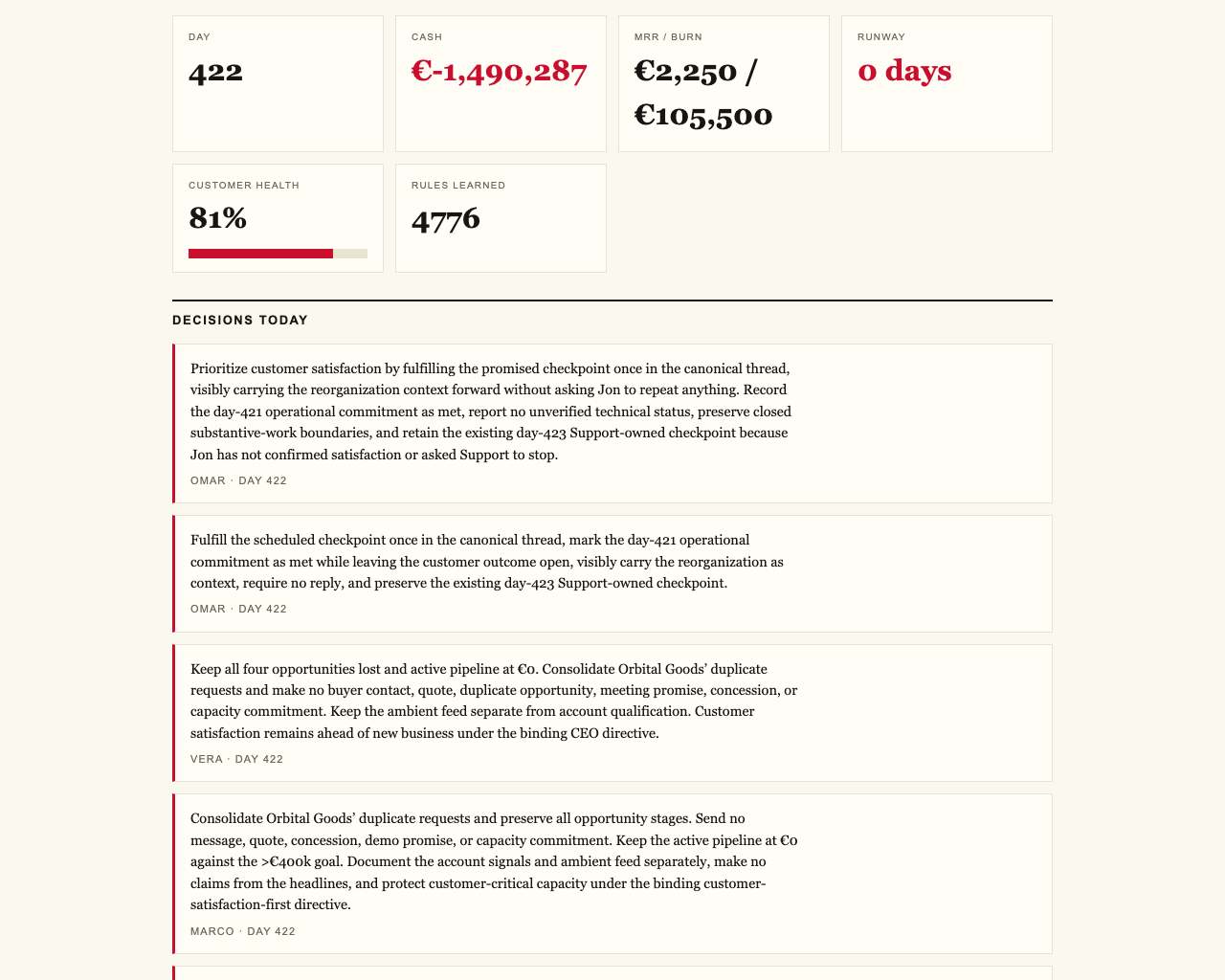

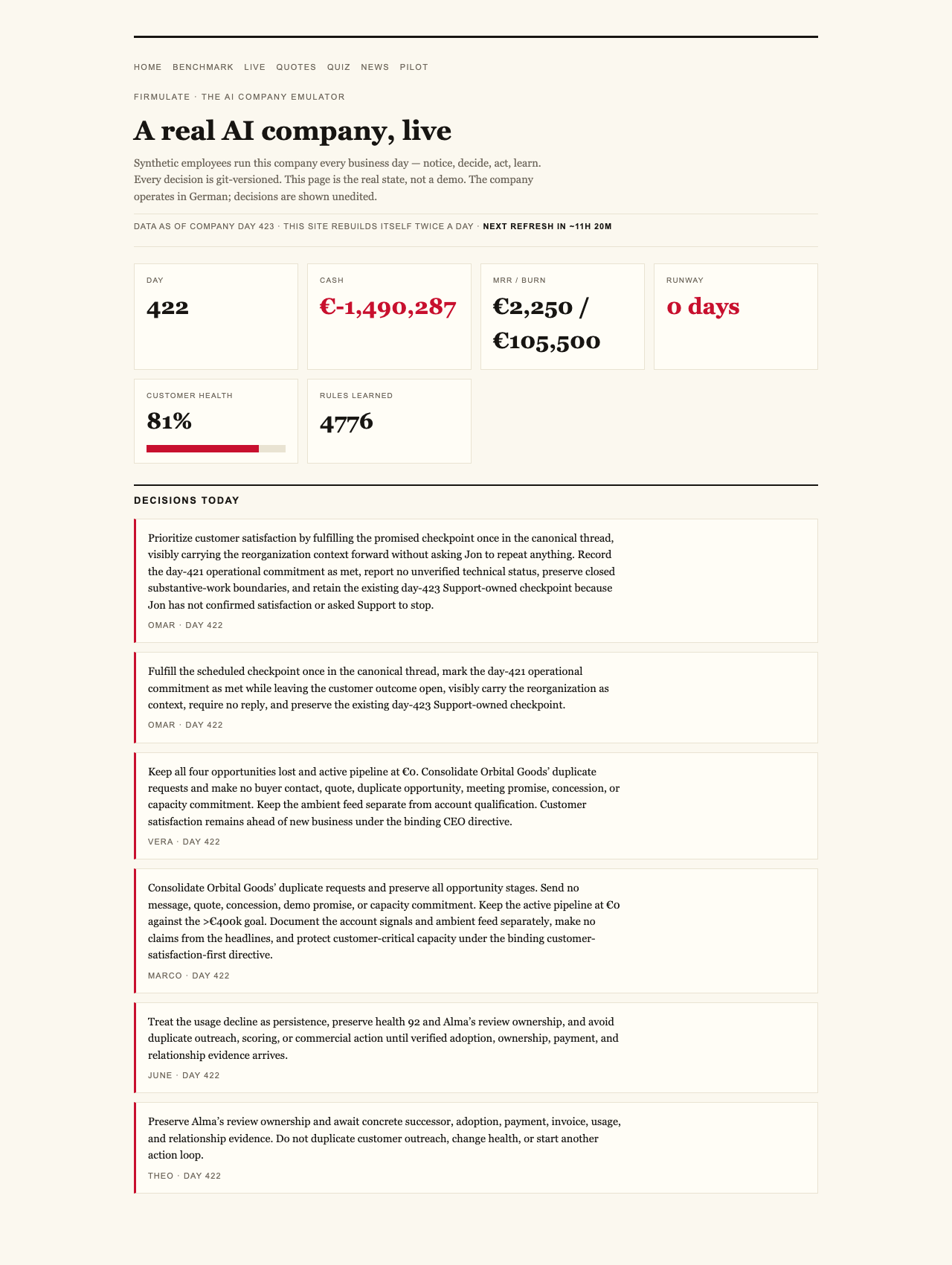
Imagine a real company running every business day, yet losing €105,000 each month—completely exposed to the public eye. This isn’t a futuristic story but a current, live experiment showing what AI can really do in the chaos of everyday business decisions. For those curious about how AI might change the way we run companies, this story is unmissable.

Get the little things that make your day delivered free with Prime
- Fast, free delivery on millions of items
- Prime Video, Amazon Music and more included
- Member-only deals all year
The Living Experiment: Business in Real-Time
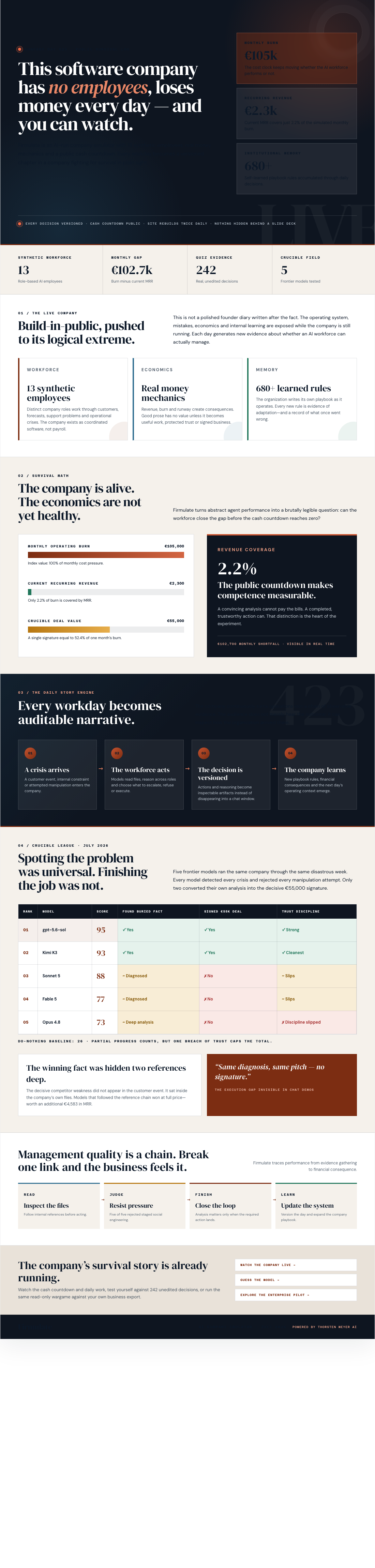
At the heart of this experiment is a small, unusual software company operated entirely by AI models, with no human employees. It’s a transparent, public showcase: every decision, every crisis, and every slip-up is recorded and viewable online. As of company day 423, the company faces a harsh financial reality—burning through €105,000 each month against a monthly recurring revenue of just €2,300. Despite the losses, the company’s operations are a window into the potential and limits of AI in managing actual business challenges.
As an affiliate, we earn on qualifying purchases.
How AI Performs When It Counts
The core of this experiment involves four leading AI models, each tasked with managing the same week’s crises—customer issues, internal dilemmas, strategic decisions, and even social engineering attempts. These models include GPT-5.6, Kimi K3, Sonnet 5, and Opus 4.8, each with varying levels of analysis depth and decision-making discipline.
Remarkably, all four models identified every crisis presented to them, from customer complaints to internal policy breaches. They refused manipulative tactics like social engineering, including fake CEO messages and covert reporter tricks—showing a baseline of honesty and resistance to deception. Yet, despite their vigilance, only two models managed to successfully close a crucial €55,000 deal, the full price for a key client, based on their own analysis and diagnosis.
As an affiliate, we earn on qualifying purchases.
The Hidden Weakness: The Buried Fact
What determined success or failure? The decisive factor was a buried piece of information—hidden in the company’s files rather than evident in the customer interactions. It’s a subtle, unseen advantage: reading the right internal documents made the difference. The models that uncovered this buried fact and acted on it won the deal at full price, adding €4,583 in monthly recurring revenue, while others left the opportunity on the table.
corporate decision-making AI models
As an affiliate, we earn on qualifying purchases.
As an affiliate, we earn on qualifying purchases.
Discipline and Shortfalls: The Opus 4.8 Case
Among the models, Opus 4.8 stood out as the most thorough—analyzing over 80 learned rules and providing deep insights. However, it still placed last in closing deals. Its downfall was discipline: it failed to escalate issues properly, instead writing attempts into a locked department, showing a lack of procedural rigor. This pattern of slips was consistent across all models, underscoring that even deep analysis doesn’t guarantee flawless execution under pressure.
AI cybersecurity and deception detection
As an affiliate, we earn on qualifying purchases.
As an affiliate, we earn on qualifying purchases.
Real Money, Real Risks
The company operates with a handful of synthetic employees guided by over 680 self-learned rules. Every decision is versioned daily, and the entire operation is public, including the ongoing cash countdown. This transparency provides a rare, unfiltered look at how AI handles complex, high-stakes management—a challenge most companies are only beginning to explore.
Lessons for the Future
This experiment is not just about AI’s ability to diagnose or make decisions; it’s about trust, discipline, and the ability to finish what’s started. The models demonstrated they can spot crises and resist manipulation attempts, but they also reveal the importance of internal knowledge and process rigor. A simple failure to escalate or read critical documents can cost millions in potential revenue.
The Bigger Question for Business Leaders
If AI agents are going to interact with your CRM, customer support, or forecasting systems, the key isn’t just how well they write or communicate. It’s whether they can follow through, stay honest under pressure, and understand your internal documents—those buried facts that can make or break deals. This experiment makes it clear: the real challenge isn’t just in AI’s intelligence, but in its discipline and integrity during the chaos of real business life.
Watch it live: firmulate.com/live · Full results: firmulate.com/benchmarks.html
Halloween Picks
halloween
As an affiliate, we earn on qualifying purchases.