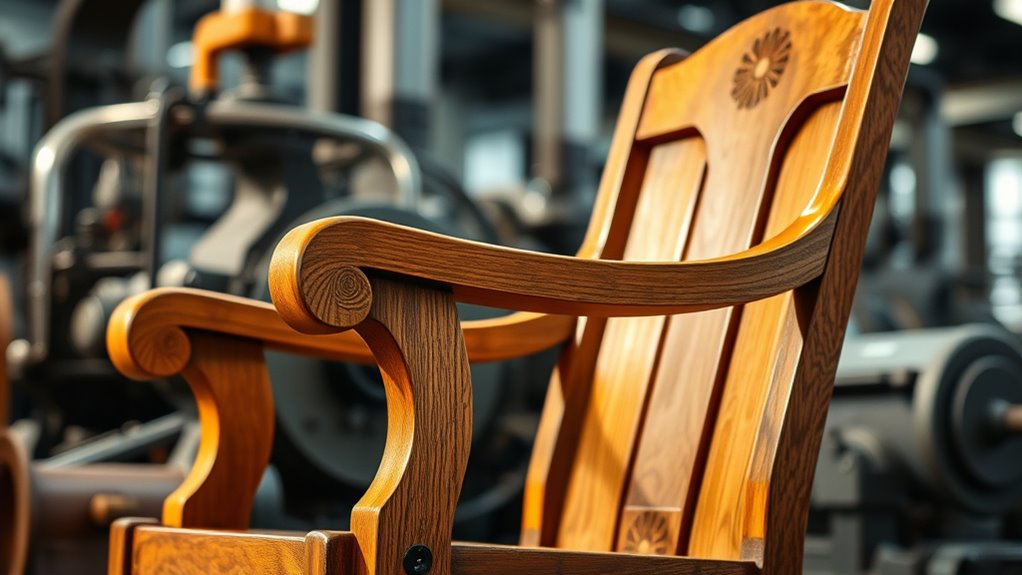

The Arts and Crafts Movement developed in response to the rise of industrialization, which mass-produced objects and reduced craftsmanship. It encourages you to appreciate handmade items that emphasize quality, natural materials, and honest design. The movement promotes reconnecting with individual skill and artistry, prioritizing functionality and beauty in everyday objects. If you want to understand how this movement aimed to restore dignity to craft and challenge mass production’s impact, there’s more to discover ahead.
Key Takeaways
- Emerged in the late 19th century as a direct response to the negative impacts of mass-produced, machine-made goods.
- Emphasized handcrafted craftsmanship, quality, and beauty to counteract the dehumanizing effects of industrialization.
- Promoted natural materials and simple, functional designs to reconnect with traditional artisanal practices.
- Aimed to restore pride in individual skill and elevate the value of authentic, durable objects.
- Inspired a cultural shift towards sustainable, local production and a rejection of overly ornate, mass-produced trends.
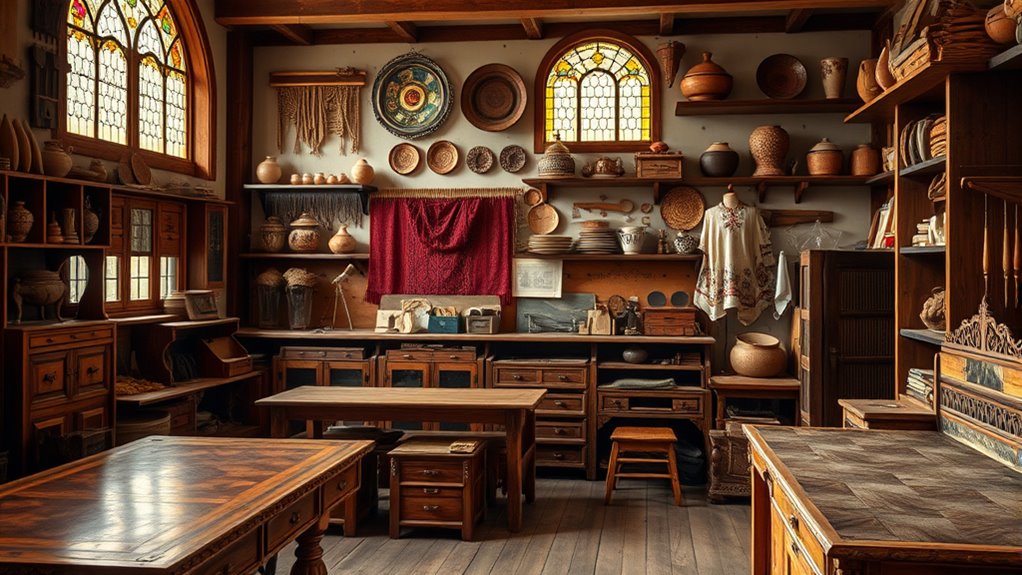
The Arts and Crafts Movement emerged in the late 19th century as a response to the industrial revolution, emphasizing craftsmanship, quality, and beauty in everyday objects. You’re encouraged to appreciate the value of handcrafted techniques that prioritize individual skill and artistry over mass production. This movement champions a design philosophy that celebrates simplicity, functionality, and natural materials, rejecting the overly ornate and machine-made trends of the time. When you look at Arts and Crafts pieces, you notice how each item reflects the personal touch of the craftsperson—every line and detail carefully executed. This focus on handcrafted techniques isn’t just about aesthetics; it’s about reviving a sense of pride in making things with your own hands, fostering a connection between artist and object that mass-produced items can’t replicate.
As you explore the movement further, you see that its design philosophy centers around harmony with nature and the environment. You’re encouraged to value authenticity and integrity in design, where form follows function without unnecessary decoration. The movement’s advocates believed that beautiful, well-made objects could elevate daily life, making ordinary routines feel special. This philosophy guides artisans to create pieces that are not only visually appealing but also durable and functional, emphasizing quality over quantity. When you handle or observe Arts and Crafts furniture, textiles, or decorative arts, you notice the emphasis on honest craftsmanship—materials are chosen for their natural beauty, and construction techniques highlight the skill involved.
Additionally, the movement’s emphasis on handcrafted techniques contributes to a sustainable approach to consumption and supports local artisans. You’ll find that handcrafted techniques such as joinery, weaving, or carving are used deliberately to showcase the artisan’s mastery. This focus on quality craftsmanship encourages you to value objects that are built to last, fostering a more sustainable approach to consumption. The design philosophy behind Arts and Crafts isn’t just about aesthetics; it’s a way to reconnect with the process of creating and to appreciate the skill involved in handmade objects. As you engage with these works, you gain a deeper understanding of how the movement seeks to restore dignity to craftsmanship and to elevate the everyday through thoughtful, well-made design.

Nicpro Metallic Gold Acrylic Paint, 8.45oz/250ml Large Gold Leaf Paint, Non Toxic, Non Fading Craft Paints for Metal, Wood, Clay, Fabric, Canvas, Furniture, Handcrafts, Art Supplies
Stunning Metallic Finish: Creamy texture and high pigments provide great coverage for large areas and fine details. Nicpro…
As an affiliate, we earn on qualifying purchases.
As an affiliate, we earn on qualifying purchases.
Frequently Asked Questions
How Did the Arts and Crafts Movement Influence Modern Interior Design?
The Arts and Crafts Movement influences your modern interior design by emphasizing handcrafted aesthetics and nature-inspired motifs. You now see more artisanal details and organic shapes in furniture, emphasizing quality over mass production. This movement encourages you to incorporate natural materials and intricate craftsmanship, creating warm, inviting spaces. Its focus on authenticity and artistry shapes contemporary trends, making your interiors feel personalized, timeless, and connected to nature.
What Specific Artisans and Designers Were Pivotal in the Movement’s Development?
Think of craftsmen pioneers and design innovators as the beating heart of the Arts and Crafts Movement. Figures like William Morris, known for his intricate textiles and wallpaper, and John Ruskin, who championed handcrafted quality, played pivotal roles. These artisans emphasized craftsmanship over mass production, inspiring generations of modern interior design. Their dedication transformed simple materials into works of art, leaving a legacy that still influences design today.
How Did the Movement Address Social and Economic Inequalities?
You see, the movement aimed to promote artisan empowerment by emphasizing handcrafted work over mass production, fostering economic equality among craftsmen. It challenged social inequalities by valuing skilled labor and encouraging fair wages, helping artisans gain recognition and financial stability. Through these efforts, it sought to create a more equitable society where craftsmanship was appreciated and supported, ultimately endeavoring to reduce the disparities created by industrialization.
Were There Any Criticisms or Controversies Surrounding the Arts and Crafts Movement?
You’ll find that artisan critiques and commercialization concerns sparked controversy within the Arts and Crafts Movement. Critics argued that the movement’s emphasis on handcrafted quality clashed with rising mass production and commercial interests. While champions praised its craftsmanship, opponents worried it limited accessibility and ignored economic realities. This tension between artistic integrity and market demands created ongoing debates, challenging the movement’s ideals and exposing its vulnerabilities in a rapidly industrializing society.
How Does the Movement’s Philosophy Compare to Contemporary Sustainable Design?
You’ll find that the movement’s philosophy aligns closely with contemporary sustainable design because both emphasize craftsmanship preservation and eco-friendly principles. You’re encouraged to value handmade quality over mass production, reducing environmental impact. By prioritizing durable, thoughtfully crafted items, you support sustainability and maintain cultural heritage. This shared focus on eco-consciousness and craftsmanship makes the Arts and Crafts Movement a timeless influence on today’s efforts toward responsible, sustainable design.

SOTISI Canvas Fabric, Premium 10oz Natural Cotton Duck Canvas Fabric 62'' Wide for Arts & Crafts, Backings, Covers,1Yd (60 x 36 inchs)
[PREMIUM QUALITY MATERIALS]:SOTISI canvas is carefully sewn with 100% cotton fabric.10 ounces gram weight ensures higher strength and…
As an affiliate, we earn on qualifying purchases.
As an affiliate, we earn on qualifying purchases.
Conclusion
Just like a delicate tapestry woven with care, the Arts and Crafts Movement reminds you that beauty and craftsmanship can thrive amidst industrial chaos. By embracing traditional methods and honest design, you can create a world where artistry isn’t lost in the rush of progress. Remember, it’s within your hands to preserve this delicate balance and guarantee that the soul of craftsmanship remains alive, shining brightly like a guiding star through the darkness of mass production.

Working Wood 1 & 2: the Artisan Course with Paul Sellers
Working Wood 1 & 2 is part of a comprehensive course in woodworking and accompanies 7 DVDs.
As an affiliate, we earn on qualifying purchases.
As an affiliate, we earn on qualifying purchases.

Kunibaka Ceramic Art Decorative Tiles, Handmade 3D Embossed Relief Wall Art, Home Decor Accent for Wall & Tabletop, Unique Gift for Mom Daughter Anniversary Birthday(7.8″x11.8″)
Handcrafted Artisan Ceramic Tile – Features unique three-dimensional embossed artwork that provides a sophisticated tactile experience and visual…
As an affiliate, we earn on qualifying purchases.
As an affiliate, we earn on qualifying purchases.