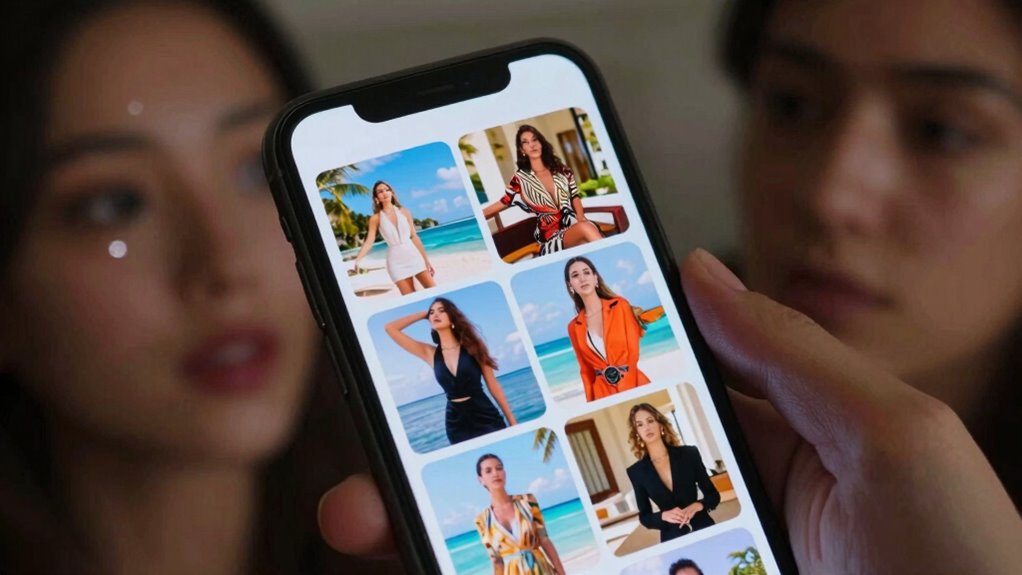

Understanding the psychology of envy shows how social media’s curated images and validation-seeking behaviors can heighten your feelings of comparison and inadequacy. When you see others’ highlights, it’s easy to believe your life doesn’t measure up. Recognizing these triggers helps you develop a more realistic perspective and manage your emotional reactions. If you keep exploring, you’ll discover ways to lessen envy’s impact and foster healthier online habits.

Get the little things that make your day delivered free with Prime
- Fast, free delivery on millions of items
- Prime Video, Amazon Music and more included
- Member-only deals all year
Key Takeaways
- Social media amplifies envy by showcasing curated, idealized lives that trigger social comparison and feelings of inadequacy.
- Recognizing content curation helps develop critical viewing habits, reducing the emotional impact of envy.
- External validation on social platforms influences self-esteem, making envy a response to perceived validation disparities.
- Understanding that envy often stems from internal needs allows for mindful engagement and emotional regulation.
- Awareness of social media’s design and algorithms can diminish envy’s power by fostering realistic perspectives.
In today’s digital age, almost everyone encounters social media daily, and with it comes a powerful emotional response—envy. You scroll through your feeds, seeing friends or strangers sharing their highlights: exotic vacations, career milestones, perfect photos. It’s easy to feel that tug of comparison, wondering why your life doesn’t seem as glamorous or exciting. This isn’t just a fleeting feeling; it’s rooted in the way social media taps into your desire for virtual validation and comparative feedback. When you post something, you’re often seeking approval—likes, comments, shares—that serve as digital affirmations of your worth. This craving for validation can intensify feelings of envy, especially when others seem to get more recognition for their posts. It’s a cycle: you seek validation from your online audience, but when that validation isn’t as abundant as you hoped, envy can grow.
You might not even realize how deeply social media’s design encourages comparison. Algorithms prioritize content that garners engagement, often highlighting the most curated and polished versions of others’ lives. As you consume this content, you subconsciously compare your behind-the-scenes reality to their highlight reels. When you see someone’s seemingly perfect vacation or luxurious purchase, your brain registers it as a form of comparative feedback—an informal judgment of how you measure up. If your own experiences or possessions seem less impressive, envy takes hold. Recognizing content curation as a key factor in shaping perceptions can help you critically assess what you’re viewing. Additionally, understanding how social comparison theory influences your reactions can empower you to develop healthier online habits. Being aware of the selective presentation of others’ lives can also make it easier to maintain a more realistic perspective.
Social media’s emphasis on virtual validation feeds this cycle further. When you post, you’re not just sharing moments; you’re also inviting judgment—positive or negative—that influences your self-esteem. If your posts don’t receive the response you crave, feelings of inadequacy or envy can intensify, making you feel invisible or less valued. Conversely, when others get more validation, you might feel jealous or resentful. The constant pursuit of external validation becomes a mirror for your self-worth, and social media’s environment amplifies this need. Understanding this dynamic helps you see how envy is often less about others and more about your own internal need for affirmation. Recognizing that social media is designed to trigger these feelings allows you to approach your online habits more mindfully, reducing the power envy holds over your emotional well-being.
mindfulness meditation for social media envy
As an affiliate, we earn on qualifying purchases.
As an affiliate, we earn on qualifying purchases.
Frequently Asked Questions
Can Envy on Social Media Lead to Long-Term Mental Health Issues?
Envy on social media can indeed lead to long-term mental health issues. You might experience comparison anxiety, where constantly comparing your life to others’ highlights diminishes your self-esteem. Over time, this decline can foster feelings of inadequacy and dissatisfaction, affecting your overall well-being. Recognizing these patterns helps you take steps to limit social media’s impact, fostering healthier self-perceptions and reducing the risk of persistent mental health struggles.
How Does Social Media Amplify Feelings of Envy Compared to Real Life?
You might not realize it, but social media dramatically amplifies envy compared to real life. Comparing envy triggers, like someone’s perfect vacation or flawless appearance, becomes effortless online. The constant stream of curated content heightens your feelings of inadequacy and longing. Unlike face-to-face encounters, social media impact keeps these triggers fresh and relentless, fueling envy’s grip and making it harder to feel genuinely content with your own life.
Are Certain Personality Types More Prone to Envy on Social Platforms?
Yes, certain personality traits make you more prone to envy susceptibility on social media. If you’re naturally more competitive, anxious, or have low self-esteem, you’re likely to feel envy more intensely when comparing yourself to others online. People high in neuroticism or with a tendency toward social comparison often experience stronger feelings of envy. Recognizing these traits helps you understand your reactions and manage your social media habits better.
What Are Effective Strategies to Reduce Envy Triggered by Social Media?
Research shows that 70% of social media users feel envy at times. To reduce this, compare online to offline experiences realistically—remember that social media often shows curated highlights. Manage digital boundaries by limiting your time on platforms and unfollowing accounts that trigger envy. Focus on your own achievements and gratitude. These steps help you stay grounded, foster self-compassion, and diminish feelings of envy when browsing social media.
Does Social Media Use Influence the Intensity or Frequency of Envy?
Social media use definitely influences how often and intensely you feel envy. Comparison triggers pop up more often when you’re scrolling through curated posts, making you feel inadequate or jealous. If you’re seeking validation, it can amplify these feelings, as your self-esteem becomes tied to likes and comments. This cycle fuels envy, making it more persistent and intense, especially when you’re constantly exposed to others’ highlight reels.
journals for emotional regulation
As an affiliate, we earn on qualifying purchases.
As an affiliate, we earn on qualifying purchases.
Conclusion
Understanding envy’s psychology reveals that social media is a double-edged sword, often turning your happiness into a fragile house of cards. By recognizing these feelings, you can guard your mental well-being and stop comparing your behind-the-scenes to everyone else’s highlight reel. Remember, social media is like a mirror—what you see isn’t the full story, just reflections. When you grasp this, you’ll find your peace amid the digital noise, shining brighter than envy ever could.
books on social media and self-esteem
As an affiliate, we earn on qualifying purchases.
As an affiliate, we earn on qualifying purchases.
As an affiliate, we earn on qualifying purchases.
NFL season / tailgating Picks
team gear
As an affiliate, we earn on qualifying purchases.