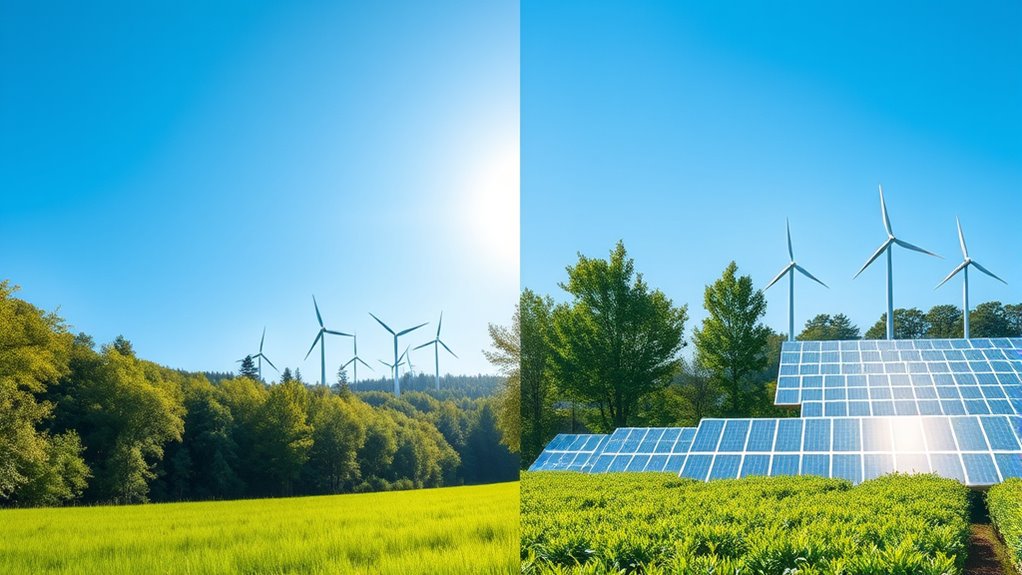

Investing in renewable energy and policy incentives helps you balance costs with long-term benefits. While upfront expenses may seem high, they lead to lower operational costs, job creation, and improved public health. Incentives like tax credits encourage innovation and make clean energy more accessible. This approach reduces reliance on fossil fuels and fosters economic growth aligned with sustainability. To understand how these strategies shape a resilient and eco-friendly economy, keep exploring these key concepts.
Key Takeaways
- Renewable energy investments require upfront capital but offer long-term savings and environmental benefits.
- Policy incentives lower financial barriers, encouraging adoption and innovation in sustainable technologies.
- Externalities like job creation and health improvements provide additional economic and societal advantages.
- Incentives promote technological advancements, making renewable energy more efficient and competitive.
- Integrating incentives into broader policies ensures sustainable growth and balances costs with environmental gains.

Have you ever wondered how economic principles can promote sustainable development? One key way is through strategic investments in renewable energy sources. Renewable investment involves directing funds toward solar, wind, hydro, and other clean energy technologies that reduce reliance on fossil fuels. When you invest in renewables, you’re not just supporting environmental health—you’re also creating economic opportunities. This kind of investment often requires upfront capital, but the long-term benefits include lower operational costs and reduced greenhouse gas emissions. Governments and private investors can play a pivotal role here by providing policy incentives that make renewable projects more attractive. These incentives, like tax credits, subsidies, or favorable tariffs, lower the financial barriers for renewable investments, encouraging more businesses and individuals to participate. By aligning economic incentives with sustainability goals, policymakers can stimulate a shift toward cleaner energy sources more swiftly.
Policy incentives act as catalysts, making renewable investments more appealing and economically viable. They help offset the higher initial costs often associated with renewable technologies and signal a commitment to sustainable development. When you see government grants or tax breaks for renewable projects, it’s a clear indication that policies are designed to promote environmentally friendly practices while supporting economic growth. These incentives can also reduce investment risks, encouraging entrepreneurs and companies to innovate and expand renewable infrastructure. In doing so, they help create a more resilient energy market that benefits both the economy and the environment. Additionally, investment in renewable energy can drive innovation and technological advancements, making clean energy more efficient and accessible. The challenge lies in designing policies that balance immediate costs with long-term gains, ensuring that incentives are sustainable and effective over time.
Furthermore, integrating policy incentives into the broader economic framework can generate positive externalities, such as job creation in green industries, improved public health, and energy security. As you become more aware of these dynamics, it’s evident that well-crafted policies can drive the transition to a sustainable economy. They help align individual and corporate interests with societal benefits, fostering a climate where renewable investments become the norm rather than the exception. The success of this approach depends on continuous evaluation and adjustment of incentives to reflect technological advancements and market conditions. Ultimately, leveraging policy incentives to promote renewable investments is a key component of the economics of sustainability, making environmental responsibility compatible with economic prosperity.

ECO WORTHY 10000W Output Complete Off-Grid Solar Panel Kit for Home| 10KW 120V/240V Output Split Phase Inverter| 48V 314Ah16.1kWh High Capacity Energy Storage| 2950W Solar Panel PV| Whole House System
System Components:Delivers up to 10kW power output with 120V/240V single-phase split-phase support, making it suitable for smoothly running…
As an affiliate, we earn on qualifying purchases.
As an affiliate, we earn on qualifying purchases.
Frequently Asked Questions
How Do Sustainability Costs Impact Consumer Pricing?
Sustainability costs often lead to higher consumer prices because businesses face green premiums, which are extra expenses for eco-friendly practices. These costs typically pass through to you as a consumer through cost pass-through, making products more expensive. While you might pay more upfront, you’re supporting environmentally responsible choices. Companies may also absorb some costs to stay competitive, but ultimately, sustainability costs influence pricing strategies and your overall purchasing decisions.
What Are the Long-Term Economic Benefits of Sustainability?
You’ll see long-term economic benefits from investing in renewable energy and boosting ecological resilience. These efforts reduce reliance on fossil fuels, lower energy costs over time, and create jobs in green industries. Plus, strengthening ecological resilience helps prevent costly environmental disasters and preserves resources. Ultimately, sustainable practices lead to a more stable economy, increased innovation, and a healthier planet, ensuring ongoing prosperity for you and future generations.
How Do Government Policies Influence Sustainability Costs?
Government policies subtly shape sustainability costs through regulatory frameworks and fiscal incentives, making eco-friendly choices more appealing. You benefit when these policies encourage green innovations or impose standards that drive industries to adopt sustainable practices. While costs may initially seem higher, the long-term savings and environmental benefits outweigh these expenses. By aligning economic incentives with sustainability goals, you find it easier to support and participate in environmentally responsible actions.
What Role Do Private Investments Play in Sustainable Development?
Private investments play a vital role in sustainable development by fueling innovation and expanding eco-friendly initiatives. You can see this through corporate responsibility, as companies allocate private funding toward renewable energy, waste reduction, and sustainable supply chains. These investments help bridge gaps in public funding, accelerate green technologies, and create jobs. By directing private funding into sustainability projects, you support long-term environmental health and economic resilience, making sustainable development achievable at a larger scale.
How Can Small Businesses Afford Sustainability Initiatives?
You can afford sustainability initiatives by focusing on energy savings, which lower your operating costs over time. Start small with energy-efficient upgrades and look for grants or incentives that support eco-friendly practices. Improving your brand reputation through sustainable efforts attracts customers who value environmental responsibility. These investments may seem costly initially, but they pay off by reducing expenses and boosting loyalty, making sustainability a smart business move.

20000W Vertical Axis Wind Turbine Generator Kit with Controller for Home Use – High-Efficiency Renewable Energy Solution
Wind Turbine Blades feature Precision Injection Molding Technology and an Optimized Aerodynamic Shape for improved efficiency. Designed for…
As an affiliate, we earn on qualifying purchases.
As an affiliate, we earn on qualifying purchases.
Conclusion
Just as Prometheus brought fire to humanity, embracing sustainability fuels our future. By weighing costs against benefits, you realize that investing in eco-friendly practices isn’t just ethical—it’s essential for long-term prosperity. The economics of sustainability remind you that small, conscious choices today can spark a brighter, more resilient tomorrow. Remember, the path to a sustainable world is a journey you’re shaping—choose wisely, and let your actions echo through history.

Solar Power for Beginners: The Complete Guide to Home Solar Energy, Tax Credits, Batteries, and Generators
As an affiliate, we earn on qualifying purchases.
As an affiliate, we earn on qualifying purchases.

The Renewable Energy Handbook: The Updated Comprehensive Guide to Renewable Energy and Independent Living
As an affiliate, we earn on qualifying purchases.
As an affiliate, we earn on qualifying purchases.