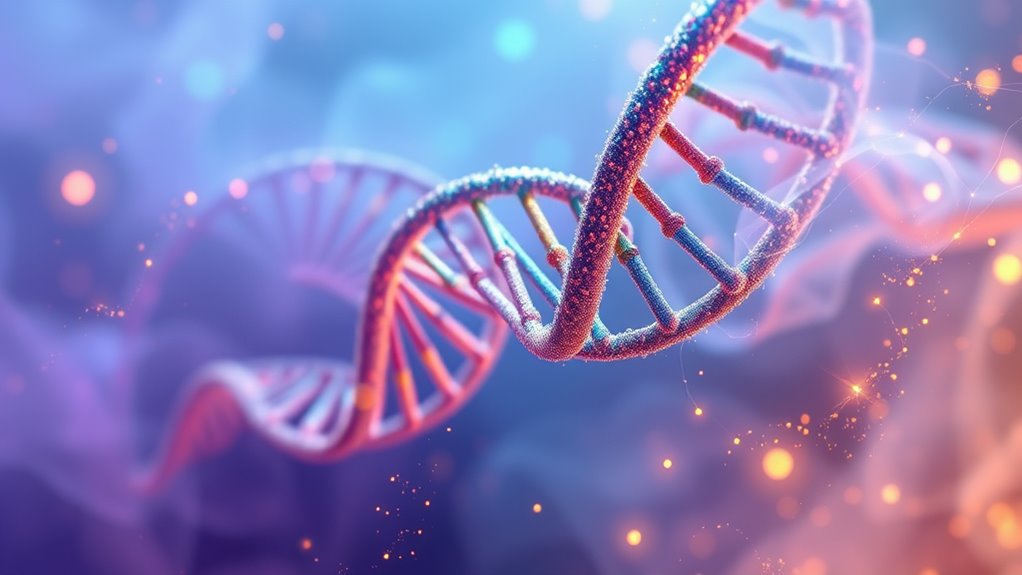

Epigenetic modulation influences how your genes function by responding to environmental factors like diet, stress, and lifestyle choices. It doesn’t change your DNA sequence but activates or silences genes through reversible processes like DNA methylation and histone modification. This ability means your genes are more adaptable than you might think, shaping your health and potential. By understanding this, you can learn how your environment and habits continue to influence your genetic expression—there’s more to discover about revealing your genetic potential.
Key Takeaways
- Epigenetic modulation alters gene activity without changing DNA, enabling flexible gene expression based on environmental influences.
- Lifestyle factors like diet, stress, and exercise can induce beneficial epigenetic changes, enhancing health and longevity.
- Reversible mechanisms such as DNA methylation and histone modifications allow adaptation to external conditions.
- External factors leave epigenetic marks that can activate or silence genes, unlocking hidden genetic potential.
- Understanding epigenetics empowers conscious decisions to optimize gene expression and overall well-being.
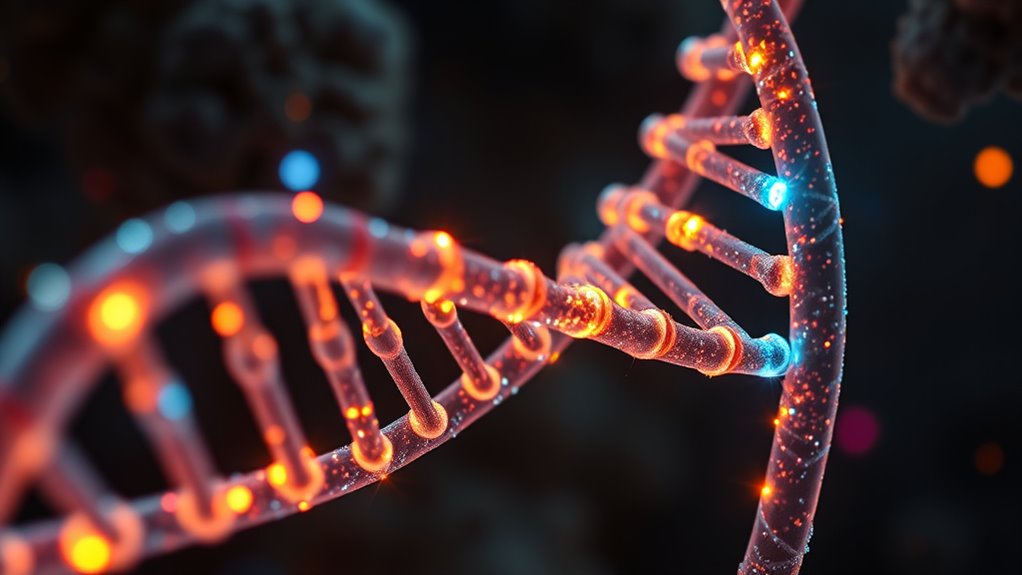
Epigenetic modulation refers to the ways in which gene activity can be altered without changing the underlying DNA sequence. This process influences how your genes are expressed, turning certain genes on or off in response to various factors. Understanding this mechanism puts you in a position to recognize how your environment can shape your biological makeup beyond just your genetic code. It’s a powerful reminder that your gene expression isn’t fixed; instead, it’s dynamic and responsive to your surroundings.
Gene activity can change without altering DNA, shaped by your environment and lifestyle.
When you think about environmental influence, it’s easier to grasp how epigenetic modulation operates. Factors like diet, stress, exposure to toxins, or physical activity can trigger chemical modifications on your DNA or associated proteins. These modifications don’t rewrite your genetic blueprint but instead act as signals that regulate whether specific genes are active. For instance, a high-stress environment might lead to changes in gene expression related to mental health, while a nutritious diet could promote the activation of genes associated with longevity and cellular repair. Every external factor you encounter can leave an epigenetic mark, subtly shifting how your genes function.
This modulation occurs mainly through mechanisms like DNA methylation and histone modification. DNA methylation involves adding a methyl group to DNA, which typically silences gene activity. Conversely, removing these groups can reactivate genes. Histone modifications alter how DNA wraps around histone proteins, making certain regions more or less accessible for transcription. These processes are reversible, allowing your body to adapt to changing conditions effectively. You aren’t doomed to a fixed gene expression pattern; instead, your environment can turn certain genes on or off as needed. Additionally, advancements in genetic research are deepening our understanding of how these epigenetic processes influence health and disease.
By understanding epigenetic modulation, you realize that your lifestyle choices directly influence your genetic expression. Regular exercise, stress management, and a balanced diet aren’t just about immediate health benefits—they can induce beneficial epigenetic changes that promote long-term well-being. Conversely, harmful habits or chronic stress might lead to detrimental modifications, increasing your risk for various diseases. This insight empowers you to take control of your health in ways that transcend traditional genetics, emphasizing the importance of your environment and daily habits.
In essence, epigenetic modulation reveals that your genes are more like a dimmer switch than an on/off button. Your environment and lifestyle choices constantly shape how your genes are expressed, affecting your health and development. Recognizing this connection motivates you to make conscious decisions, knowing they can have lasting genetic impacts. It’s a testament to the incredible adaptability of your biology and a reminder that your environment has a profound influence on your genetic potential.

LifeDNA Genetic Methylation Test Kit, All-In-One DNA Wellness Blueprint: 13 Genes Including MTHFR, COMT, CBS, 165+ DNA Insights plus Premium Gut, Detoxification and Aging Reports, Results in 3-5 Weeks
- Exclusive Insights: Deep analysis of microbiome, detox, aging
- Extensive DNA Insights: 165+ insights across 11 reports
- Comprehensive Methylation Panel: Analyzes 13 methylation genes including MTHFR, COMT, CBS
As an affiliate, we earn on qualifying purchases.
As an affiliate, we earn on qualifying purchases.
Frequently Asked Questions
Can Epigenetic Changes Be Inherited Across Generations?
Yes, epigenetic changes can be inherited across generations. You might not think about it often, but genetic inheritance isn’t just about DNA sequences; epigenetic transmission also plays a role. Environmental factors, lifestyle, and stress can cause epigenetic modifications that are passed down, influencing traits in your offspring. This means your experiences and choices could potentially impact future generations through changes in gene expression, not just genetic code.
How Do Lifestyle Choices Influence Epigenetic Modifications?
Ever wonder how your choices seem to shape your health in surprising ways? Your lifestyle directly influences epigenetic modifications through dietary impacts and stress regulation. Eating nutrient-rich foods can activate beneficial gene expressions, while managing stress prevents harmful epigenetic changes. By making mindful decisions, you can positively affect your genetic potential, ultimately promoting better well-being and resilience for yourself and future generations.
Are There Risks Associated With Epigenetic Therapies?
Yes, there are risks with epigenetic therapies. You might experience potential side effects like unintended gene activation or suppression, which could lead to health issues. Ethical considerations also come into play, especially regarding altering genetic expression and long-term impacts. It is crucial to weigh these risks carefully, consult healthcare professionals, and stay informed about ongoing research to make safe, informed decisions about such treatments.
Can Epigenetic Markers Predict Disease Susceptibility?
Yes, epigenetic markers can predict disease susceptibility through genetic screening. By analyzing epigenetic biomarkers, you can identify changes that influence gene expression and indicate higher risks for certain diseases. This helps you understand your health better and enables early intervention. Keep in mind, while promising, this approach isn’t foolproof and should be combined with other diagnostic tools for the most accurate assessment.
How Quickly Can Epigenetic Changes Occur in Response to Environment?
Epigenetic changes can happen quite rapidly, sometimes within hours or days, depending on the environmental impact. Factors like diet, stress, or toxins influence the speed of change, allowing your genes to adapt quickly. You might notice these shifts in response to environmental stimuli, which actively modify gene expression without altering your DNA sequence. This rapid adaptability demonstrates how environmental impact can swiftly influence your genetic regulation.

CAREFAST Lunasin – Cellular Health – Cardiovascular, Antioxidant, and Epigenetic Aid
- Epigenetic Health Support: Supports genetic potential and vitality
- Triple Antioxidant Defense: Protects against cellular damage
- Reduces Inflammation: Alleviates body-wide inflammation
As an affiliate, we earn on qualifying purchases.
As an affiliate, we earn on qualifying purchases.
Conclusion
By understanding epigenetic modulation, you hold the key to revealing your genetic potential, much like discovering a hidden door in a vast maze. With each new insight, you can steer your biological destiny, turning the invisible hands of gene expression in your favor. Embrace this powerful tool, for it’s not just science—it’s the compass guiding you toward a healthier, more vibrant future. Unseal your genetic masterpiece and step boldly into the possibilities ahead.

Anger Management Skills Workbook for Kids: 40 Awesome Activities to Help Children Calm Down, Cope, and Regain Control
As an affiliate, we earn on qualifying purchases.
As an affiliate, we earn on qualifying purchases.

50MG Sulforaphane Supplement from Broccoli Sprouts, Doctor-Formulated
- Sulforaphane Content: Over 50mg of activated sulforaphane
- Doctor-Formulated: Expertly crafted broccoli sprout supplement
- Supports Detox & Liver Health: Promotes detoxification and liver function
As an affiliate, we earn on qualifying purchases.
As an affiliate, we earn on qualifying purchases.