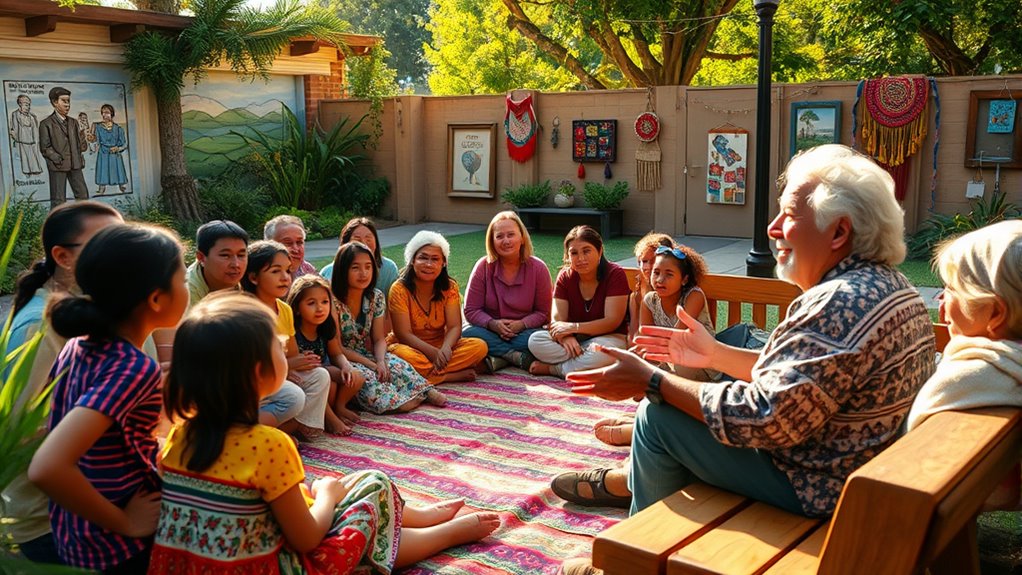

Storytelling and narrative building are powerful tools that help communities preserve their cultures, reinforce social bonds, and shape their future. By sharing stories, you pass down traditions, strengthen your sense of identity, and foster trust among members. These stories build resilience, empower communities, and encourage cooperation during challenges. When you explore how narratives influence community development, you’ll discover even more ways stories help shape a cohesive and vibrant collective future.
Key Takeaways
- Stories preserve cultural traditions and histories, passing them down across generations.
- Narrative sharing strengthens community bonds and reaffirms collective identity.
- Resilient stories inspire empowerment and resilience within communities facing challenges.
- Sharing stories fosters social cohesion by promoting understanding and shared values.
- Narratives shape community development and help guide future actions and identity.

Stories shape the way communities understand themselves and their shared experiences. When you participate in storytelling, you’re doing more than just passing time; you’re actively shaping the identity of your community. Through stories, cultural preservation becomes possible, allowing traditions, values, and histories to be passed down from one generation to the next. These narratives serve as a bridge connecting the past with the present, ensuring that the essence of your community’s unique customs isn’t lost over time. As you listen and share stories, you reinforce a collective identity that binds everyone together, creating a sense of belonging and pride. This process of identity reinforcement is essential, especially in a world where cultures are constantly evolving and sometimes threatened by outside influences. When you tell or hear stories rooted in your community’s history, you reaffirm your roots and the values that define you. It’s a way of asserting who you are in a broader cultural context, making sure that your community’s voice remains strong and recognizable.
Storytelling also acts as a tool for resilience. When challenges arise—whether social, political, or environmental—stories can serve as a reminder of your community’s strength and perseverance. They offer lessons learned and celebrate victories, providing motivation to face future obstacles. In this sense, narrative building is an act of empowerment. By sharing stories of overcoming adversity, you help to foster a collective resilience that sustains your community through tough times. These narratives aren’t just about the past; they shape your community’s future, establishing a shared vision that guides ongoing development and adaptation.
Furthermore, storytelling nurtures social cohesion. When you gather to share stories, you create a space for dialogue and mutual understanding. Different perspectives emerge, enriching the collective narrative and deepening your sense of solidarity. As stories circulate, they often highlight common values and aspirations, reinforcing social bonds and fostering trust among community members. This shared storytelling becomes a foundation for cooperation and support, especially during times of change or crisis. It reminds everyone that they’re part of something larger than themselves, a community with a continuous story that they help to write.
Frequently Asked Questions
How Can Digital Media Enhance Community Storytelling Efforts?
Digital media enhances your community storytelling efforts by boosting digital engagement, making it easier for everyone to share their stories. You can use platforms like social media or blogs to preserve your community’s narratives, ensuring they’re accessible for future generations. By actively involving members online, you strengthen connections and create a vibrant, ongoing dialogue that highlights your community’s unique identity and history.
What Are Common Challenges in Developing Shared Community Narratives?
Building a shared community narrative can feel like steering through a maze, especially when faced with identity conflicts and historical silences. You might struggle to reconcile differing perspectives or uncover stories long hidden. These challenges threaten to fragment your community’s story, making it harder to forge a cohesive identity. Overcoming them requires patience, open dialogue, and a commitment to amplifying overlooked voices, helping everyone see their place in the larger story.
How Do Storytelling Techniques Vary Across Different Cultural Communities?
You’ll find that storytelling techniques vary across cultural communities through distinct narrative styles and cultural expressions. For example, some cultures emphasize oral traditions and community participation, while others focus on written stories or visual storytelling. You’ll notice that cultural expressive elements, such as symbolism, language, and performance, shape how stories are told. Adapting to these differences helps you connect authentically and respect each community’s unique storytelling approach.
What Role Do Local Leaders Play in Shaping Community Narratives?
You see, local leaders shape community narratives through their leadership influence, guiding how stories reflect cultural identity. By sharing values, traditions, and history, they foster a sense of belonging and pride. Your leaders’ actions and words directly impact the stories that communities tell about themselves, strengthening cultural bonds. Their role is essential in ensuring these narratives authentically represent community values, fostering unity and resilience across generations.
How Can Storytelling Foster Long-Term Community Resilience?
Storytelling fosters long-term community resilience by sharing intergenerational wisdom, which helps preserve cultural identity and foster unity. You can organize storytelling festivals that encourage community members to exchange stories, strengthening bonds and promoting understanding across ages. By valuing everyone’s voice, you create a resilient community that learns from its past, adapts to challenges, and stays connected through shared narratives that inspire hope and collective growth.
Conclusion
As you weave stories within your community, remember that each voice adds a crucial thread to the tapestry. Like a storyteller around a campfire, your words ignite connection and shared purpose. Studies show communities with strong narratives see a 30% increase in cohesion. Keep sharing, listening, and building—your collective story strengthens bonds and transforms lives, just as a single spark can light a thousand fires. Your narrative is the foundation of a resilient, vibrant community.